
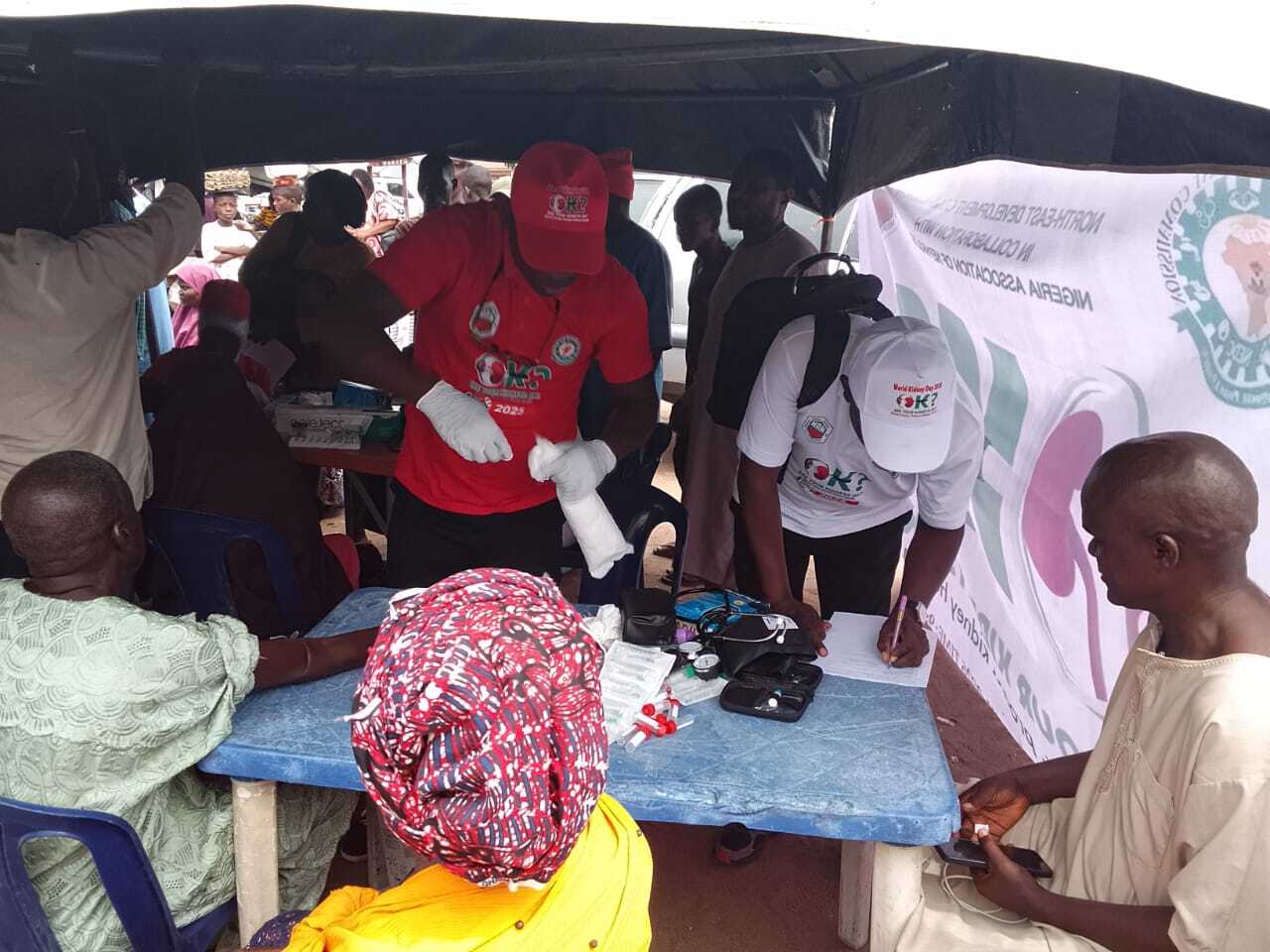
The North East Development Commission (NEDC), in collaboration with the Nigeria Association of Nephrology, has organized a one-day awareness campaign and free kidney screening for residents in Jalingo, Taraba State.
The event, held at the Jalingo Main Motor Park, formed part of activities to commemorate this year’s World Kidney Day, with a focus on early detection and prevention of kidney-related diseases.
Speaking at the event, the Taraba State Coordinator of NEDC, Alhaji Adamu Lawal, said the initiative was prompted by the rising prevalence of kidney diseases in the North-East region.
According to him, the programme was designed to create awareness on the causes of kidney diseases and educate the public on preventive measures.
“We are marking World Kidney Day by creating awareness because kidney-related issues are becoming increasingly common in this region. It is important for people to understand the causes and how to prevent them,” Lawal said.
He added that the commission engaged medical experts to carry out the exercise, noting that all services, including screening and tests, were provided free of charge.
Lawal explained that the choice of the motor park as venue was deliberate, as it targets vulnerable groups, particularly drivers and low-income earners, who may lack access to adequate health information.
“The people here are among the most vulnerable. Many of them are not aware of the causes of kidney disease. This outreach is to help them understand the risks and know their health status,” he added.
Also speaking, the Chief Consultant Nephrologist at Taraba State Specialist Hospital, Dr. Yerima Sulaiman, said the exercise included screening for key indicators of kidney disease such as hypertension, diabetes and urinalysis.
He noted that individuals diagnosed with any condition would be properly counseled and referred to appropriate health facilities for further management.
“We are ready to screen as many people as possible. Early detection is key in preventing complications associated with kidney disease,” he said.
Dr. Sulaiman expressed concern over the rising cases of kidney disease, noting that the condition was far less common decades ago.
“Today, kidney disease is on the increase. In most hospitals, a significant number of patients on admission are battling kidney-related issues,” he said.
He attributed the trend to poor dietary habits, excessive consumption of processed foods and energy drinks, as well as increasing cases of hypertension, diabetes and dehydration.
“It is not uncommon to find drivers consuming multiple energy drinks daily without considering the health implications,” he warned.
He also cautioned against excessive use of food seasonings and unhealthy diets, which he said contribute significantly to kidney problems.
A Nephrology Nurse in charge of the Dialysis Unit at the Taraba State Specialist Hospital, Jamila Sami Jibir, also noted a sharp rise in kidney disease cases in recent times.
“Previously, kidney disease was relatively rare in Taraba, but now we record multiple cases weekly. The situation is becoming alarming due to lifestyle and dietary habits,” she said.
Jibir urged residents to adopt healthier lifestyles, avoid drug abuse and indiscriminate use of herbal medicines, and ensure adequate water intake to reduce the risk of kidney disease.
She also emphasized the importance of regular medical check-ups, noting that treatment for kidney disease is often expensive and difficult to sustain.