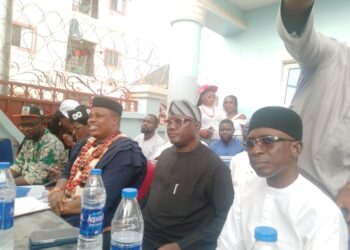

Peoples Democratic Party candidate secures decisive victory with 22,165 votes, overcoming recent national party turbulence to claim chairmanship seat in Nigeria’s federal capital territory
In a significant electoral outcome that underscores the complex political landscape of Nigeria’s Federal Capital Territory, the Peoples Democratic Party (PDP) has emerged victorious in the Gwagwalada Area Council chairmanship election, with candidate Mohammed Kasim securing a decisive win over his closest rival from the All Progressives Congress (APC).
The local government elections, conducted across all six area councils of the FCT on Saturday, witnessed Mohammed Kasim poll 22,165 votes to defeat his primary contender, Yahaya Shehu of the APC, who garnered 17,788 votes. The Independent National Electoral Commission (INEC) officially declared the results on Sunday, confirming the PDP’s hold on the strategically important council area.
Election Conduct and Voter Turnout
Declaring Mr Kasim as the winner, the INEC Returning Officer for Gwagwalada Area Council, Philip Akpen, commended the peaceful atmosphere that characterised the electoral process. “The election was peaceful and smooth throughout the voting and counting periods,” Mr Akpen stated, noting that the exercise proceeded without significant incidents across the council’s various polling units.
According to official figures released by INEC, Gwagwalada Area Council recorded 207,577 registered voters, of whom 46,294 were accredited to participate in the election. The council recorded 43,960 valid votes, with 1,521 votes rejected during the counting process.
The election, which encompassed both chairmanship and councillorship positions, saw participation from numerous political parties, reflecting the multi-party democratic framework operating within the nation’s capital territory.
Comprehensive Results Breakdown
A detailed analysis of the chairmanship election results in Gwagwalada Area Council reveals the following distribution across contesting parties:
· Peoples Democratic Party (PDP): 22,165 votes
· All Progressives Congress (APC): 17,788 votes
· All Progressives Grand Alliance (APGA): 1,687 votes
· African Democratic Congress (ADC): 1,366 votes
· Social Democratic Party (SDP): 432 votes
· New Nigeria Peoples Party (NNPP): 175 votes
· Action Alliance (AA): 116 votes
· Action Democratic Party (ADP): 128 votes
· Young Progressives Party (YPP): 158 votes
· Action Peoples Party (A): 151 votes
· Allied Peoples Movement (APM): 24 votes
The results demonstrate the PDP’s commanding performance, securing approximately 47 per cent of the valid votes cast, while the APC trailed with approximately 38 per cent. Other parties collectively accounted for the remaining 15 per cent of votes.
Candidate’s Vision and Campaign Promises
Throughout his campaign leading to the election, Mohammed Kasim articulated a comprehensive manifesto centred on grassroots development and community welfare. His policy platform emphasised four key pillars: enhanced community welfare programmes, robust women’s empowerment initiatives, improved healthcare service delivery, and expanded educational opportunities for children within the council area.
Political analysts suggest that Mr Kasim’s focused campaign on local issues resonated strongly with Gwagwalada’s diverse electorate, contributing significantly to his electoral success. The candidate’s ability to connect with voters across various demographics appears to have translated into the substantial margin of victory recorded.
Significance Amid National Political Dynamics
The PDP’s victory in Gwagwalada assumes particular significance given the party’s current challenges at the national level. The party has been grappling with internal divisions affecting its national leadership, while simultaneously witnessing the defection of several governors and federal legislators to the ruling APC. Additionally, prominent party figures, including former Vice President Atiku Abubakar, have recently aligned with other political formations, most notably the African Democratic Congress (ADC).
Despite these setbacks at the national level, the Gwagwalada outcome demonstrates the PDP’s continued organisational strength and voter appeal in specific localities. While local election results do not necessarily mirror national political dynamics, they provide valuable indicators of grassroots political sentiment.
Implications for Future Electoral Contests
Political observers note that the PDP’s performance in Gwagwalada may suggest that the APC’s recent wave of high-profile defections from opposition parties has not translated into automatic electoral advantages at the local level. The result indicates that voters continue to evaluate candidates based on local considerations rather than merely aligning with national political trends.
The election outcome also highlights the competitive nature of politics within the Federal Capital Territory, which reflects Nigeria’s broader multi-ethnic and multi-religious composition. Gwagwalada Area Council, like other parts of the FCT, hosts diverse communities whose voting patterns offer insights into the complex interplay of factors influencing electoral choices.
FCT-Wide Election Context
The local government elections were conducted across all six area councils of the Federal Capital Territory, namely: Abuja Municipal Area Council (AMAC), Gwagwalada, Abaji, Kwali, and Kuje. Voters in these councils participated in two categories of elections – chairmanship and councillorship positions – determining local leadership for the coming term.
The peaceful conduct of elections across the territory has been commended by civil society organisations monitoring the process, who have called for continued improvements in electoral administration to enhance voter participation and confidence in democratic processes.
Looking Ahead: Governance and Development
With the declaration of results, attention now turns to Mr Kasim’s preparations for assuming office and implementing the development agenda articulated during his campaign. Residents of Gwagwalada Area Council will expect the incoming administration to address pressing local needs, including infrastructure development, healthcare accessibility, and educational advancement.
The new council chairman faces the challenge of translating campaign promises into tangible outcomes while navigating the broader political environment within which local governance operates. His performance will likely influence future electoral calculations in the area and potentially impact perceptions of the PDP’s effectiveness at delivering grassroots development.
As Nigeria’s political landscape continues to evolve, local election outcomes such as this serve as important barometers of public sentiment, offering insights that may shape strategies and alliances ahead of future electoral contests at state and national levels. The Gwagwalada result demonstrates that despite national party dynamics, local factors and candidate appeal remain decisive in determining electoral outcomes across the federation.,