
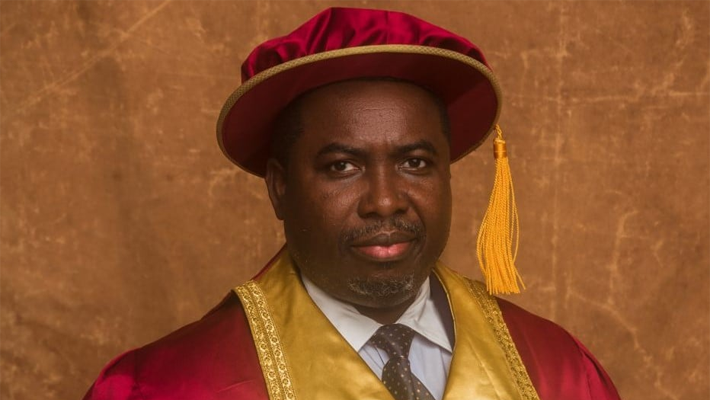
The Supreme Council for Shari’ah in Nigeria (SCSN) has issued a firm rebuttal against accusations that its demand for the removal and prosecution of the Chairman of the Independent National Electoral Commission (INEC), Prof. Joash Ojo Amupitan, is religiously motivated. In a detailed press statement, the council insisted its position is rooted solely in profound concerns over national unity, institutional credibility, and constitutional responsibility.
The clarification follows widespread public discourse and reaction to a communiqué released after the SCSN’s Annual Pre-Ramadan Conference and General Assembly, held on 28 January 2026. The Secretary-General of the Council, Nafiu Baba Ahmad, authored the statement, asserting that the council’s resolution had been “amplified out of context and grossly misconstrued” as a sectarian attack.
“The Council states unequivocally that its position is not motivated by religion or sectarian considerations, but by grave concerns relating to national cohesion, institutional integrity, constitutionalism, sovereignty, and the dangerous trajectory trailing the Chairman’s antecedents,” the statement declared.
Historical Precedent Cited
To dismantle the narrative of religious bias, the SCSN presented a historical analysis of Nigeria’s electoral leadership. The council noted that since independence, religion has never been a foundational basis for opposition to heads of electoral bodies. It highlighted that the majority of past chairmen of INEC and its predecessor bodies have been Christians, a fact accepted without national controversy.
Out of the thirteen individuals who have chaired Nigeria’s electoral commissions, only two—Prof. Attahiru Jega and the immediate past chairman, Prof. Mahmood Yakubu—were Muslims. The council argued that this historical record fundamentally invalidates claims that its current stance is driven by religious prejudice against Prof. Amupitan’s faith.
The Core Contention: A 2020 Legal Brief
The SCSN clarified that its central objection stems from a legal brief allegedly authored by Prof. Amupitan in 2020. The council described the document as containing “toxic, provocative and deeply prejudicial assertions” against Nigerian Muslims, Northern Nigeria, and the historic Sokoto Caliphate.
Of particular alarm to the council were reported claims within the brief of a so-called “Christian genocide” and attempts to directly link contemporary insecurity in Northern Nigeria to the 19th-century jihad of Sheikh Uthman bin Fodio. The SCSN labelled such assertions as historically inaccurate, revisionist, and profoundly destabilising.
“These claims are not only false but profoundly dangerous in a fragile, multi-religious federation such as Nigeria,” the statement emphasised.
The council further expressed grave concern that such allegations were reportedly presented to foreign actors, thereby portraying Nigeria as a theatre of religious extermination. This action, it claimed, invited unwarranted external pressure and interference based on false premises, potentially undermining national sovereignty.
Complex Insecurity and Accountability
Addressing the substance of the alleged brief’s claims, the SCSN countered that credible humanitarian and conflict data reveal the multifaceted nature of insecurity in Northern Nigeria. It stated that terrorism, banditry, deep-seated poverty, governance failures, and criminality are the primary drivers, affecting citizens indiscriminately.
The council stressed that both Muslims and Christians have been tragic victims of this violence, with Muslims constituting the majority of casualties in many of the worst-affected states. It argued that framing the crisis through a purely religious lens is not only incorrect but also exacerbates communal divisions.
A key point of contention for the SCSN is that Prof. Amupitan has, according to the council, neither denied authorship of the controversial document nor issued a public apology or retraction since the issues were raised. This perceived lack of accountability forms a central pillar of their grievance.
Diplomatic and Financial Repercussions
The statement also alluded to significant wider consequences. The SCSN claimed the Federal Government had been forced to expend diplomatic capital and financial resources to debunk these allegations on the international stage. This included, it reported, payments to foreign lobbyists to counter the damaging narrative propagated by the brief’s contents.
“In any responsible society, such consequences alone constitute sufficient grounds for resignation, removal and legal accountability,” the SCSN asserted, framing the issue as one of ministerial and national cost.
Reiteration of Constitutional Demand and Appeal for Unity
The Supreme Council for Shari’ah reiterated its call for established constitutional and legal processes to be followed in investigating and addressing the matter. It maintained that its position is strictly based on issues of character, professional conduct, and public credibility, which it deems essential for an office as critical as the INEC Chairman.
In a concluding appeal aimed at dousing tensions, the SCSN urged the Christian community in Nigeria not to be misled by divisive narratives. It reaffirmed its commitment to peaceful coexistence, mutual respect, and the pursuit of justice for all Nigerian citizens, irrespective of religious affiliation.
The council’s statement represents a significant effort to recalibrate the public narrative surrounding its controversial demand, shifting the focus from religious identity to questions of historical accuracy, professional judgement, and national integrity ahead of future electoral cycles.