By Israel Bulus — Elanza News, Kaduna
The Chairman of the Christian Association of Nigeria (CAN) for the 19 Northern states and the Federal Capital Territory, Rev. John Joseph Hayab, has warned that recent claims of security improvements across northern Nigeria remain premature while kidnappings and violent incidents continue.
Speaking in an exclusive interview at his official residence in Kaduna after receiving an Award of Excellence from the Northern Christian Youth Professionals (NCYP), Rev. Hayab said the persistence of abductions and lawlessness demonstrates that genuine, sustainable peace has not yet been achieved. He urged that awards and recognitions be treated as prompts for intensified action rather than reasons to celebrate.
“There is nothing to celebrate while innocent citizens remain in captivity and criminal elements continue to operate freely from the bush,” he said. Rev. Hayab called on Nigerians to pray that honours bestowed on individuals and officials translate into concerted efforts that will secure the release of abductees and encourage perpetrators to surrender.
Fragile gains, persistent threats
While Rev. Hayab acknowledged that certain localities have experienced relative calm, he cautioned that the overall security environment remains unstable. Recent attacks, he said, show the fragile nature of any gains and should be a wake-up call for authorities to convert short-term successes into enduring security.
“We have started showing that these challenges can be overcome. What we are seeing now is a test of our commitment. We must prove to the world that we are serious about peace,” he observed, urging the federal and state governments to scale up measures that would prevent renewed outbreaks of violence.
Faith, wisdom and practical precautions
Addressing anxious faithful and communities facing rising threats, the Northern CAN chairman stressed the need to combine spiritual conviction with pragmatic safety measures. He cautioned against what he described as “blind faith,” warning that overreliance on divine protection without appropriate precautions can amount to irresponsibility.
“God protects us, but that does not mean we should act foolishly. Wisdom requires that we take practical steps to secure our lives and expose evil,” he said, advising citizens to adopt sensible protective practices for themselves, their families and their communities.
The importance of public trust
Rev. Hayab also criticised initial denials or minimisations of security incidents by some authorities, describing such responses as detrimental to public confidence. He said misinformation or denial undermines trust in government institutions and hampers effective responses to insecurity.
“That erosion of trust is unfortunate,” he said, while also confirming that CAN had chosen to forgive those responsible for any past lapses in communication and to continue cooperating with authorities in the interest of public safety.
Support for victims and communities
Revealing that the association has been quietly providing assistance to affected families and communities, Rev. Hayab explained that spiritual, humanitarian and trauma-healing interventions are being offered discreetly. He said the secrecy is deliberate, intended to prevent inflated demands from criminal elements and to protect ongoing rescue or rehabilitation efforts.
“Our concern is to ensure that victims return safely, receive the needed care and are restored to their communities,” he said, adding that support is provided at multiple stages — for those still in captivity, for escapees and for communities affected by attacks — with emphasis on rehabilitation and reintegration.
Award rationale and interfaith work
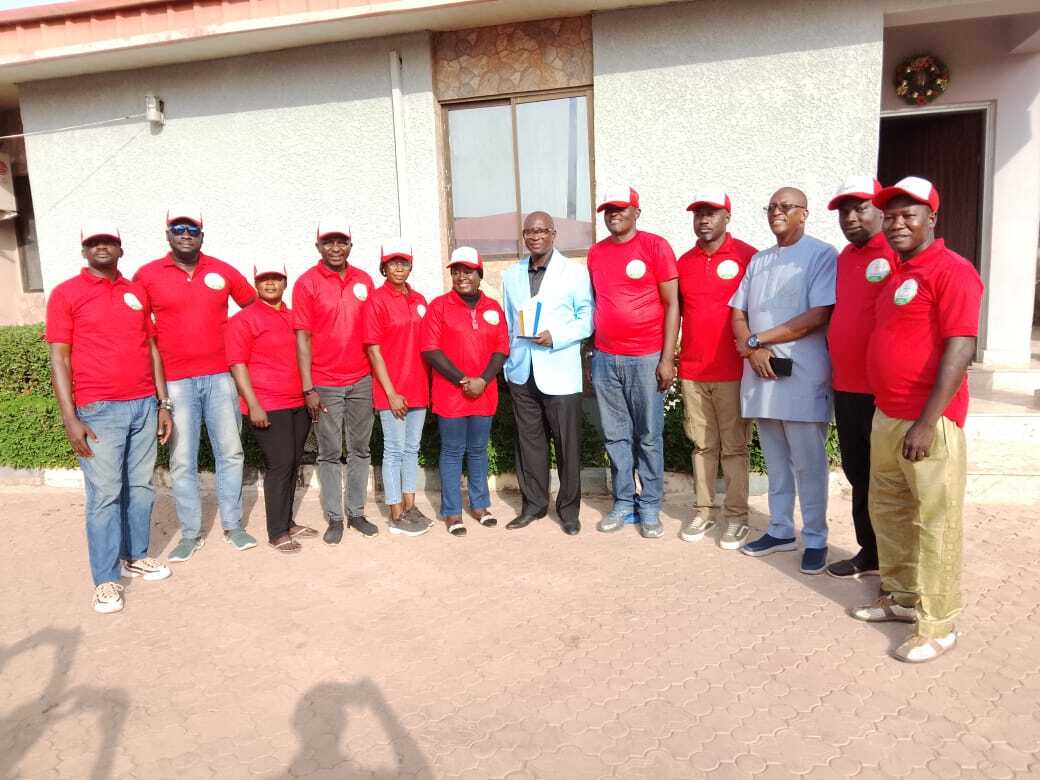
Isaac Abrack, national chairman of the Northern Christian Youth Professionals and a hostile-environment journalist, presented the award to Rev. Hayab in recognition of the cleric’s courage and consistency in promoting interfaith dialogue and sustainable development across Kaduna State and the wider North. Abrack praised Rev. Hayab’s leadership during periods of heightened interreligious tension, noting that his stance on dialogue and peaceful coexistence contributed to improved cooperation between Christian and Muslim communities.
“During difficult moments, he stood firm for dialogue, unity and peaceful coexistence,” Mr Abrack said, emphasising the positive developmental impacts of such collaboration.
Community-based forest guards urged
On the subject of rising insecurity and mass abductions of worshippers, Mr Abrack reiterated NCYP’s longstanding advocacy for the establishment of community-based forest guard systems. He said the idea — first promoted in 2022 and aligned with President Bola Ahmed Tinubu’s campaign outline on forest security — envisages recruiting, training and empowering residents of forest-bordering communities to patrol and protect their environments.
Referring to the recent attack on Kurmin Wali community, Abrack argued that a trained community guard presence could have prevented or significantly mitigated the assault. “If community members had been recruited and trained to guard their forests, this attack would either not have happened or would not have occurred on the scale we witnessed,” he said, describing attackers’ alleged freedom of movement from one church to another as evidence of security gaps.
Government response and rescue efforts
Abrack said President Tinubu had issued directives for the rescue of abducted worshippers and that the Kaduna State Government had advocated establishing a military unit in the affected locality. He noted that many rescue operations are intelligence-driven and therefore not always visible to the public, but expressed confidence that work to secure captives is ongoing.
Citing earlier interventions by Governor Uba Sani in comparable situations, Abrack expressed optimism about the likelihood of rescue. He urged continued prayer and cooperation from Christian communities as security forces pursue recovery operations and broader stabilisation measures.
Policy implications and recommendations
The comments by Rev. Hayab and NCYP underline several policy imperatives for federal and state authorities: strengthen community-based security architectures; improve intelligence-sharing and operational coordination; rebuild public trust through transparent communication; and provide comprehensive support to victims and affected communities.
Community-based forest guards — if properly regulated, trained and integrated with official security frameworks — could complement military and police operations, particularly in remote and forested border areas where armed groups frequently operate. However, experts caution that any such initiative require robust oversight to prevent misuse and to ensure adherence to human rights standards.
A call for durable solutions
As Northern CAN continues to press for decisive action, Rev. Hayab reiterated the association’s commitment to peacebuilding and reconciliation. He urged political and security leaders to view recent incidents not as isolated events but as tests of resolve that require sustained, collaborative responses.
“We must keep winning the trust of the people. Anything that undermines that trust should never happen again,” he said, stressing that the pursuit of peace must be relentless and accompanied by practical measures that guarantee safety for all citizens.
Conclusion
Rev. John Joseph Hayab’s intervention is a reminder that pronouncements of security success should be measured against the lived realities of communities, particularly those still suffering abductions and attacks. His call for a combination of prayer, prudence, community-driven protection and accountable governance frames a pragmatic agenda for stabilising northern Nigeria and restoring public confidence in the security architecture.
For now, Northern CAN insists, there is no cause for celebration until every captive is freed and the conditions that allow criminality to thrive are decisively addressed.