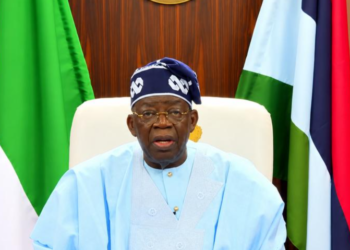
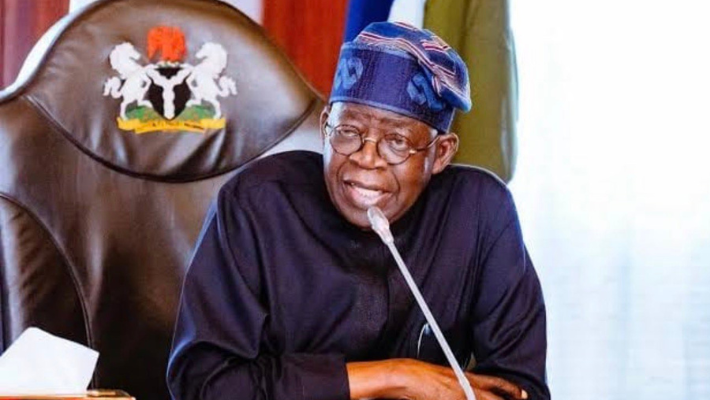
President Bola Tinubu has pledged that the All Progressives Congress (APC) will conduct issue-based, transparent campaigns ahead of the 2027 elections, while warning political actors against violence, hate speech, misinformation, and the use of artificial intelligence-generated content.
The President made the commitment on Tuesday in Abuja during the signing of the national peace accord alongside political parties and candidates. Represented by the Secretary to the Government of the Federation, George Akume, Tinubu urged all stakeholders to embrace the accord, stressing that elections must not become a “do-or-die affair”.
“Let us remember that elections are not a do-or-die affair. We are partners in the project of nation-building. Win or lose, our country, Nigeria, must be the ultimate winner,” he said.
The President called on political actors to reject ethnic and religious sentiments, urging campaigns to focus instead on competing ideas, policies, and development programmes. “Let us campaign on superior ideas. Let us debate issues and promote the best policies to expand opportunities for our people,” he said, adding that such an approach would accelerate Nigeria’s transformation from a developing nation toward a first-world country.
Commending the National Peace Committee for its sustained efforts since 2014, Tinubu specifically recognised former head of state General Abdulsalami Abubakar (rtd), the Sultan of Sokoto, Muhammad Sa’ad Abubakar III, and Bishop Matthew Hassan Kukah of Sokoto Diocese.
The President noted significant improvements in Nigeria’s electoral process since 1999, attributing progress to technological innovations introduced by the Independent National Electoral Commission. He cited Permanent Voter Cards and the Bimodal Voter Accreditation System as measures that have curbed ballot stuffing, snatching, and other malpractices.
“These improvements have restored power to the voters, who are now sure that their vote will count,” Tinubu said, adding that politicians had become more accountable as a result.
He highlighted three off-cycle elections conducted in Anambra, Ekiti, and Osun between October 2025 and August 2026, noting that different political parties emerged victorious—a testament to the competitiveness of Nigeria’s electoral process. Local and international observers, he said, described the polls as free, credible, and transparent.
Describing the peace accord as a solemn commitment by political leaders to place national interest above partisan ambitions, Tinubu called on Nigerians, civil society organisations, foreign partners, and the media to join in deepening the nation’s democratic culture.
“Democracy goes beyond periodic elections,” he said, urging citizens to participate actively in national affairs and promote good governance while building trust in public institutions.
In a stern warning, the President cautioned against using social media to spread incitement, misinformation, hate speech, or manipulated AI-generated materials, urging political parties and candidates to ensure their campaigns strengthened rather than undermined Nigeria’s social fabric.
“The ultimate objective of the electoral process must remain the emergence of a peaceful, united, and prosperous Nigeria,” Tinubu concluded.