

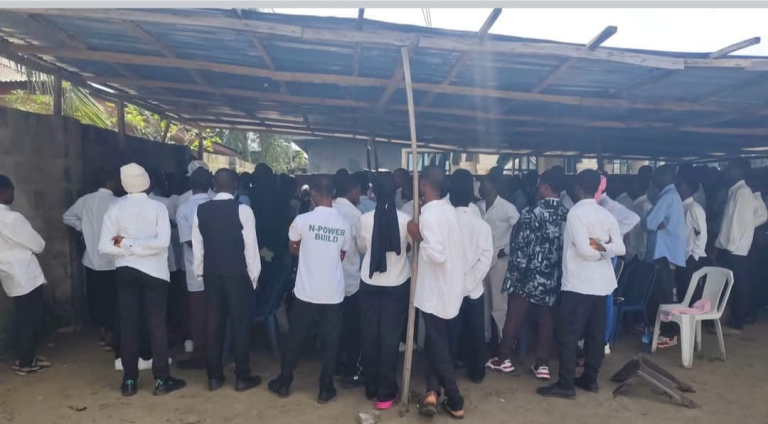
The Nigeria Security and Civil Defence Corps (NSCDC), Badagry Area Command, has dismantled an alleged fake university operating from a rented three-bedroom flat in Ilado, Olorunda Local Council Development Area, Lagos State, rescuing 106 youths and arresting the proprietor.
The operation, launched in the early hours of Monday following days of intelligence gathering and covert surveillance, exposed a fraudulent recruitment scheme that lured young people from across Nigeria and neighbouring West African nations with false promises of foreign university admission.
Badagry Area Commander, Chief Superintendent Gbenga Ekunola, confirmed that the suspects, aged between 19 and 24, were taken into protective custody for profiling. He stated that the command acted on credible intelligence, monitored the premises for days, and has since detained the proprietor, who is assisting with inquiries.
Investigations revealed that the purported institution lacked any official name, signboard, or registered campus, operating solely online as a distance-learning centre affiliated with a fictitious overseas institution. Victims from Kogi, Oyo, and several northern states, alongside foreign nationals from Niger, Cameroon, and Togo, were allegedly recruited via the internet.
Preliminary findings indicate that participants paid between N200,000 and N1.5 million, while foreign enrollees paid between $400 and $500. The scheme functioned as a chain-marketing or Ponzi-style operation, requiring victims to recruit additional students in exchange for commissions. Some youths were also allegedly coerced into promoting unidentified products online for sales percentages.
Mr Ekunola expressed concern that many parents remained unaware of their children’s activities, with one parent reportedly believing their child had travelled to Badagry solely to learn a trade. The NSCDC has initiated family contact protocols to facilitate reunification and assured that any culpable individuals will face prosecution once investigations conclude.
The incident has heightened concerns over the proliferation of fraudulent online admission networks preying on vulnerable youths seeking international educational opportunities. Authorities are expanding their probe to identify possible collaborators and determine if similar operations exist elsewhere in the country.