
President Bola Tinubu has declared that Nigeria’s economy has turned the corner, revealing that state governors no longer resort to bank loans to pay workers’ salaries—a stark contrast to the situation his administration inherited.
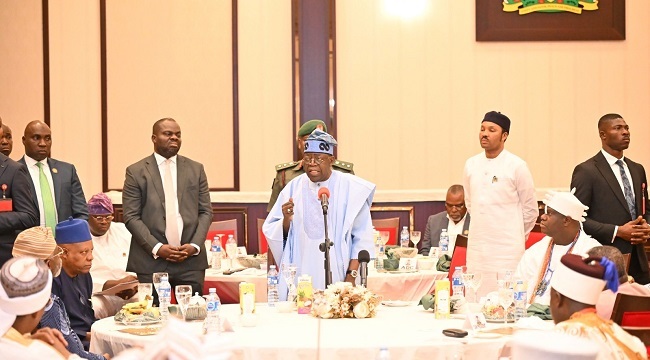
The President made this assertion on Monday while hosting religious and traditional leaders for an interfaith breaking of the fast at the Presidential Villa in Abuja. According to a statement by his spokesperson, Bayo Onanuga, Mr Tinubu used the occasion to offer a progress report on the nation’s economic trajectory, expressing gratitude for the opportunity to serve and pledging continued fidelity to his duties.
“I am just grateful, one person among millions, that I have been given the opportunity to serve. And all I can do is promise that I will continue to be faithful in discharging my duty. I can report that the economy has turned the corner,” the President told his guests.
“It is getting better. Pensioners are getting their relief gradually. We have saved Nigeria from bankruptcy. It was very daunting and challenging when we took over. But today I can say with pride and joy that we have survived. No governor in this country is running around the banks to borrow money to pay the salaries of their workers.”
Economic Recovery and Fiscal Responsibility
The President’s remarks come at a time when the administration continues to implement far-reaching economic reforms, including the removal of fuel subsidies and unification of exchange rates—policies that initially triggered inflationary pressures but which the government maintains were necessary to place the nation on a sound fiscal footing.
Mr Tinubu’s assertion that states are no longer borrowing for recurrent expenditure suggests growing fiscal stability among sub-national governments, many of which had previously struggled to meet monthly wage bills due to dwindling allocations and mounting debt burdens. The development aligns with the administration’s broader objective of ensuring that borrowings, where necessary, are directed toward capital projects that stimulate economic growth rather than consumptive spending.
Financial analysts note that the Federal Government’s recent efforts to increase revenue allocations to states, coupled with improvements in internally generated revenues across various regions, may have contributed to easing the liquidity pressures that previously forced governors into frequent borrowing for salary payments.
Security Challenges and National Resilience
Beyond economic matters, the President addressed the nation’s security challenges, acknowledging the desperate tactics of terrorist elements while reassuring Nigerians of the government’s unwavering resolve to protect the country’s sovereignty.
“Yes, we are challenged; the terrorists are very desperate now because they are getting barraged and defeated, they leave trails of blood in their wake. But I assure you of one thing: Nigeria will never surrender. We are not discouraged. We are going to win and win well,” he declared.
The President’s confidence reflects the military’s intensified operations against non-state actors across various theatres, including the North-East, North-West, and parts of the North-Central regions. Security agencies have recorded significant successes in recent months, neutralising several high-profile commanders and degrading the operational capabilities of terrorist groups.
Mr Tinubu emphasised that Nigeria would not allow agents of instability to undermine its peace, unity, and sovereignty, while acknowledging the critical roles religious and traditional leaders play in promoting stability and moral guidance within communities. His remarks underscored the administration’s recognition that lasting security requires not only kinetic military operations but also the engagement of community leaders in fostering social cohesion and countering extremist narratives.
Investment in Critical Sectors
Looking beyond immediate challenges, the President reaffirmed his commitment to investing in critical sectors such as agriculture and education to leave a lasting legacy for future generations. He urged Nigerians not to lose hope, assuring them that his administration remains focused on building a safer, more secure, and prosperous nation for all.
The emphasis on agriculture aligns with the government’s strategy to enhance food security, reduce import dependence, and create employment opportunities for the nation’s growing youth population. Similarly, investments in education are seen as crucial for developing the human capital necessary to drive long-term economic transformation.
Religious and Traditional Leaders Express Support
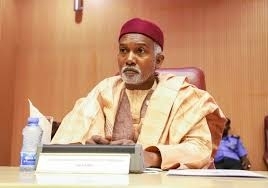
In his remarks, the Etsu Nupe, Yahaya Abubakar, expressed gratitude to the President for hosting leaders of the two major religions at the breaking of fast, which he said symbolises unity. He prayed for God’s guidance, protection, and for peaceful coexistence in the country, as well as for the President’s success.
The Etsu Nupe represented the President of the Nigeria Supreme Council for Islamic Affairs (NSCIA) and the Sultan of Sokoto, Sa’ad Abubakar, at the event, underscoring the importance of the occasion in fostering interfaith harmony.
The Christian Association of Nigeria (CAN), represented by Archbishop Daniel Okoh and Dr Stephen Baba-Panya, President of The Evangelical Church Winning All (ECWA), assured President Tinubu of the church’s support for his administration in its determination to transform the economy and strengthen the country’s security architecture.
The presence of traditional rulers and religious leaders from all six geopolitical zones of Nigeria at the event highlighted the broad-based engagement the administration is fostering with critical stakeholders across the country.
Looking Ahead
As the President’s first term progresses, his administration faces the dual challenge of sustaining economic reforms while managing their short-term social impacts. The claim that states are no longer borrowing for salaries, if substantiated by fiscal data, would represent a significant departure from the recurring cycles of bailouts and salary bailouts that characterised previous administrations.
Economic observers will be watching closely to see whether this improved fiscal discipline at the sub-national level translates into enhanced service delivery and infrastructure development that positively impacts ordinary Nigerians. The test of economic recovery, ultimately, lies not in aggregate statistics but in the lived experiences of citizens across the country.
For now, the President’s message is one of resilience and cautious optimism—a nation that has weathered the storm and is now charting a course toward sustainable growth and development. Whether this trajectory will be maintained depends on continued policy consistency, effective implementation, and the cooperation of all stakeholders in the Nigerian project.