
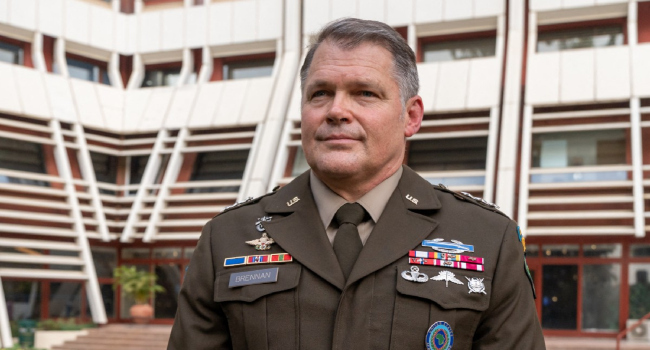
The United States military has intensified its operations in Nigeria, launching targeted strikes against militants linked to the Islamic State on Christmas Day. This strategic move, led by Lieutenant General John Brennan of the US Africa Command, highlights a significant shift in American military involvement in the region, as Washington seeks to combat the rising threat of jihadist violence that has plagued Nigeria and its neighbouring countries.
Increased Military Support and Intelligence Sharing
Lieutenant General John Brennan, who has served as the deputy commander of the United States Africa Command since April 2024, revealed the details of these operations in an exclusive interview with AFP. The US military’s efforts include increased material deliveries and enhanced intelligence sharing with Nigerian forces, reflecting a broader commitment to collaborate with African militaries in countering Islamic State-affiliated groups.
Brennan stated, “The targets were areas that all terrorist groups from the Sahel use as a staging area. The most recent information we received from the Nigerians indicated it was ISIS Sahel related.” This clarification underscores a growing concern among analysts regarding the expansion of the Islamic State Sahel Province (ISSP) from the Sahel region into coastal West African nations, including Nigeria.
The Christmas Offensive
On Christmas Day, US forces conducted airstrikes in northwestern Nigeria, targeting known Islamic State positions. This military action was carried out at the request of Nigerian authorities, with the Pentagon confirming that multiple ISIS terrorists were killed during the operation. The strikes were described by President Donald Trump as “powerful and deadly,” reflecting a more aggressive stance from the US in its fight against terrorism in the region.
In a post on his Truth Social platform, Trump warned the Islamic State to cease its violent actions against Christians, stating, “I have previously warned these Terrorists that if they did not stop the slaughtering of Christians, there would be hell to pay, and tonight, there was.” His remarks were accompanied by a call for blessings on the US military and a veiled message to militants, emphasising the serious consequences of their actions.
Reaction and Implications
While the strikes were celebrated by some as a decisive action against terrorism, they also raised concerns about potential civilian casualties. The US Africa Command sought to address these worries, reiterating that the operation was guided by intelligence and conducted in coordination with Nigerian forces.
As the US military ramps up its presence in Nigeria, the implications for regional stability and security are significant. The ongoing violence in Nigeria, particularly against Christians, has drawn international attention and criticism. Trump’s earlier remarks, describing the situation as an “existential threat” to Christians in Nigeria, highlight the urgency with which the US perceives the need for action.
The strikes on Christmas Day mark a pivotal moment in US-Nigeria relations and reflect a broader strategy to address the escalating threat posed by jihadist groups in West Africa. As the Pentagon maintains open lines of communication with military leaders in the Sahel countries of Burkina Faso, Niger, and Mali, it is clear that the US is committed to a sustained military presence aimed at dismantling the networks of violence that threaten regional stability.
Looking Ahead
The challenges ahead remain formidable, as the Islamic State and its affiliates continue to exploit the instability in the Sahel and coastal West Africa. The collaboration between the US and Nigerian forces is expected to deepen, with a focus on intelligence-led operations designed to disrupt the activities of terrorist groups.
As the situation evolves, the international community will be watching closely to assess the impact of these military operations on the ground. The Christmas Day strikes serve as a reminder of the complexities of combating terrorism in a region grappling with socio-political unrest and humanitarian crises.
In conclusion, the US military’s Christmas Day offensive against ISIS militants in Nigeria represents a critical juncture in the fight against terrorism in West Africa. With heightened collaboration and a clear commitment to supporting Nigerian forces, the hope is that these actions will contribute to a more secure and stable future for the region. The path forward will require continued vigilance, cooperation, and a comprehensive approach to addressing the underlying issues that fuel the cycle of violence.
### Conclusion
The recent military actions underscore the urgency of addressing the threats posed by Islamic State-linked groups in Nigeria and its surroundings. As the US and its allies work to dismantle these networks, the long-term implications for peace and stability in West Africa remain to be seen.