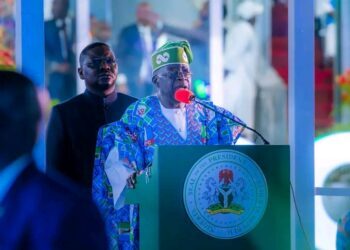

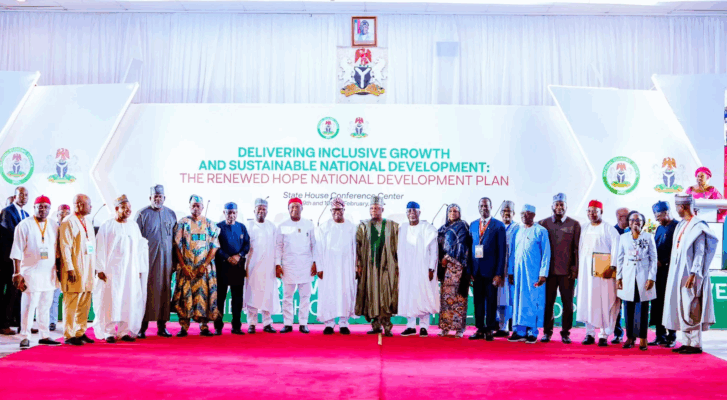
In a bold declaration, President Bola Tinubu has assured Nigerians that his administration’s economic policies will yield tangible benefits across every state and community. Speaking at the closing of the second edition of the National Economic Council (NEC) Conference in Abuja, Tinubu, represented by Senate President Godswill Akpabio, emphasised the importance of the Renewed Hope Agenda in transforming the nation’s economic landscape.
A Commitment to Visible Change
During his address, President Tinubu urged NEC members—including governors, key government officials, and relevant stakeholders—to recommit to the agenda. He stated, “The decisions we make here must translate into visible improvements in the daily lives of all Nigerians— in jobs created, businesses supported, roads constructed, schools strengthened, healthcare improved, and opportunities expanded.”
The President reaffirmed his administration’s dedication to supporting sub-national governments and deepening institutional reforms, ensuring that the dividends of their policies resonate throughout the nation. “Our administration remains resolute,” he asserted, highlighting a collective commitment to building a resilient economy and a more inclusive society.
Leadership and Collaboration
Commending Vice-President Kashim Shettima for his steady leadership, Tinubu expressed gratitude for the clarity and focus he brought to the conference discussions. “As we conclude this second edition of the NEC Conference, I am deeply encouraged by the seriousness of engagement and the strength of the consensus we have built,” he remarked.
The President acknowledged the contributions of governors, ministers, development partners, and private sector stakeholders, thanking them for their frank discussions and unwavering commitment to Nigeria’s progress.
A Path to Sustainable Prosperity
The conference underscored that sustainable prosperity hinges on collaboration between the federal and state governments, as well as between public and private sectors. Tinubu noted that the NEC members reaffirmed their commitment to key areas such as fiscal responsibility, economic diversification, infrastructure development, food security, social protection, and human capital development.
In a crucial highlight, he pointed out that the government has enhanced mechanisms for coordination and accountability, which are now yielding improved socio-economic benefits for the populace.
Focus on Economic Diversification
One of the key pillars of Tinubu’s Renewed Hope Agenda is economic diversification. Recognising Nigeria’s over-reliance on oil, the administration is actively exploring avenues to bolster sectors such as agriculture, technology, and manufacturing. This approach aims to create a robust economy capable of withstanding global market fluctuations.
During the conference, discussions centred on innovative strategies to stimulate growth across various sectors. By fostering an environment conducive to entrepreneurship and investment, the government aims to generate employment opportunities and stimulate local economies.
Infrastructure Development as a Priority
Infrastructure development remains a critical focus for the Tinubu administration. The President reiterated the need for extensive investment in roads, healthcare facilities, and educational institutions. Improved infrastructure not only promotes economic growth but also enhances the quality of life for citizens.
Tinubu’s commitment to infrastructure is evident in ongoing projects aimed at modernising transport networks and upgrading public services. By prioritising these developments, the administration seeks to lay a solid foundation for long-term economic stability.
Enhancing Human Capital Development
In line with the Renewed Hope Agenda, the government is placing significant emphasis on human capital development. Education and healthcare are pivotal areas that require urgent attention. The President highlighted the necessity of strengthening educational institutions to equip the youth with the skills needed in a rapidly evolving job market.
Additionally, healthcare improvements are essential for fostering a healthier workforce. The administration is committed to enhancing access to quality healthcare services, ensuring that Nigerians can lead productive lives.
Promoting Food Security
Food security is another critical aspect of the government’s agenda. The Tinubu administration is implementing policies aimed at boosting agricultural production and ensuring that all Nigerians have access to sufficient and nutritious food. By supporting farmers and investing in agricultural technology, the government aims to reduce dependency on food imports and promote self-sufficiency.
### A Call for Unity and Responsibility
Tinubu’s address also served as a call for unity and collective responsibility among all stakeholders in Nigeria’s development journey. He stated, “Together, we will build a more resilient economy, a more inclusive society, and a stronger federation.” This message resonates with the ongoing efforts to foster collaboration among various sectors and levels of government.
Conclusion: A Vision for the Future
As Nigeria navigates its economic challenges, President Tinubu’s commitment to the Renewed Hope Agenda signals a new era of governance focused on delivering real benefits to the populace. By prioritising collaboration, infrastructure development, human capital, and food security, the administration aims to create a prosperous future for all Nigerians.
In conclusion, the assurance of economic dividends from the Tinubu administration is not merely rhetoric; it is a call to action. As stakeholders recommit to this vision, the hope for a better Nigeria becomes increasingly attainable. With focused efforts and genuine collaboration, the nation stands poised to realise its full potential, ensuring that every Nigerian can indeed enjoy the fruits of these economic policies.