By Nahum Sule, Jalingo
Amid rising insecurity across the country, Taraba State University’s Department of Peace Studies and Conflict Resolution, in partnership with the State Bureau for Peace and Conflict Management, on Thursday released comprehensive proposals aimed at confronting Nigeria’s worsening security situation.
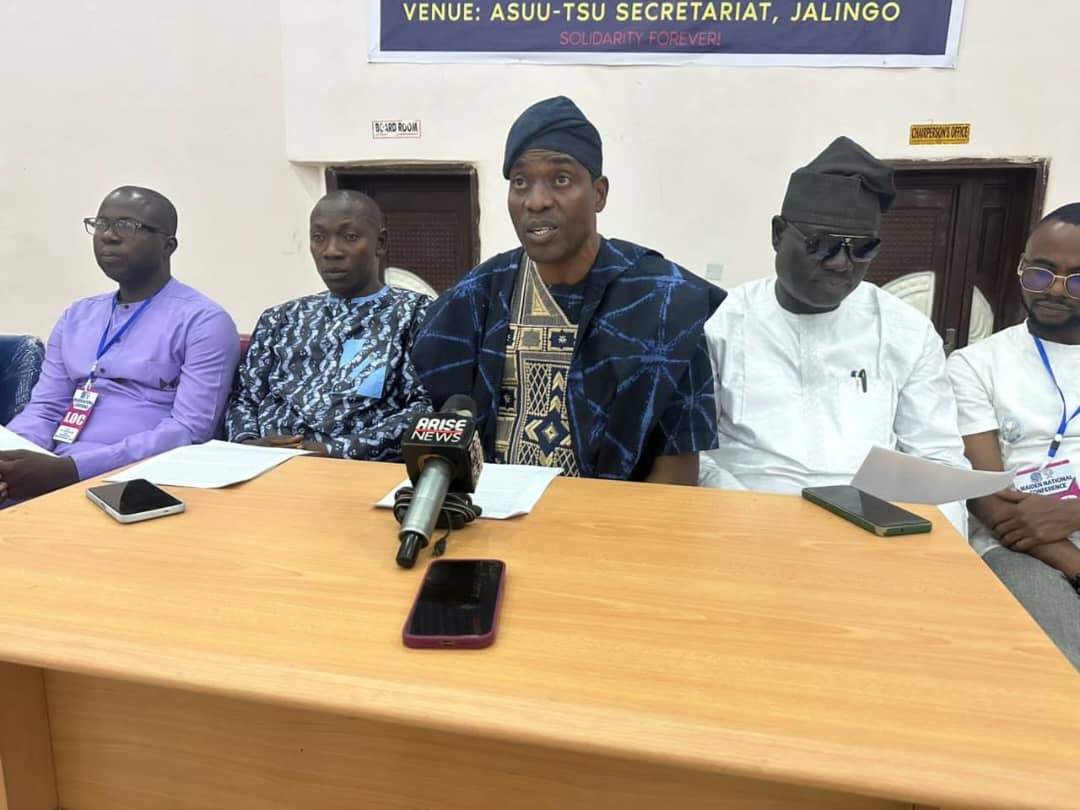
The recommendations were detailed in a communiqué issued at the close of the institution’s maiden National Conference on Violent Conflict and Peacebuilding. The document was presented by the chairman of the drafting committee, Dr. Buhari Miapyen.
The three-day conference brought together scholars, traditional leaders, security operatives, civil society groups, youth and women’s organizations, religious leaders and community delegates.
Dr. Amos Jev, Head of the Department of Peace Studies and Conflict Resolution, described the gathering as “a genuine effort to find a practical roadmap for a peaceful Taraba and a more secure Nigeria,” stressing that the initiative was designed to address widening national security gaps.
According to the communiqué, meaningful progress in peacebuilding will remain elusive without the active participation of all segments of society. It emphasized the need to give greater voice to women, youth, people with disabilities and rural communities in peace efforts.
The conference identified competition over land, water and grazing routes—worsened by climate change and population growth—as major drivers of recurring conflicts. It also cited ethnic mistrust, political interference, weak governance structures, unemployment, poverty and slow justice processes as key underlying causes of violence.
Lead presenter, Prof. John Tsuaa of Benue State University, cautioned that unresolved grievances continue to spark instability nationwide. He stressed that long-standing injustices often make conflict “almost unavoidable,” and called for stronger accountability mechanisms and more sensitive governance.
Participants raised alarm over the increasing sophistication of banditry, kidnapping and road attacks, warning that misinformation and inflammatory content on social media are intensifying public fear and widening social divides.
Civil society advocate Dr. Joseph Gimba noted that “fake news has become a tool of conflict, especially during political periods,” urging the media to promote verified information to counter harmful narratives.
The communiqué also highlighted the severe humanitarian toll of ongoing conflicts, including mass displacement, destruction of farms, disruption of schools and health services, and significant damage to agriculture—the state’s economic backbone. It warned that social trust had deteriorated sharply, deepening inter-community suspicion.
While acknowledging the state government’s ongoing peace initiatives, the communiqué commended the Bureau for Peace and Conflict Management for leading mediation and early warning efforts. It called for stronger coordination, particularly in high-risk areas such as Takum and Karim Lamido.
The conference advocated a hybrid security model combining formal security agencies with community-based structures to improve trust, coordination and swift response. It also recommended better intelligence gathering, strengthened community policing and expanded investments in rural security infrastructure.
Other participants—among them Dr. Edward Lenshie, Dr. Gabriel and Sarah John—emphasized the need for climate resilience, sustainable land and water management, enhanced peace education, justice sector reforms to curb impunity and cultural exchange programmes to rebuild ethnic trust. They also urged media practitioners to uphold ethical standards and fight misinformation.
The communiqué called on governments at all levels, traditional rulers, security agencies, civil society groups and development partners to deepen cooperation. “Peace is a collective duty,” it affirmed. “Only through shared commitment, transparency and inclusion can Taraba and Nigeria overcome cycles of violence and achieve lasting stability.”