

By Tambaya Julius, Abuja
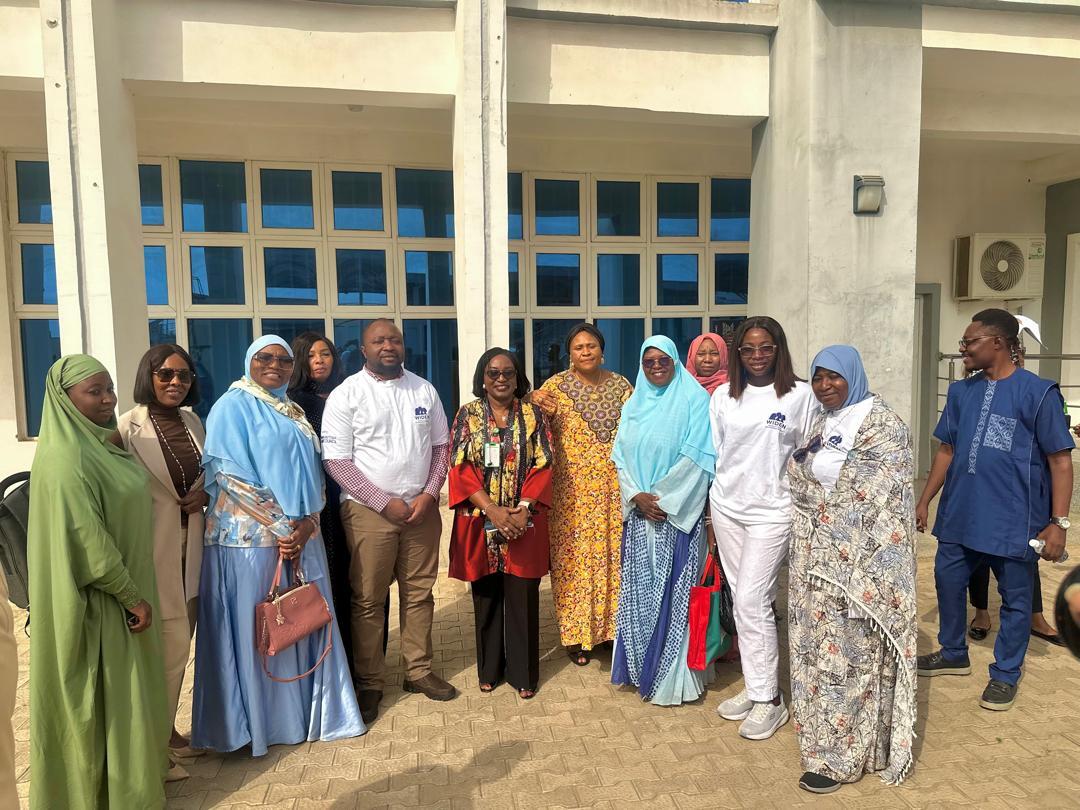
Stakeholders in Nigeria’s education and technology sectors have intensified calls for the nationwide scaling of digital empowerment initiatives for women and girls, as the 3rd WIDEN Workshop on AI for Sustainable Development held at the National Open University of Nigeria (NOUN), Jabi, Abuja.
The workshop, part of the WIDEN AI for Sustainable Development Project funded by the British Council, brought together NOUN, Nasarawa State University, Keffi (NSUK), and Brunel University London in a cross-border collaboration aimed at advancing inclusive digital skills for Nigerian women.
Presenting the project findings, the Principal Investigator, Nigeria, Prof. Ganiyat Adejoke Adesina-Uthman, said data from nearly 1,000 respondents nationwide showed that over 71 percent of surveyed women were highly likely to pursue careers in technology, with close to 60 percent under the age of 24.
Despite the enthusiasm, she noted that more than half of respondents identified as beginners in digital skills, revealing a significant capacity gap.
The data also showed that 13.7 percent of participants live with disabilities, highlighting the urgency of inclusive digital design, while family responsibilities and limited access to opportunities remain major barriers.
Describing the findings as a “national asset,” Adesina-Uthman urged the National Universities Commission (NUC) and the Federal Ministry of Education to integrate the WIDEN mentorship-driven digital literacy model into tertiary curricula and adopt a national framework to support women in technology.
A key highlight of the event was the presentation of Nura-X, described as the world’s first Muslim female robot, developed in Keffi by Co-Investigator Prof. Rashidah Funke Olanrewaju.
The robot was recently inducted into the Nigeria Computer Society, symbolising culturally grounded technological innovation emerging from Nigeria.
In separate remarks, the Vice-Chancellor of Nasarawa State University Keffi, Prof. Sa’adatu Hassan Liman, called for the creation of a dedicated arm of WIDEN for young girls across all tiers of education.
Represented by Prof. Ngozi Nwosu, she said the urgency of preparing girls for the digital future cannot be overstated, particularly as the world navigates the Fourth Industrial Revolution (4IR), also known as Industry 4.0.
“The world is in the Fourth Industrial Revolution, powered by digitisation. Since digitisation is the bedrock of this revolution, we must explore and expand more tools towards sustainable development,” she said.
Prof. Liman stressed that sustainable development depends largely on how effectively women and girls are positioned within the fast-evolving digital ecosystem shaped by automation and artificial intelligence.
“There is the need to create more awareness of the existence of this network. If need be, create an arm of it for young girls in all tiers of education. This becomes more necessary with the rise of automation and artificial intelligence,” she stated.
She noted that automation, robotics, coding and AI are redefining global labour markets, making early exposure to digital education critical for girls to compete and lead in emerging technology fields.
“There is a dire need for a shift so that the young ones are equipped with the necessary skills and technical know-how,” she added, while also appealing to the international community for increased grants and scholarships targeted at women in technology.
“The international community should give more grants to more ladies in technology. More scholarships should be given to ladies who want to delve into these areas where resources are not readily available,” she urged.
Delivering remarks on behalf of the Director of University Education at the Federal Ministry of Education, Mrs. Rakiya Ilyasu, Amina Yazid Ibrahim said the digital empowerment network was already demonstrating tangible impact.
“When women gain digital tools, they boost household income, community resilience and national growth,” she said, emphasising the need for public-private partnerships, local content in indigenous languages and safe learning spaces that address gender-specific barriers.
In his welcome address, the Vice-Chancellor of NOUN reaffirmed the institution’s commitment to open and accessible education, pledging readiness to partner with regulators to scale the WIDEN model nationally.
Also speaking, Prof. David Botchie, Principal Investigator, United Kingdom, commended the collaboration and described the research underpinning the digital solutions as comprehensive and impactful.
In a goodwill message, Class Representative Morayo Nesochi Oladotun-Abdul, an MBBS student of Nile University of Nigeria, thanked the organisers for creating a supportive learning environment that built participants’ confidence and strengthened networks among women in tech.
The workshop featured digital solution presentations by Techlade and brought together academics, researchers, innovators and development partners to explore how artificial intelligence can drive inclusive and sustainable growth.
Participants agreed that early investment in girls’ digital education and structured national scaling of mentorship-driven programmes such as WIDEN are critical to ensuring that Nigerian women not only participate in, but lead, the country’s AI-driven future.