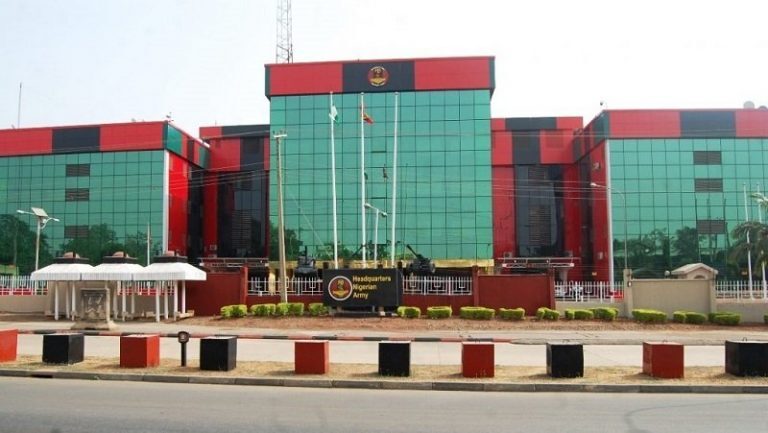
(Abuja, Nigeria) – In a landmark announcement with profound implications for national security, the Defence Headquarters (DHQ) has officially confirmed that a recent internal investigation uncovered a plot by serving military officers to overthrow the government. Those indicted will now face a military judicial trial.
The confirmation, delivered on Monday by the Director of Defence Information, Major General Samaila Uba, marks a decisive conclusion to the probe that began in October 2025 with the arrest of sixteen officers for acts of indiscipline and breaches of service regulations.
“The comprehensive investigation process, conducted in accordance with established military procedures, has carefully examined all circumstances,” stated Major General Uba. “The findings have identified a number of the officers with allegations of plotting to overthrow the government, which is inconsistent with the ethics, values and professional standards required of members of the Armed Forces of Nigeria (AFN).”
From Disciplinary Matter to Grave Security Breach
The DHQ’s statement signifies a critical shift in the narrative surrounding the officers’ detention. Initially described in October by the then-Director of Defence Information, Brigadier General Tukur Gusau, as a “routine internal process” concerning discipline, the matter has now been escalated to a grave issue of national security.
The investigation was triggered following reports by Sahara Reporters on 18 October 2025, which alleged that officers ranging from Captain to Brigadier General had been arrested by the Defence Intelligence Agency for holding clandestine meetings aimed at toppling the government. The publication had also controversially linked the cancellation of that year’s Independence Day parade to the alleged plot—an assertion the military had vehemently denied at the time.
Brigadier General Gusau’s earlier statement had characterised the Sahara Reporters story as an attempt to “create tension and distrust,” insisting the process was internal. The latest update, however, validates the core of the initial allegations while framing the military’s response as a diligent, procedure-driven exercise.
The Path to Military Justice
With the investigation concluded and the report forwarded to “appropriate superior authority,” the process now moves to the judicial phase. Major General Uba confirmed that the indicted officers would be formally arraigned before relevant military judicial panels.
“Those with cases to answer will be formally arraigned before appropriate military judicial panels to face trial in accordance with the Armed Forces Act and other applicable service regulations,” Uba stated. “This ensures accountability while upholding the principles of fairness and due process.”
This trial will be conducted as a court-martial, a legal proceeding unique to military law designed to adjudicate breaches of the Armed Forces Act. The process is expected to be conducted in camera, given its sensitive nature and potential implications for operational security, though verdicts are typically made public.
Reaffirming Discipline and Constitutional Order
Throughout the statement, the DHQ meticulously positioned its actions as a necessary defence of institutional integrity and constitutional democracy. Major General Uba stressed that the measures were “purely disciplinary” and part of “ongoing institutional mechanisms to preserve order, discipline, and operational effectiveness within the ranks.”
He further offered a robust reaffirmation of the military’s subordination to civil authority: “The Armed Forces remain resolute in maintaining the highest standards of professionalism, loyalty, and respect for constitutional authority.”
This language is widely interpreted as a direct message intended to reassure the Nigerian public and the international community of the military’s stability and unwavering commitment to democratic norms amid regional instability where coups have resurfaced.
Analysis: A Test for Military Justice and Civil-Military Relations
Security analysts view this episode as a significant test for Nigeria’s military justice system and its civil-military relations framework.
“The transparent confirmation of a plot, followed by the promise of a fair trial, is a double-edged sword,” commented Dr. Chidi Nwafor, a senior fellow at the Abuja-based Institute for Security Studies. “On one hand, it demonstrates the system’s capacity for self-purging and its rejection of unconstitutional behaviour. On the other, it exposes a dangerous fracture within a critical institution. The fairness and perceived justice of the upcoming trials will be closely scrutinised both domestically and internationally.”
The incident also raises pressing questions about the socio-political undercurrents that may have fostered such discontent within the officer corps, prompting calls for deeper analysis beyond the disciplinary proceedings.
A Firm Stance in a Volatile Region
Nigeria’s firm handling of this alleged coup plot stands in stark contrast to the political upheaval witnessed in several neighbouring West African nations over recent years. By moving swiftly from arrest to investigation and now to promised trial, the Nigerian military high command and the federal government are sending a unambiguous signal of zero tolerance for any action that threatens the constitutional order.
The coming weeks will be crucial as the military judicial panels convene. Their conduct and conclusions will not only determine the fate of the accused officers but will also heavily influence perceptions of the Nigerian military’s discipline, unity, and ultimate loyalty to the democratic process.