
In a bold move to diversify its economy, President Bola Tinubu has officially launched Nigeria’s National Halal Economy Strategy. This strategic initiative aims to tap into the lucrative $7.7 trillion global halal market, providing a significant boost to the nation’s economic landscape.
### A New Era for Nigeria’s Economy
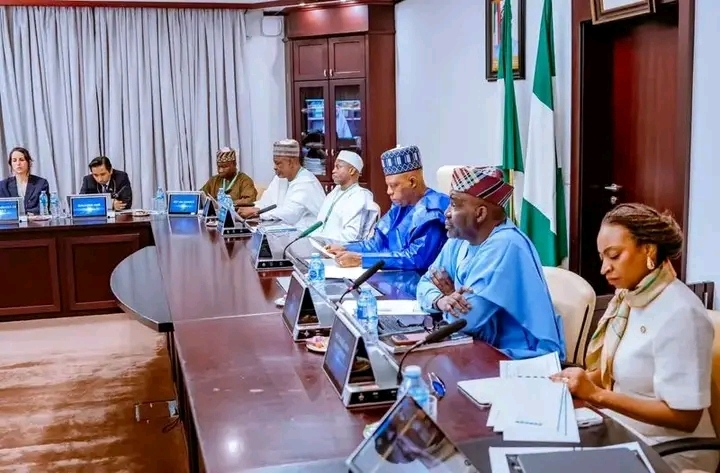
During the inauguration ceremony, held on Thursday, President Tinubu underscored the importance of disciplined and measurable action to ensure the success of this ambitious strategy. He was represented by Vice-President Kashim Shettima, who echoed the president’s sentiments regarding the opportunity this presents for creating jobs and fostering shared prosperity across the nation.
The president described the unveiling of the strategy as a pivotal moment in Nigeria’s economic trajectory, signalling the country’s readiness to position itself among leading nations in the global halal economy. He stated, “This initiative is not just a policy document; it is a declaration of our commitment to meet global standards while leveraging Nigerian capabilities.”
### Economic Impact and Job Creation
The National Halal Economy Strategy is projected to add an estimated $1.5 billion to Nigeria’s Gross Domestic Product (GDP) by the year 2027. The president emphasised the strategy’s potential to unlock over $12 billion in cumulative economic value. This ambitious plan aims to strengthen food security, enhance industrial capacity, and create numerous opportunities for small and medium-sized enterprises across Nigeria.
Key components of the strategy include the promotion of halal-compliant food exports, the development of pharmaceutical and cosmetic value chains, and the establishment of Nigeria as a halal-friendly tourism destination. By 2030, the strategy aims to mobilise ethical finance at scale, ensuring long-term sustainability and growth.
### A Broader Understanding of Halal
Addressing concerns surrounding the religious connotations of halal, President Tinubu clarified that the global halal economy has evolved beyond traditional interpretations. “It is no longer defined solely by faith but by trust, through systems that emphasise quality, traceability, safety, and ethical production,” he stated. This broader understanding positions Nigeria to appeal to a diverse array of consumers, investors, and trading partners who prioritise certainty in the production and delivery of goods.
### Global Recognition of Halal Standards
The president highlighted that many advanced economies, including the United Kingdom, France, Germany, and Australia, have recognised the commercial and ethical appeal of the halal economy. These nations have successfully integrated halal standards into their export and quality assurance systems, thus reinforcing the notion that the halal economy is a global market framework rooted in safety and consumer trust.
### Strategic Partnerships and Collaboration
The development of the National Halal Economy Strategy is the result of extensive research and collaboration with key stakeholders. President Tinubu noted that the strategy was created in partnership with the Halal Products Development Company, a subsidiary of the Saudi Public Investment Fund, and Dar Al Halal Group Nigeria. Technical support has also been provided by prominent institutions such as the Islamic Development Bank and the Arab Bank for Economic Development in Africa.
Dr. Jumoke Oduwole, the Minister of Industry, Trade and Investment, emphasised that the inauguration of the strategy represents a collaborative effort between the public and private sectors. “This is a whole-of-government and whole-of-country intervention that positions us among the leading exporters of halal-certified goods globally,” she affirmed.
Leveraging Trade Opportunities
Oduwole also highlighted the potential for leveraging the African Continental Free Trade Area (AfCFTA) to facilitate the export of Nigeria’s halal-friendly goods to neighbouring countries and beyond. She reassured stakeholders of her ministry’s commitment to achieving the objectives of the strategy, thereby ensuring prosperity for the nation.
A Landmark Opportunity
The Chairman of Dar Al-Halal Group Nigeria Ltd, Muhammadu Dikko-Ladan, described the halal strategy as a landmark opportunity for Nigeria. He noted that in addition to the strategy, an export programme is underway to facilitate the entry of Nigerian companies into the Saudi Arabian market and beyond.
“This initiative creates market access and attracts foreign direct investment, positioning Nigeria favourably within the global halal economy,” Dikko-Ladan stated.
### Conclusion
The inauguration of Nigeria’s National Halal Economy Strategy marks a significant turning point in the nation’s economic development. By positioning itself within the expansive global halal market, Nigeria aims to diversify its economy, create jobs, and foster sustainable growth. With a clear focus on quality, trust, and ethical production, the strategy not only promises economic benefits but also aims to enhance Nigeria’s reputation on the global stage. As the nation embarks on this transformative journey, the collective efforts of government, industry, and stakeholders will be crucial in realising the full potential of the halal economy.