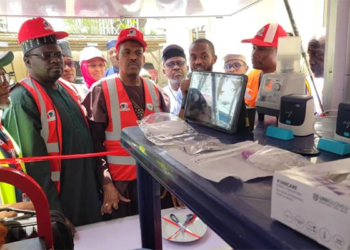

The National Primary Health Care Development Agency (NPHCDA) has announced a significant 46% reduction in variant poliovirus cases in Nigeria compared to the previous year. This update was shared on Tuesday in Abuja during the second quarter 2025 review meeting of the Northern Traditional Leaders Committee on Primary Health Care Delivery (NTLC), chaired by His Highness Sa’Maila Muhammad Mera, the Emir of Argungu.
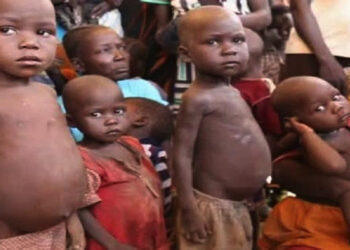
Poliomyelitis, commonly known as polio, is a highly contagious viral disease that predominantly affects children under five, leading to paralysis, respiratory complications, and sometimes death. The virus is transmitted through contaminated food, water, or direct contact, and while many infections are asymptomatic, some present with fever, fatigue, and limb pain. Vaccination has proven to be an effective means of preventing polio, making initiatives like those led by the NTLC crucial.
In his opening remarks, Emir Mera emphasized the need for intensified efforts, highlighting that the final phase of combating the poliovirus is often the most challenging. He stated, “We must remain steadfast in our commitment to halting the transmission of cVPV2 in our Emirates and Kingdoms. This is a sacred duty to our community, entrusted to us by Almighty Allah.”
The Emir also expressed concerns about the low uptake of other health services during vaccination campaigns, including the Human Papillomavirus (HPV) vaccine and anti-malaria measures in certain regions. He urged traditional leaders to educate their communities, reassure caregivers, and mobilize families to support all vaccination efforts, affirming, “We must enhance our educational outreach to encourage vaccination, as it is effective.”
Mr. Mera commended the NPHCDA and its partners for their strategic shift in vaccination campaigns and welcomed support from Gavi for increased community awareness. He remarked, “This backing reflects the confidence and trust the global community has in the NTLC.”
Dr. Muyi Aina, Executive Director/Chief Executive Officer of the NPHCDA, reported a decline in poliovirus cases from 78% last year to 46% currently. He stressed the importance of media collaboration to bolster traditional leaders’ efforts, emphasizing the urgency of the situation, stating, “We cannot afford to be unprepared. Time is not on our side.”
Dr. Aina noted progress in high-burden states like Kano and Katsina, where infections fell by 85% and 84%, respectively. He highlighted that between April and June 2025, vaccination campaigns reached over 71% of planned settlements, increasing to 78% by June, with vaccination coverage rising from 81% to 84%.
He also addressed ongoing challenges, including issues like fake finger-marking and insecurity, which undermine campaign credibility. He explained, “When vaccinators are sourced from outside the community, there’s a lack of accountability. Involving traditional leaders in the selection process fosters trust and compliance.”
Providing accurate information to parents remains a priority, as no mother would willingly jeopardize her child’s health.
Dr. Sam Okiror, Senior Programme Officer for the Bill & Melinda Gates Foundation in Nigeria, commended traditional leaders for their dedication to previous immunization initiatives, including the newly introduced HPV vaccine. He recognized the effectiveness of empowering traditional leaders to supervise vaccination teams, which has helped mitigate issues like fake finger-marking and non-compliance.
However, he pointed out two significant challenges: low routine immunization rates and insecurity in states such as Zamfara, Sokoto, Kebbi, Katsina, Niger, and Borno. He remarked, “Low immunization rates, especially in the northern states, continue to facilitate the spread of variant poliovirus and other vaccine-preventable diseases. Traditional leaders can play a vital role in encouraging fathers to support mothers in getting their children vaccinated.”
He also called on royal figures to negotiate safe passage for vaccinators and primary healthcare services in areas facing security challenges.
UNICEF Nigeria’s Country Representative, Wafaa Saeed-Abdelatef, expressed optimism regarding Nigeria’s progress toward polio eradication. Nonetheless, she cautioned that nomadic and mobile populations, as well as children in insecure and hard-to-reach areas, still miss vaccinations. She stated, “We are hopeful that we are nearing the final stretch in Nigeria and globally. However, the mobility of certain populations and limited access to healthcare services remain hurdles in our path towards eradicating polio.”
She emphasized the crucial role traditional leaders play in disrupting transmission in the Lake Chad region, where cultural and linguistic connections span across 17 countries. She also sought their support for the upcoming integrated measles, rubella, and polio vaccination campaign, which will introduce a new vaccine into Nigeria’s routine immunization program.
Ms. Saeed-Abdelatef noted advancements in primary healthcare revitalization, with over 1,160 facilities upgraded nationwide and an additional 2,800 being equipped. She added, “Last year, we reached more than 54,000 zero-dose children, and 774 health fellows have been deployed to enhance local service delivery.”
She concluded by reiterating that engaging traditional leaders is essential for vaccination success, ensuring supervision, accountability, and improved compliance among caregivers. “With sustained collaboration among government, communities, media, and traditional institutions, Nigeria can achieve its goal of eliminating the virus,” she stated.
The NTLC meeting, attended by government representatives, development partners, and traditional rulers from 19 states and the Federal Capital Territory, served as a platform for sharing experiences, aligning strategies, and reinforcing community-led approaches to polio eradication and primary healthcare delivery.
(NAN)