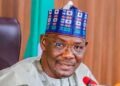

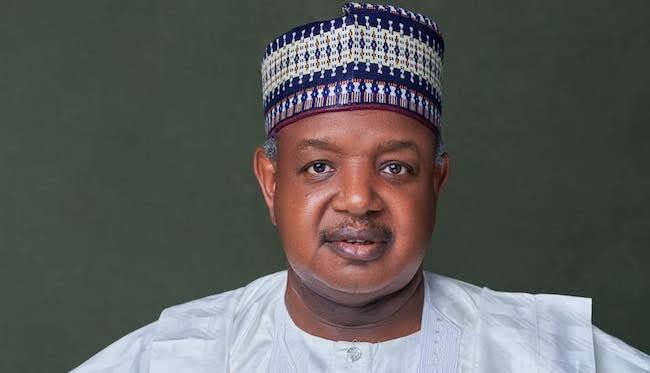
Atiku BaguduAtiku Bagudu, the Minister of Budget and National Planning, has emphasized that Nigeria needs to secure a minimum of $100 billion in investments each year to attain middle-income status by the year 2050.
Mr. Bagudu made this declaration during a one-day policy dialogue titled “Deepening Legislative-Executive Synergy for Effective Economic Governance in Nigeria,” organized by the National Institute for Legislative and Democratic Studies (NILDS) in Abuja.
He characterized the Agenda 2050 initiative as a pragmatic roadmap to prosperity rather than an overly ambitious goal. The minister noted that President Bola Tinubu has shown that this vision is achievable, having undertaken unprecedented risks typically avoided by developing nations, with positive outcomes beginning to emerge.
According to him, President Tinubu’sPresident Tinubu’s renewed hope agenda is a strategic effort to address years of inadequate fiscal capacity and systemic inefficiencies. He warned that without decisive actions and enhanced collaboration between the legislative and executive branches, Nigeria could fall further behind its global competitors in economic performance.
“To meet this target, Nigeria must attract at least $100 billion in annual investments from both public and private sectors,” Mr. Bagudu stated. He explained that Agenda 2050 consists of six medium-term plans, starting from 2021 to 2025, progressing in five-year increments until 2050.
He highlighted that Nigeria’s revenue-to-GDP ratio was a mere nine percent as of June 2023, one of the lowest worldwide, compared to the EU average of 31 percent. Although recent reforms have increased this ratio to 16 percent, he noted that Nigeria still lags behind its potential.
Mr. Bagudu pointed out stark contrasts with other nations, stating, “Brazil, a federation similar to Nigeria, operates with a federal budget of approximately $700 billion, while Nigeria’s budget is only $36 billion. Japan, with nearly half of Nigeria’s population, allocates over $20 trillion annually. These discrepancies clarify why the results are so markedly different.”
Representative Afam Ogene (LP-Anambra) remarked on Nigeria’s ongoing struggles with the implementation of the 2024 budget as of September 2025, referencing local contractors protesting for overdue payments for work completed in 2024.
“A government that fails to fulfill its obligations is essentially bankrupt; in basic economic terms, the budget is the supreme law for the year, composed of revenue and expenditure. Continuous engagement is necessary because governmental secrecy fosters corruption; we must insist on greater transparency,” he asserted.
Abubakar Sulaiman, the director-general of NILDS, described Nigeria’s economic fragility as evident in soaring inflation, mounting debt servicing pressures, currency instability, and sluggish growth. Represented by Shauibu Danwanka, the Director of the Department of Legal Services, he called for a unified effort from both government branches to address the nation’s economic challenges.
(NAN)