
KADUNA – In a major announcement set to reshape Northern Nigeria’s sporting landscape, Kaduna State Governor, Senator Uba Sani, has unveiled ambitious plans for a complete, world-class redevelopment of the historic Ahmadu Bello Stadium. The project, promised to meet stringent FIFA standards, will see the facility’s capacity doubled to 32,000 seats, positioning it as the nation’s second-largest stadium after Abuja’s national arena.
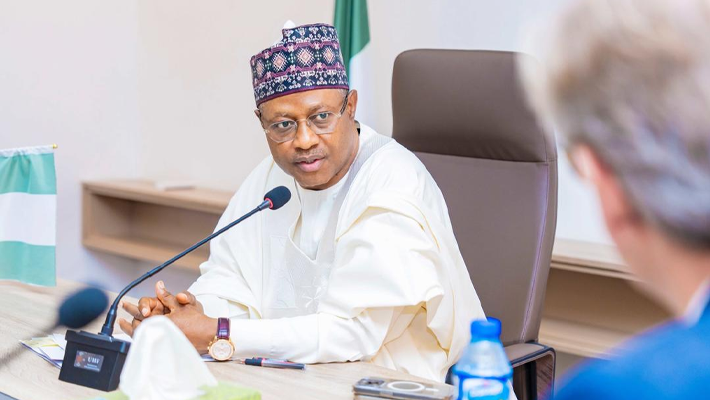
The revelation came during a courtesy visit by the Director-General of the National Institute for Sports (NIS), Comrade Philip Shuaibu, at Sir Kashim Ibrahim House on Tuesday. The meeting also yielded a significant institutional gain for Kaduna, as it was confirmed the city will host the NIS’s newly established North West zonal headquarters.
A Vision for a Modern Sporting Icon
Governor Sani framed the redevelopment as an essential modernisation of a key regional asset. “The Ahmadu Bello Stadium was constructed in 1965. To meet the demands of contemporary sports, international competitions, and the expectations of our people, a complete and comprehensive remodelling is not just desirable—it is imperative,” the Governor stated.
He pledged that the transformed stadium would be “a FIFA-standard sports facility,” capable of hosting premier international football matches and other global sporting events. This upgrade, he asserted, would catalyse sports tourism, bolster the local economy, and restore Kaduna’s prominence on the national and continental sports map.
“Upon completion, the remodelled Ahmadu Bello Stadium will boast a seating capacity of 32,000, effectively doubling its current capacity,” Governor Sani confirmed. “It will stand as the most spacious and modern stadium in Northern Nigeria and the second largest in the country.”
A Partnership Rooted in Democratic History
The meeting underscored a longstanding political camaraderie between Governor Sani and the NIS Director-General. Governor Sani recalled their shared activism “in the trenches together for the restoration of democracy in 1999” and praised Comrade Shuaibu’s subsequent performance as Deputy Governor of Edo State.
He also commended the DG’s transformative impact on the NIS since his appointment. “Before Comrade Shuaibu assumed office, the Institute was largely moribund. His visionary leadership has begun to turn it around, making it a pivotal institution for our national sports development,” Governor Sani noted.
NIS Unveils Decadal Plan and Zonal Structure
Speaking earlier, Comrade Philip Shuaibu outlined his mandate to develop critical manpower for Nigeria’s sports ecosystem, including the training of coaches, sports administrators, and paramedics. He detailed a sweeping reform agenda initiated upon his tenure, beginning with the constitution of a 32-member “star-studded” committee of sports experts.
“This committee has formulated a robust 10-year strategic work plan for the Institute,” Shuaibu explained. “We have already commenced specialised training programmes and, crucially, have created six zonal offices across Nigeria’s geopolitical zones for effective coordination and grassroots impact.”
He announced the confirmed locations for these new zonal headquarters:
· North West: Kaduna
· North East: Yola
· North Central: Jos
· South South: Benin
· South East: Enugu
· South West: Abeokuta
The DG expressed profound gratitude to Governor Uba Sani for promptly committing to provide a fully furnished office complex to facilitate the immediate take-off of the North West zonal office in Kaduna. This move solidifies the city’s status as the administrative hub for sports development in the region.
Strategic Significance for Kaduna and the North
The dual announcements represent a strategic coup for Kaduna State. The stadium project addresses a long-standing infrastructure deficit, promising a venue fit for national league finals, continental club competitions, and potential international friendlies. Modern facilities such as upgraded pitches, digital floodlighting, VIP suites, media centres, and enhanced security and safety provisions are expected to be core components of the redesign.
Concurrently, hosting the NIS zonal headquarters places Kaduna at the centre of professional coaching certifications, talent identification programmes, and sports science development for the entire North West. This is expected to create jobs, attract continuous professional traffic, and elevate the quality of local athletic talent.
Economic and Social Impact Prospects
Economists and sports analysts suggest the stadium’s redevelopment could trigger a significant multiplier effect. Construction will generate hundreds of jobs, while the completed facility is projected to boost hospitality, retail, and transportation sectors on event days. The enhanced infrastructure is also likely to make Kaduna a more attractive base for professional sports clubs.
Governor Sani’s administration appears to be leveraging sports as a tool for urban renewal and social cohesion. A world-class stadium in the heart of Kaduna is envisioned not only as an arena for sport but as a community asset for cultural events and a symbol of civic pride.
Next Steps and Forward Look
While the governor did not announce a specific timeline or detailed budget for the mega-project, the public commitment marks a critical first step. It is anticipated that the Kaduna State Government will now proceed to engage architectural consultants, prepare detailed plans, and seek financing and potential private-sector partnerships for the stadium’s delivery.
The collaboration with the National Institute for Sports signals a holistic approach, ensuring that the hardware of infrastructure is matched by the software of human capacity development. As both projects advance, Kaduna is poised to reclaim its historic reputation as a premier destination for sport in Nigeria, nurturing future champions while hosting the nation’s most prestigious tournaments.