
President Bola Tinubu’s government has inaugurated the “One Humanitarian-One Poverty Response System (OHOPRS)” aimed at lifting 50 million Nigerians out of poverty by 2030.
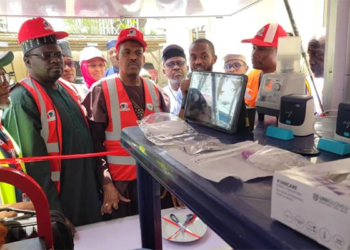
The Minister of Humanitarian Affairs and Poverty Reduction, Bernard Doro, unveiled the initiative at a national technical workshop for humanitarian sector stakeholders at the UN House in Abuja on Tuesday.
The minister explained that the OHOPRS is a unified national architecture to end poverty in Nigeria, adding that over 63 per cent of Nigerians face multidimensional poverty.
He itemised the challenges facing the humanitarian activities as structural gap-chronic fragmentation across MDAs, states, and local governments; visibility crisis; and coordination conflict.
“Others include siloed data, uncoordinated beneficiary registers, inefficient funding, duplicated efforts that fail to reach the last mile, fragmentation, lack of synergy, limited social proof/impact, stagnation, and lack of a unified ‘poverty exit’ pathway.
“We have been managing poverty, not ending it. It is time for a paradigm shift. To end poverty, Nigeria does not lack interventions but lacks the systems to facilitate the effective actualisation of the interventions,” Mr Doro said.
According to him, OHOPRS is the new national backbone designed to merge and integrate humanitarian relief, long-term development, and social protection.
He noted that the system also aligned MDAs, state governments, and development partners but lacked individuals from vulnerability to support, exit, and growth.
“There is a clear national direction on the OHOPRS; President Bola Tinubu’s vision is uncompromising. The mandate is to lift 50 million Nigerians out of poverty by 2030.
“Also, to implement real-time, digital accountability, re-establish government-led coordination and align every stakeholder to a single national system.
“Meanwhile, the core principles are one system, one register, and one pathway; one National Data Backbone: the Single Source of Truth.
“One Unified Beneficiary System: No more ‘double-dipping’ or exclusions; one Poverty Exit Pathway: A structured roadmap to self-reliance; and one National Coordination Platform: Total alignment of all actors,” Mr Doro said.
He further explained the OHOPRS’ architecture, poverty exit pathway, poverty intelligence lab, data-driven governance, evolution of the response, roles and responsibilities, expected national impact, and operationalisation of the vision.
“The focus is shifting from the ‘poverty line’ to the ‘prosperity ladder.’ Yesterday, we managed the challenge. Today, we architect the end,” Mr Doro said.
Also, the Minister of State, Ministry of Humanitarian Affairs and Poverty Reduction, Tanko Sununu, said the OHOPRS aims to synergise efforts across various sectors and agencies to ensure a coordinated response.
“When we have one response plan, it means we are going to have a way that everyone can put effort together so that we can have a proper plan, execution, tracing, tracking, and then measurement of internal outcomes.
“By allowing humanitarian aid with long-term development goals, the programme can address the immediate survival needs while also focusing on sustainable social mobility,” Mr. Sununu said.
The organisations in attendance include the International NGO Forum, the European Union, UNOCHA, IOM, UNICEF, ECHO, the World Bank, and other stakeholders from the subnational level.
(NAN)