
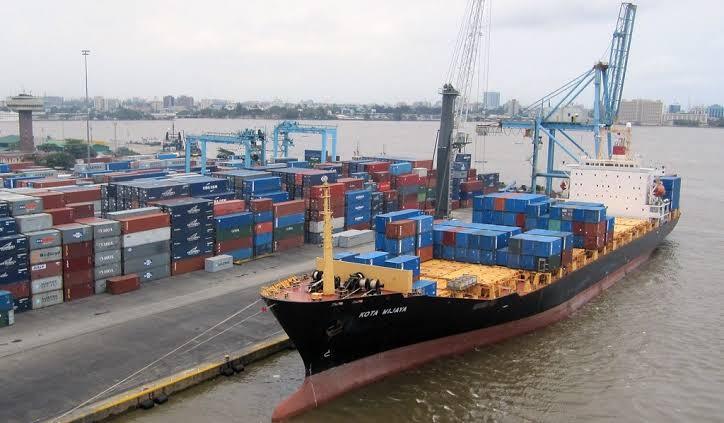
The Federal Government has secured £746 million to modernise the Apapa and Tin Can Island Ports in Lagos, a move expected to transform Nigeria’s maritime sector.
Minister of Marine and Blue Economy, Adegboyega Oyetola, announced the funding while declaring open the ‘Blue Economy Investment Summit 2026’ in Abuja. He explained that the project would significantly enhance the capacity, efficiency, and global competitiveness of the nation’s busiest seaports.
Mr Oyetola also reported a remarkable surge in internally generated revenue across agencies under his ministry. “In 2023, when I assumed office, these agencies generated a total of N700.79 billion. By the end of 2025, this figure had risen substantially to approximately N1.83 trillion,” he said. He attributed the growth to strengthened regulatory oversight, improved revenue collection, and the digitalisation of core processes.
Describing Nigeria’s blue economy potential, the Minister noted: “This summit comes at a defining moment… The global blue economy, now valued at over $3 trillion annually, has become a critical driver of trade.” He stressed that with over 8,300 kilometres of coastline and a strategic position along the Gulf of Guinea, Nigeria is uniquely positioned to harness marine resources for national prosperity.
For the first time in the nation’s history, Mr Oyetola revealed that the government has developed and launched a National Policy on Marine and Blue Economy. He added that efforts are underway to revitalise the Regional Maritime Development Bank after more than 16 years of delay.
Speaking at the summit, the Chief Executive Officer of Maritime Innovations Hub, Ronke Kosoko, said the administration’s focus on a private-sector-led economy is already attracting investor interest. “Investors are not just interested in opportunities; they want efficiency,” she noted.
Echoing similar concerns, the Executive Secretary of the Nigeria Shippers Council, Pius Akutah, warned that poor logistics and weak maritime connectivity remain major obstacles to Africa’s trade ambitions under the African Continental Free Trade Area.
Delta State Governor, Sheriff Oborevwori, represented by his deputy Monday Onyeme, announced the creation of two state-level committees to drive blue economy policies. Meanwhile, the CEO of APM Terminals Nigeria, Frederik Klinke, declared: “If there was ever a defining moment for Nigeria’s blue economy to reposition itself for resilience, competitiveness, and sustainable growth, that moment is now.”