

The federal government has revoked the national policy that mandated the use of indigenous languages as the medium of instruction in schools.
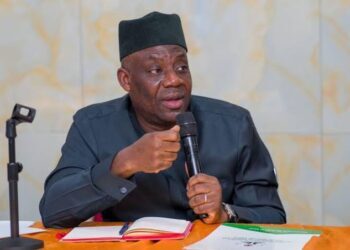
Minister of Education Tunji Alausa announced this at the 2025 Language in Education International Conference, organised by the British Council in Abuja on Wednesday.
“The national policy on language has been abolished. English is now the sole medium of instruction across all levels of education,” he declared.
In 2022, the federal government approved a National Language Policy (NLP), which stipulated that from early childhood education to Year Six, the language of instruction would be the mother tongue or the language of the immediate community.
The policy aimed to promote indigenous languages, recognise their equal status, and enhance early childhood learning outcomes, while English remained the official language used in later education and formal settings.
Speaking at the conference, Mr Alausa stated that English is now the medium of instruction in Nigerian schools from primary to tertiary levels.
He noted that Nigerian children had been performing poorly in public examinations due to being taught in their mother tongue.
The minister explained that the decision to revoke the policy was based on extensive data analysis and evidence indicating that the use of the mother tongue as the primary medium of instruction had adversely affected learning outcomes in various parts of the country.
“We have observed a high failure rate in WAEC, NECO, and JAMB in certain geopolitical zones that adopted this mother tongue policy excessively.
“This is about evidence-based governance. English is now the medium of instruction from pre-primary, primary, junior secondary, and senior secondary, to tertiary education.”
“Using the mother tongue in Nigeria for the past 15 years has effectively destroyed education in certain regions. We must focus on evidence, not emotions,” he stated.
According to him, data collected from schools across the country revealed that students taught primarily in indigenous languages recorded higher failure rates in national examinations and struggled with basic English comprehension.
The minister encouraged stakeholders with differing opinions to present verifiable data to support their positions, adding that the government remained open to evidence-based dialogue aimed at strengthening the education sector.
He commended the British Council for its ongoing partnership with Nigeria in advancing educational reforms and promoting inclusive language and learning policies.
The Minister of State for Education, Suwaiba Ahmed, also addressed other areas of focus for the government to tackle the teaching and learning crisis at the foundational level of education.
Mr Ahmad noted that a new training package had been developed for teachers to assist with literacy and numeracy learning.
“We are training them on the best methods to teach literacy, the best approaches for teaching numeracy, and, of course, the overall approach,” she said.
Additionally, the Country Director of the British Council Nigeria, Donna McGowan, pledged the council’s continued support and expertise to Nigeria’s educational policies aimed at reshaping the education sector.