
The federal government and ActionAid Nigeria have reaffirmed their dedication to eradicating poverty by 2030 through a coordinated, accountable, and inclusive approach that empowers citizens and rewards productivity.
This commitment was made on Wednesday in Abuja during the ongoing high-level national dialogue on Rethinking Poverty Reduction Strategies in Nigeria.
Organised by ActionAid Nigeria (AAN), the dialogue carries the theme “Prospecting for an Improved Living for Our Communities.”
It aims to tackle the alarming rise in multidimensional poverty, which currently affects 61 per cent of Nigerians, while promoting community-driven strategies for sustainable poverty eradication.
Andrew Mamedu, the country director for ActionAid, stated that poverty eradication can only be achieved through shared responsibility, transparency, and a renewed focus on rewarding hard work across all sectors.
He called for a comprehensive review of Nigeria’s poverty reduction strategies to ensure that economic growth results in tangible benefits for citizens.
Mamedu highlighted that despite Nigeria’s budget expanding from approximately N300 billion in 1999 to N54.5 trillion in 2024, poverty levels have not decreased proportionately.
“This indicates that we must adopt a different approach.
“At ActionAid, we are convinced that poverty can be eradicated, but this requires both government and citizens to take shared responsibility and ensure accountability from the federal to the local levels,” he explained.
He expressed concern over the persistence of poverty despite increased financial allocations to states and local governments.
Mamedu urged the government to learn from countries like China and India, which have lifted millions out of poverty through investments in infrastructure, education, health, and social protection, while ensuring local participation.
“Increasing spending is not sufficient; we must ensure resources are used efficiently. Reports indicate that we lose approximately $18 billion annually to illicit financial flows.
“If we can halt such leakages, more funds will remain in our economy to drive development,” he stated.
Mamedu commended the government’s pledge to lift 100 million Nigerians out of poverty within a decade but emphasised that this goal can only be achieved through consistency, accountability, and collaboration among stakeholders.
“We need to help about 10 million Nigerians escape poverty each year. To accomplish this, all parties—government, civil society, and the private sector—must work together,” he added.
He also urged Nigerians to adopt discipline, punctuality, and commitment as hallmarks of accountability and efficiency.
“Governance is not solely the responsibility of the president or ministers; it involves all of us. If we begin to address small issues correctly, it will reflect in how we manage larger responsibilities,” Mamedu remarked.
He reiterated ActionAid’s commitment to supporting and holding the government accountable in the fight against poverty, noting that the organisation’s 10-year strategy aims to lift five million Nigerians out of poverty.
“We must ensure that the next poverty review indicates progress, not decline. Together, we can build a Nigeria where prosperity is shared and poverty becomes a thing of the past,” he concluded.
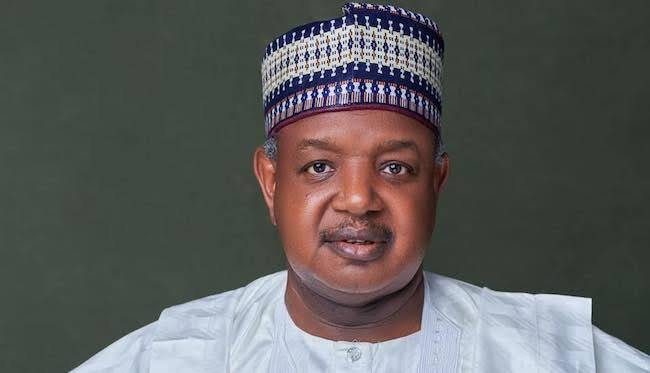
The Minister of Budget and National Planning, Atiku Bagudu, stated that the most effective form of social protection is ensuring that hardworking Nigerians receive fair compensation for their labour, while government support is focused on those genuinely in need.
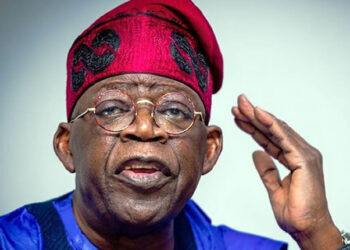
He affirmed that President Bola Tinubu’s administration is committed to creating an inclusive economy driven by productivity and innovation.
Bagudu added that the Renewed Hope Development Plan aims not only to reduce poverty but to eliminate it entirely by 2030.
He noted that ongoing reforms are already yielding positive results, including increased revenues, renewed investor confidence, and new economic initiatives.
“President Tinubu’s policy directions are bold and forward-looking. The reforms aim to ensure sustainable growth, equitable wealth distribution, and long-term national stability.
“I urge Nigerians to be patient and supportive, as the benefits of these reforms will become more apparent as the economy strengthens,” Bagudu concluded.