
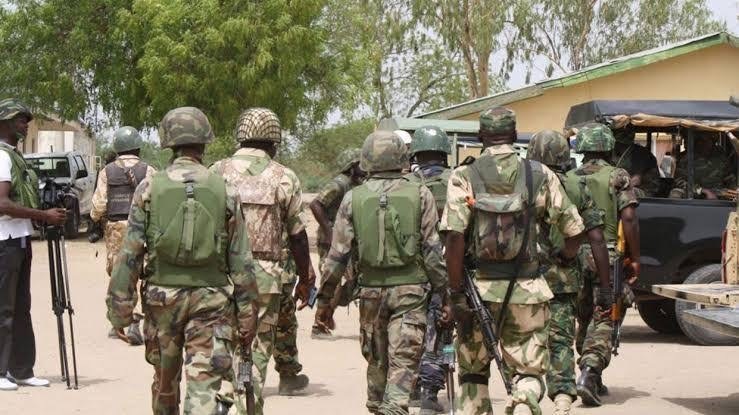
The Defence Headquarters (DHQ) is preparing to deploy the Joint Special Task Force, known as ‘Savanah Shield’, to tackle terrorism in Kwara and parts of Niger. Chief of Defence Staff, General Olufemi Oluyede, announced this initiative during the 2026 budget defence session held by the House of Representatives Committee on Defence in Abuja on Tuesday.
Enhancing National Security
General Oluyede emphasised that the military is committed to ensuring a safer Nigeria for both citizens and investors. He acknowledged improvements in the North-East zone but noted ongoing challenges in the North-West and North-Central regions.
“We are evolving modalities to checkmate these challenges within the resources available to us,” he stated. The DHQ has trained a new set of special forces, recently deployed to Benue and Plateau, and is now extending operations to Kwara and parts of Niger under the Savanah Shield initiative.
“A joint task commander has been appointed, and we are mobilising resources from various sectors to ensure comprehensive coverage,” he added.
Call for Collaboration
Despite these efforts, General Oluyede underscored the impossibility of the armed forces covering the entire landscape of Nigeria. He called for a stronger partnership between the military, the police, and the Nigerian Security and Civil Defence Corps (NSCDC).
He urged Nigerians to support intelligence gathering and refrain from collaborating with terrorists, stating that public trust in the armed forces is essential for improving the security situation.
Legislative Support for Defence
Committee Chairman Rep. Benson Babajimi (APC-Lagos) highlighted the importance of safety for sustainable national progress. He commended the armed forces and security agencies for their ongoing efforts to curb insurgency and crime but noted that persistent security threats necessitate institutional reforms and better coordination.
“Nigerians have high expectations, and the National Assembly will prioritise the defence and security sector,” he affirmed. Babajimi stressed that increased allocations must be accompanied by measurable outcomes and strict adherence to transparency and accountability principles.
A Holistic Approach to Security
The chairman also pointed out that while military operations are vital for deterring violent threats, sustainable peace requires a multi-faceted strategy. He identified issues such as poverty, youth unemployment, illiteracy, and misinformation as contributing factors to insecurity.
“This committee advocates a whole-of-government and whole-of-society approach to national security,” he said, emphasising the need for significant investment in strategic communication to counter extremist ideologies and foster community engagement.
Investments in Cyber Defence and Technology
Babajimi called for enhanced cyber defence to protect Nigeria’s digital sovereignty and improve defence intelligence infrastructure. He urged investments in border security technology, police reforms, and inter-agency data fusion centres, describing these as critical force multipliers in the fight against terrorism.
Balancing Military and Peacebuilding Efforts
The chairman stressed the necessity for the 2026 defence budget to reflect a balance between military strength and the tools for sustainable peace. He highlighted the importance of addressing personnel welfare, training, equipment maintenance, and logistics to ensure effective operations.
Babajimi concluded that recurring issues such as abandoned projects and procurement inefficiencies must be rectified to enhance the effectiveness of defence strategies.
Conclusion
As Nigeria faces ongoing security challenges, the deployment of the Savanah Shield Task Force aims to bolster efforts against terrorism in Kwara and Niger. With the commitment of military leadership and legislative support, a unified approach that combines military action with community engagement and strategic reforms is essential for achieving long-term peace and stability in the region.