

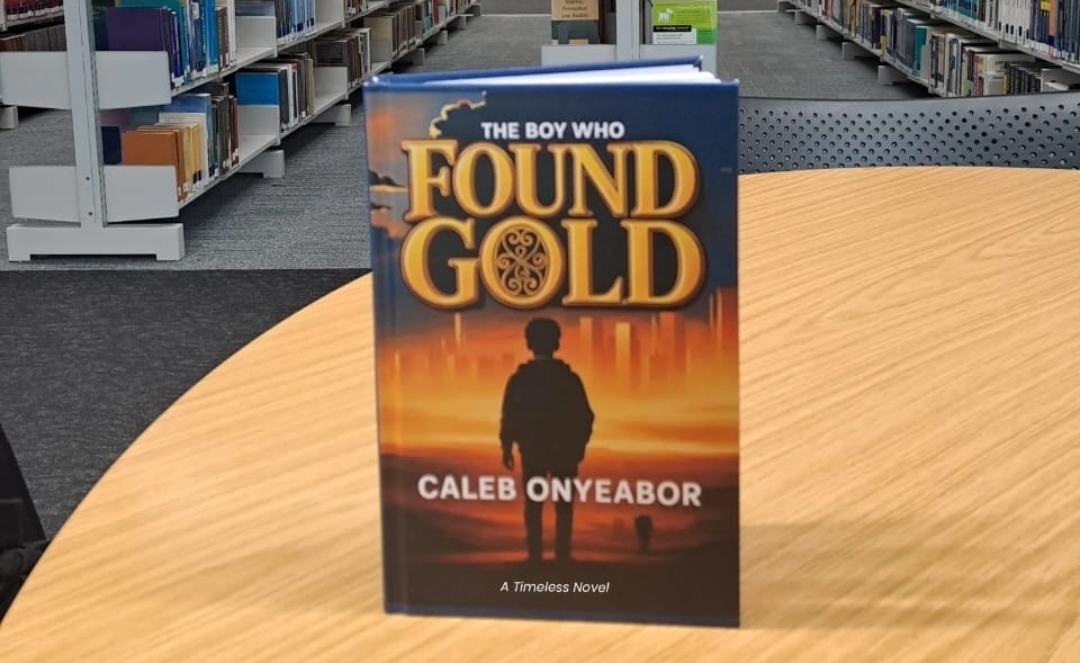
Caleb Onyeabor’s debut novel, The Boy Who Found Gold, has received widespread acclaim from literary critics and academics, who described it as a compelling work that challenges young Nigerians to pursue purpose, resilience and opportunity despite difficult circumstances.
The commendations were made in Abuja during a review of the book, where reviewers said the novel combines engaging storytelling with life lessons that resonate with a generation confronting unemployment, poverty and uncertainty.
In his review titled In Search of Gold: A Story for a Restless Generation, Dr. Ifeanyi Nwachukwu, described the novel as a courageous and well-crafted work that seeks to transform the lives of young readers through fiction rather than mere motivational rhetoric.
According to him, the novel opens with the story of Mansur, a young boy who inherits his late father’s responsibilities and his mother’s egg-and-fruit business after tragedy strikes the family.
The reviewers agreed that The Boy Who Found Gold stands out in Nigeria’s growing inspirational fiction landscape by combining literary craftsmanship with a powerful message that success is achieved not through chance, but through courage, mentorship and persistent pursuit of opportunity.
Nwachukwu said the author deliberately avoids the familiar rags-to-riches formula, instead presenting a story in which true wealth comes through mentorship, perseverance and personal growth.
Nwachukwu said: “The novel works because Onyeabor understands that a lesson only lands when it has first been made into a story worth staying up for.”
He noted that the introduction of Old Abe, a respected market elder, shifts the story from one of hardship to one of hope, teaching Mansur that success belongs to those who actively pursue opportunities rather than wait endlessly for them.
Nwachukwu also praised the book’s narrative structure, saying Onyeabor skilfully weaves Mansur’s journey with the historical parable of Mansa of Timbuktu and the mysterious Preacher, all framed within a story being told to a group of young boys.
According to him, the layered storytelling transforms what could have been a simple inspirational tale into a powerful reflection on how wisdom and values are passed from one generation to another.
He further observed that the novel refuses to romanticise poverty or simplify ambition, describing Mansur’s emotional struggle with the memory of his late father as one of the book’s strongest elements.
Nwachukwu said Old Abe’s admission that he wasted decades waiting for opportunities reinforces the novel’s central message that “the boy who will find gold is the boy who goes for gold.”
He added that the story speaks directly to young Nigerians searching for hope in difficult economic conditions, stressing that the novel succeeds because it acknowledges hardship while encouraging resilience and determination.
Also reviewing the novel, Professor Gerald Ezirim of the University of Nigeria, Nsukka, described The Boy Who Found Gold as “a very, very compelling read” and one of the most impressive debut novels he has encountered in recent years.
Ezirim, who first read the manuscript in his capacity as an editor, said the novel’s finished version remained just as engaging, describing it as the kind of story Nigeria urgently needs.
He noted that the book goes beyond fiction by presenting a realistic portrait of ordinary Nigerians navigating economic hardship through courage, family support and determination.
According to him, Onyeabor’s depiction of Mansur’s life, from the family’s modest two-room apartment to his mother’s years of labour in the informal economy—reflects careful observation of everyday Nigerian realities.
He commended the author’s ambitious storytelling, particularly the decision to embed the historical tale of Mansa of Timbuktu within Mansur’s story while framing the narrative as an oral account shared among young listeners.
Ezirim said the approach elevates the novel beyond a conventional morality tale by demonstrating how mentorship and lived experience shape future generations.
He also praised Onyeabor for allowing his protagonist to question the very ideals the story promotes, arguing that Mansur’s doubts and resentment toward his late father make the novel’s central message more authentic and believable.
He said: “The difference between a good inspirational story and a merely earnest one lies in whether the author allows the protagonist to doubt the philosophy the book is built to deliver. Onyeabor does not spare Mansur this doubt.”
Ezirim recommended the novel to students, educators and young professionals, describing it as a mature debut that balances the harsh realities of Nigerian society with an enduring message of hope.