
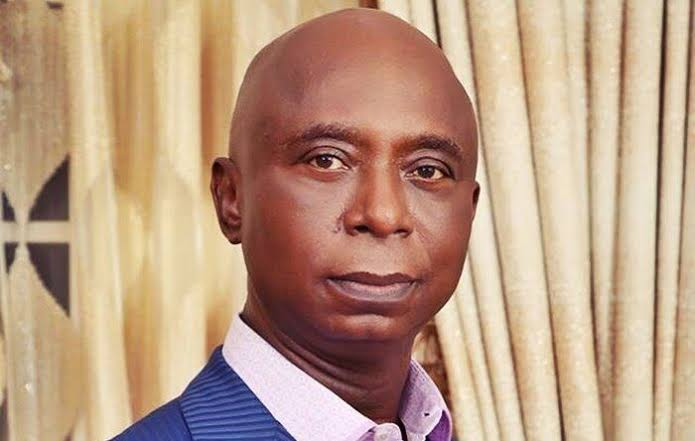
Ned Nwoko, the senator representing the Delta North Senatorial District, known as the “Anioma People,” has emphasized that the establishment of Anioma State from the current Delta State would yield significant advantages for its residents.
Nwoko made these comments during the two-day event titled “Ogbako-Igbo Zara Igbo Oru Na Ndida,” organized by the Igbo Unification Movement in partnership with the Ndi Na Asu Bia Social Cultural Organisation. The gathering, held in Asaba, Delta State, on Friday, revolved around the theme “Igbo Bu Ofu” (Igbos are One).
He expressed that the event aligns with his vision for a united Igbo community, both locally and globally, asserting that fostering Igbo unity should be a priority for all stakeholders across the 13 states in Nigeria and beyond. Nwoko highlighted that any state, clan, or community that speaks Bia belongs to the Igbo race, reinforcing the historical connection of the Anioma people to the Ndi-Igbo.
According to Nwoko, the critical issue at hand is the creation of Anioma State, regardless of whether it is designated within the Eastern region or elsewhere. He asserted that the creation of Anioma would be mutually beneficial, which is why he introduced a bill for state creation at the National Assembly last year.
Nwoko envisions Anioma as a distinct state separate from Delta, allowing for the establishment of a new entity referred to as the “real Delta.” He expressed his full support for Governor Sheriff Oborevwori, noting that just as Bendel was divided into Edo and Delta states, a similar division could occur here.
He indicated that the bill for Anioma’s creation has successfully passed its first and second readings in the Senate and is now progressing to the third reading. Nwoko urged everyone to rally behind this vision, emphasizing that the desire for a sixth state is driven by the principles of equity.
“I believe there isn’t an Anioma son or daughter who does not support the creation of Anioma State,” he stated. Nwoko underscored the importance of unity among the Igbo people and deemed debates about the state’s potential zoning to the Eastern region as secondary.
“The primary need is for a state for Ndi-Igbo, and Anioma, being the oldest advocate for this cause, deserves support. This movement is not politically motivated; we seek the establishment of a state. Furthermore, I have previously stated that if Anioma is created, I would endorse an Ndokwa person as the first governor,” he added.
Nwoko commended the event’s organizers for their efforts in realizing the aspirations of their ancestors regarding the creation of Anioma State.
In a goodwill message, Governor Sheriff Oborevwori, represented by his chief of staff, Johnson Erijo, praised the event for its emphasis on unity among the Igbo populace. He noted the significant role the Igbos play in both the national and international economies and pledged the state government’s support for the Igbo and all socio-cultural organizations in the state.
Kingsley Kainebi, president of the Ndi Na Asu Bia Social Cultural Organisation, stated that the conference’s goal was for the Igbo people to unite as a single ethnic group. He reminded attendees of the wisdom of their ancestors: “Igwebuike” (Strength in Unity), asserting that unity enhances their influence and helps safeguard their interests, thus contributing more effectively to national development.
Cosmas Chikeobi, chairman of the organizing committee, shared that their mission, inspired by the Igbo principle of “Onye aghala nwanne ya,” involves engaging with indigenous Igbo communities outside the Southeast facing identity crises. Their aim is to help these communities resolve their identity issues and fully embrace their Igbo heritage.
The keynote address was delivered by Uzodinma Nwala, a prominent figure in African Philosophy, while guest speaker Obasi Igwe provided a historical perspective on Anioma and the case for establishing it as the sixth state in the Southeast region. The event was attended by traditional rulers, youth, and women leaders from Anioma and the broader Southeast region, among other groups.
(NAN)