
In a forceful rebuttal of sectarian sentiment, the Christian Media Forum (CMF) has issued a stark condemnation of the Supreme Council for Shari’ah in Nigeria (SCSN) over its demands for the removal of the National Chairman of the Independent National Electoral Commission (INEC), Professor Joash Amupitan, based on his religious faith. The forum has labelled the call as “baseless, unfortunate, and highly divisive,” warning that it represents a dangerous erosion of Nigeria’s constitutional principles of fairness, inclusion, and secular governance.
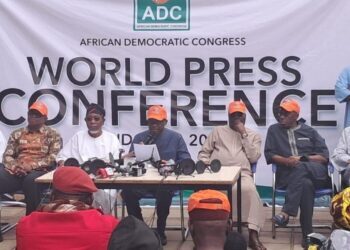
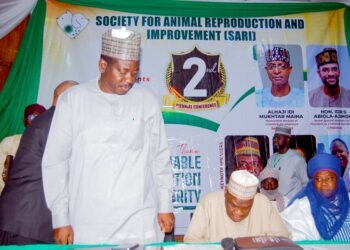
The robust criticism was contained in a statement jointly signed by the CMF’s National President, Okpani Jacob Onjewu Dickson, and its National Secretary, Andrew Ibrahim Mshelia. It comes in direct response to reported remarks made by the President of the SCSN, Sheikh Bashir Umar, during the Council’s 2026 Annual Pre-Ramadan Lecture and General Assembly in Abuja this Tuesday.
A Call Founded on Faith, Not Fact
According to the CMF, Sheikh Umar declared that Muslims across Nigeria would not recognise or legitimise any election conducted under the leadership of an INEC Chairman whose integrity is allegedly under question—a premise the Christian group vigorously disputes. The Forum argues that such a position, explicitly linking the legitimacy of an electoral process to the religion of its chief administrator, is without merit and corrosive to democratic institutions.
“Nigeria’s democracy thrives when public office holders are assessed based on competence, integrity, and performance, rather than religious or ethnic affiliations,” the CMF’s statement emphasised. It stressed that Professor Amupitan, like any public servant, must be judged on his professional record and adherence to the law, not his personal creed.
The Forum expressed profound concern that the SCSN’s demand fundamentally undermines the constitutional mandate of INEC as an independent body. It warned that publicising such a sectarian litmus test for leadership roles risks inflaming religious sentiments and dangerously eroding citizen confidence in the electoral system, particularly with the 2027 general elections on the horizon.
Ill-Timed Rhetoric Amid National Crises
The CMF also highlighted the “insensitive” timing and context of the statement, noting that Nigeria is presently grappling with severe multidimensional challenges. With the nation confronting acute insecurity, economic hardship, and social instability, the forum argued that what is required is collective responsibility and unifying dialogue, not divisive rhetoric that threatens to heap a religious crisis atop existing troubles.
“It is too early and inappropriate for any religious organisation to begin making statements that could undermine the credibility of future electoral processes,” the statement read. The CMF cautioned that respected religious bodies with wide followership bear a heightened responsibility to promote tolerance and national cohesion. Statements perceived as promoting religious intolerance, it noted, are especially volatile and must be avoided.
The forum urged the Supreme Council for Shari’ah to redirect its considerable influence and energy towards supporting governmental efforts to address the pressing insecurity and socio-economic challenges “bedevilling the nation, the Northern part in particular.”
Upholding the Secular Principle and INEC’s Mandate
Reaffirming its confidence in INEC as a constitutional institution, the CMF called on the Commission’s leadership to remain steadfastly focused on its core mandate without succumbing to distraction or undue pressure from sectional interests. It reiterated that Nigeria, as a secular state, belongs to all citizens irrespective of faith, and that leadership positions must never be weaponised along religious lines.
The controversy touches upon a deep-seated and recurrent tension in Nigerian public life: the contest between national unity and sectarian identity. The demand for Professor Amupitan’s removal on religious grounds challenges the very notion of civic citizenship, where an individual’s qualification for office is separated from their personal beliefs.
Legal and political analysts often point to Sections 10 and 15(2) of the 1999 Constitution, which expressly forbid the adoption of a state religion and command national integration, respectively. Calls for removal based solely on faith appear to run counter to these foundational provisions, setting a precarious precedent that could be applied to any high office, from the Chief Justice to the Secretary to the Government of the Federation.
A Broader Context of Electoral Trust
This incident does not occur in a vacuum. Previous electoral cycles have witnessed similar, though often less overtly stated, suspicions and criticisms along religious and regional lines. The integrity of INEC’s leadership is perennially under intense scrutiny, a fact the Commission itself acknowledges. However, the CMF argues that critique must be anchored in tangible evidence of malpractice or bias, not in the identity of the chairman.
By framing its objection around competence and constitutionalism, the Christian Media Forum seeks to occupy the ground of national principle. Its statement is a deliberate appeal to the broader Nigerian populace and the international community, positioning the SCSN’s demand as an outlier view that threatens the fragile fabric of the nation’s democracy.
A Call for Restraint and Reflection
In conclusion, the Christian Media Forum has issued a clarion call for restraint. It urged all religious and civic leaders to prioritise national unity, exercise caution in their public pronouncements, and work collectively towards a peaceful, stable, and democratic Nigeria.
The forum called on “well-meaning Nigerians to disregard any calls or statements that could incite religious intolerance or threaten peaceful coexistence.” This stance underscores a belief that the path forward for Nigeria lies in strengthening its common, civic identity, rather than amplifying divisions that can be exploited for political or sectarian gain.
As the nation navigates its complex socio-political landscape, the exchange between these two influential religious media bodies highlights a critical battle of narratives. The outcome will significantly influence the tone of public discourse in the lead-up to the next electoral period, testing Nigeria’s resilience and its commitment to the secular, democratic ideals enshrined in its constitution.