
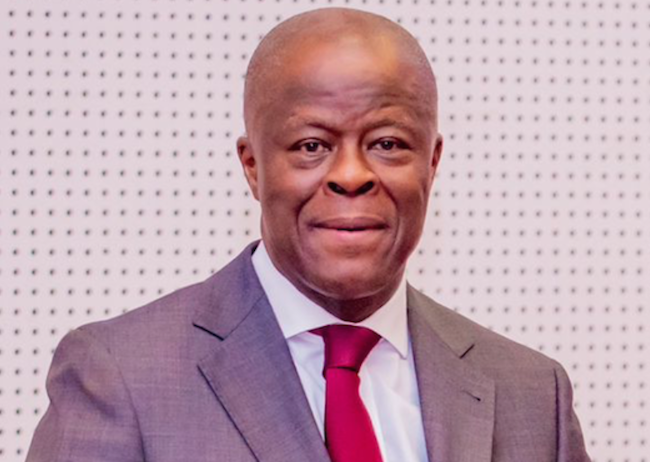
Wale Edun, the Minister of Finance and Coordinating Minister of the Economy, has announced that Nigeria’s extensive economic reforms are beginning to deliver noticeable results, as the nation’s debt situation becomes more manageable and investor confidence returns.
Edun shared these insights during the 11th Annual Conference and General Assembly of the West Africa Association of Public Accounts Committees (WAAPAC), hosted by the House of Representatives Committee on Public Accounts on Monday. The conference focused on the theme, “Strengthening Parliamentary Oversight of Public Debt.”
The minister acknowledged that Nigeria, similar to many countries in West Africa, continues to face significant fiscal challenges, including high debt servicing commitments, constrained revenue inflows, and escalating public expenditure demands.
Nevertheless, he asserted that the policy measures implemented under President Bola Ahmed Tinubu’s administration are progressively reversing adverse economic trends and steering the country toward a sustainable growth path.
“Nigeria stands at a pivotal moment. Our reforms are producing measurable outcomes, enhancing investor confidence, decreasing expenditure on fuel imports, boosting energy self-sufficiency, and increasing value addition within our economy,” Edun stated.
He reported that Nigeria’s debt service-to-revenue ratio has decreased to approximately 60 percent in 2024, while the debt-to-GDP ratio is at 38.8 percent, a figure he described as favorable by international standards.
Additionally, he noted that government revenues surged by 34.7 percent in the first half of 2025 compared to the same period in 2024, thereby creating additional fiscal space for investment in key areas.
Edun credited these improvements to challenging but essential reforms, such as the elimination of fuel subsidies, the liberalization of foreign exchange, and the implementation of a comprehensive tax reform agenda aimed at simplifying compliance and gradually increasing the nation’s tax-to-GDP ratio.
He emphasized that the government’s primary role is to create a conducive environment, while private investment, which constitutes 90 percent of economic activity, is what truly drives growth.
“The government should serve as a catalyst rather than a competitor to the private sector. Through robust fiscal discipline, we can unlock opportunities and foster inclusive growth that elevates millions out of poverty,” he remarked.
Regarding fiscal priorities, Edun highlighted the importance of debt transparency, growth-focused borrowing, domestic revenue mobilization, and compliance with the Fiscal Responsibility Act.
He assured that borrowing will be linked to viable projects yielding direct returns, while avoiding unsustainable financing practices.
Edun also warned of global challenges, such as declining aid, sluggish trade, and rising global interest rates, which complicate fiscal management for developing economies.
He called on African nations to adopt reforms, leverage technology, and implement digital systems to enhance revenue collection.
Importantly, he stressed the crucial role of parliaments in ensuring fiscal accountability.
“A credible fiscal framework is a collective responsibility. Parliamentary oversight, particularly by public accounts and finance committees, is vital for maintaining transparency and discipline,” he stated.
Senate President Godswill Akpabio, in a message delivered by Senator Osita Izunaso, urged West African nations to strengthen the constitutional authority of public accounts and finance committees to ensure fiscal stability.
He warned that unchecked debt could jeopardize democracy and compromise citizens’ futures, while asserting that, when managed appropriately, debt can be a valuable tool for financing infrastructure, growth, and sustainable development.
Akpabio stated, “Africa’s progress hinges on establishing resilient institutions rather than relying on strongmen. Legislative oversight is essential for ensuring transparency and accountability.”
Rep. Bamidele Salam, Chairman of the House Public Accounts Committee, announced that the committee has recovered over N200 billion in lost revenue for the Federal Government over the past year.
He characterized Nigeria’s hosting of WAAPAC for the first time since its inception in 2009 as timely, given the continent’s escalating debt challenges.
Salam emphasized that while debt can facilitate development, it must remain sustainable, transparent, and justifiable.
He highlighted the committee’s achievements, including the completion and adoption of reports for the first time since 1999, the passage of the long-awaited Audit Bill currently before the Senate, the digitization of hearings, and the launch of PAC Magazine for public engagement.
WAAPAC President Hon. Issouf Traore praised President Tinubu for his efforts in economic revitalization and urged African nations to collaborate for the continent’s advancement.