
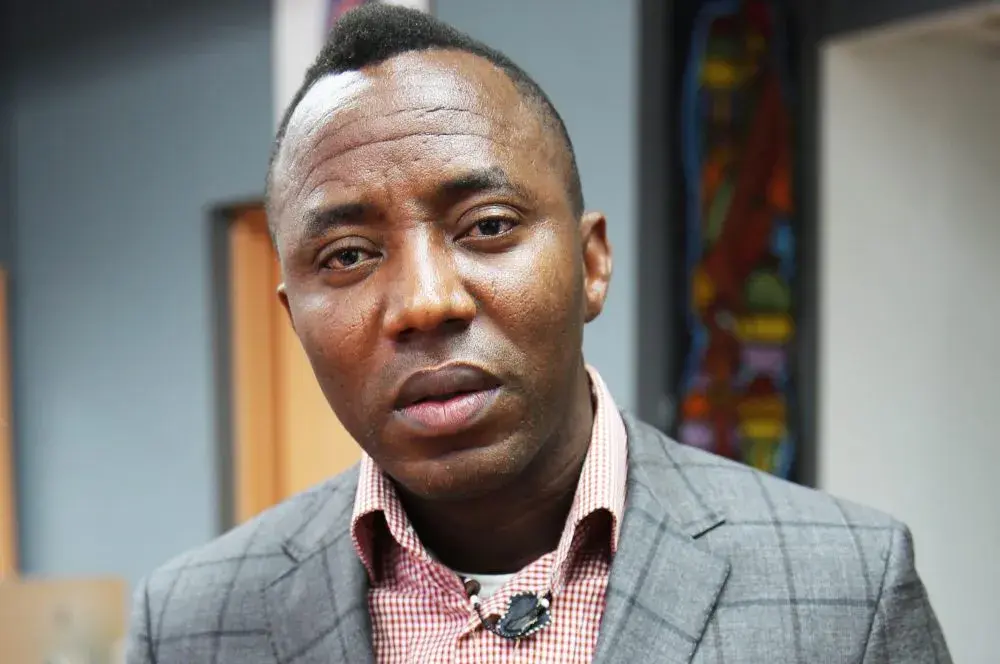
The Nigerian government has lodged a formal complaint with X Corp., the parent company of the social media platform previously known as Twitter, demanding the immediate suspension and permanent ban of Omoyele Sowore’s verified account. Sowore, a prominent activist and publisher, faces scrutiny for a contentious tweet aimed at President Bola Ahmed Tinubu. In a strongly worded letter dated September 6, 2025, addressed to the Chairman and CEO of X Corp. in Bastrop County, Texas, the government accused Sowore of disseminating “misleading information” and intentionally promoting an ideology that poses a serious threat to national security.
The petition, titled “DEMAND FOR IMMEDIATE AND URGENT BAN/DEACTIVATION OF AN X ACCOUNT OWNED BY OMOYELE SOWORE THROUGH HIS VERIFIED X HANDLE @YELESOWORE OR ANY OTHER X ACCOUNT MAINTAINED BY HIM,” elaborated on the perceived gravity of Sowore’s recent online activities. The government expressed alarm over a particular tweet from August 25, 2025, which criticized the President’s statements regarding corruption in Nigeria. The tweet read: “This criminal @officialABAT actually went to Brazil to state that there is NO MORE corruption under his regime in Nigeria. What audacity to lie shamelessly!” The authorities contended that this message was not only aimed at President Tinubu but constituted a direct response to his official communication channel.
Officials claimed that Sowore’s remarks have heightened tensions within the nation, risking public disorder. They noted that the tweet, which remains in circulation, has been widely condemned, prompting protests from President Tinubu’s supporters, thereby creating political instability. The letter emphasized the damaging effect of the tweet on the President’s reputation and Nigeria’s standing among other nations.
The Nigerian government characterized the tweet as a significant breach of both national and international digital conduct standards, asserting it violated “transparency on X” and represented a harmful, false narrative that undermines the President and the country. In support of its claims, the government referenced various sections of Nigerian law, including the Criminal Code Act and the recently amended Cyber Crimes Act of 2025, arguing that Sowore’s statements amount to offenses punishable under these laws.
The correspondence further indicated that both the author of the tweet and the platform hosting it could face legal repercussions under Nigerian law. The letter noted that the law holds both the individual and the medium responsible for propagating such offenses, referencing the Terrorism (Prevention and Prohibition) Act, 2022, among other relevant statutes.
In concluding the petition, the government asserted, “It is not in doubt that the words employed by Mr. Omoyele Sowore constitute misleading information, online harassment and abuse, and a willful intent to further an ideology capable of serious harm, thereby threatening the national security of Nigeria.”
This confrontation between the Nigerian government and Sowore is part of a larger trend. As a former presidential candidate and the founder of the investigative outlet Sahara Reporters, Sowore has consistently challenged successive Nigerian administrations, using social media to rally grassroots movements. His prior arrests have drawn significant international attention, highlighting concerns about repression of dissent in Nigeria. This latest attempt by the government to influence a global platform to silence him is viewed as part of a broader strategy to restrict digital activism.
In response to the government’s petition, Sowore dismissed the request as both absurd and perilous. From his verified account, he stated, “The Nigerian government is so desperate to protect lies that it now wants X Corp to shut down my account. They are citing ‘national security’ because I called out a blatant falsehood by @officialABAT. Let it be clear: no amount of intimidation or blackmail will stop me from speaking truth to power.” He maintained that his tweet reflected the realities faced by countless Nigerians grappling with economic hardship and corruption.
Sowore also criticized the legal arguments presented by the government, accusing officials of misusing the law to suppress dissent. “They cite the Criminal Code, Cybercrime Act, and Terrorism Act as if telling the truth has suddenly become terrorism. This is the same authoritarian playbook we’ve seen for decades. Nigerians will not be silenced,” he asserted.
While X Corp. has yet to issue a public response to the petition, the situation has sparked considerable debate both within Nigeria and internationally. Civil society groups, legal scholars, and global observers are closely monitoring whether the platform will succumb to state pressure or uphold the principle of free speech, which many argue is essential for holding leaders accountable. For numerous Nigerians, this controversy underscores the escalating conflict between governmental authority and digital freedom in an increasingly online political landscape.