
The Economic Community of West African States (ECOWAS) has urged its member nations to take decisive steps to diminish migrant flows as a crucial strategy in combating human trafficking throughout the sub-region.
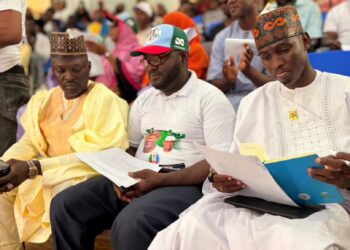
This appeal was made during the concluding session of the 17th Annual Review Meeting of the ECOWAS Regional Network of National Focal Institutions Against Trafficking in Persons Plus (RNNI-TIP+), which took place in Lagos.
Chaired by Dehunge Shiaka, the representative from Sierra Leone, the meeting underscored the connection between migration and human trafficking within the region. Mr. Shiaka, who also serves as the executive director of Sierra Leone’s Anti-Trafficking in Persons Agency, highlighted that certain countries have been identified as major transit routes for migrants seeking better opportunities abroad.
He pointed out that these routes often leave migrants vulnerable to exploitation in both transit and destination countries, creating an environment conducive to trafficking networks.
“Over the past five days, we have thoroughly examined these issues and reached a consensus that migration significantly drives human trafficking,” Mr. Shiaka stated. He insisted that member states must enhance their efforts to identify trafficking routes and implement effective measures to curtail migrant flows through their territories.
Mr. Shiaka emphasized that human trafficking poses a substantial challenge in the region, with irregular migration and migrant smuggling exacerbating this hidden crime. He noted that cultural factors, such as fears related to witchcraft, often deter victims from reporting their experiences.
Despite these obstacles, he affirmed that regional stakeholders are committed to bridging gaps and fortifying anti-trafficking strategies.
“One key recommendation was to empower communities with knowledge about traffickers’ tactics to recognize the risks associated with irregular migration and its potential for exploitation,” he remarked. He urged governments to educate their citizens about the dangers of perilous journeys that could entrap them within trafficking networks in both transit and destination countries.
Awareness campaigns and public education were highlighted as essential recommendations, alongside regular community engagement to protect individuals from becoming victims of traffickers.
Olatunde Olayemi, representing the ECOWAS Director of Humanitarian and Social Affairs, encouraged member states to incorporate the meeting’s recommendations into their national action plans. He emphasized the necessity for capacity building in victim identification and coordinated law enforcement efforts across the region.
“Member states are expected to return and implement the national priorities expressed at this meeting within their existing action plans,” Mr. Olayemi clarified. He also mentioned that ECOWAS, in collaboration with partner organizations, offers technical and financial assistance to enhance national responses to trafficking.
Implementation of these strategies will be reviewed annually, with both national and regional plans subject to monitoring.
Isabelle Wolfsgruber, head of office at the International Centre for Migration Policy Development (ICMPD) in Nigeria, stressed the center’s support for migration and free movement in West Africa. However, she also highlighted the critical role of cooperation, awareness-raising, and prevention in addressing trafficking associated with irregular migration.
“Trafficking is a transnational crime orchestrated by organized criminal groups. International cooperation among nations is vital to combat this issue,” Ms. Wolfsgruber stated.
(NAN)