
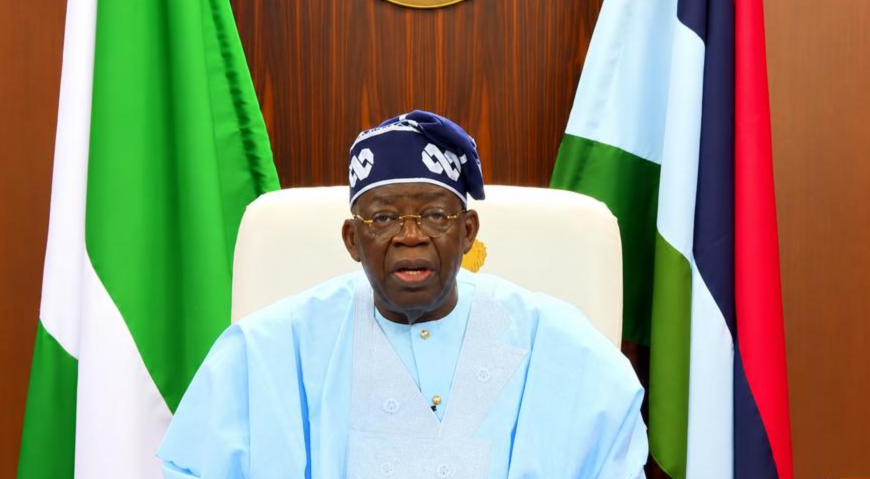
The Makinde-Daura Presidential Campaign Organisation has boasted that its candidate, Seyi Makinde, will defeat President Bola Tinubu in 12 battleground states and other parts of the country in the January 2027 presidential election.
The organisation also predicted victory for Makinde, who is contesting on the platform of the Allied Peoples Movement, in Rivers State and the Federal Capital Territory, Abuja.
The group made its position known in a statement issued on Saturday by its Director of Strategy and Communication, Richard Ihediwa.
It attributed Tinubu’s planned campaign visits to the 12 states to the growing popularity of Makinde’s RESET NIGERIA agenda, although it provided no polling evidence to support the claim.
The states are Oyo, Kaduna, Rivers, Plateau, Borno, Enugu, Bauchi, Sokoto, Delta, Kano, Adamawa and Lagos.
The organisation said the President’s visits would not change voters’ determination to reject his re-election bid, blaming his administration for the economic hardship experienced by Nigerians.
It described the growing resentment against the Federal Government as a consequence of what it called Tinubu’s failures in office.
“Mr President should know that his visit to these states, if he eventually does, will not in any way change the direction or the determination of the people to vote him out,” the statement said.
The campaign organisation challenged Tinubu to travel by road during his proposed visits to assess the condition of federal highways, infrastructure and the living conditions of Nigerians.
It also urged the President to engage directly with residents in communities rather than rely on campaign rallies and airport receptions.
“If President Tinubu believes he is popular as he claims, he should not stop at the rally ground or at the airport when he gets to any of the states,” it said.
The group argued that Makinde’s RESET NIGERIA agenda offered a more practical alternative to Tinubu’s Renewed Hope agenda, claiming that the proposal was gaining acceptance, particularly among young Nigerians.
It said Makinde’s programme included a proposed four-year transitional government of national unity focused on education, the economy, security and socio-political reforms.
According to the organisation, the plan would address poverty through increased production, improve security through intelligence gathering and other measures, expand access to quality education and strengthen public institutions.
It contrasted the proposals with what it described as the shortcomings of the Tinubu administration.
The group also criticised the President’s campaign council, describing its members as failed politicians who could not attract votes.
However, the claims of growing support for Makinde and predictions of victory in the 12 states were those of the campaign organisation and were not independently established in the statement.