
Women’s advocacy in Africa has reached a pivotal juncture. Are we building a movement that will outlive individual advocates, or are we creating platforms that rise and fall with personalities alone?
When advocacy for women’s inclusion becomes too closely identified with an individual, political party, or social class, it risks being dismissed as a struggle for positions. However, when anchored in institutions, laws, and measurable societal benefits, it becomes far more difficult to ignore.
The ultimate objective is not simply to place more women in office. It is to build societies where competent women have fair opportunity to contribute alongside men, and where their participation demonstrably improves governance, families, communities, and national development.
Historical Lessons in Collective Action
Nigeria need not look beyond its borders to understand the power of collective women’s action. The Women’s War of 1929—Ogu Umunwanyi—remains one of the most significant examples. Thousands of women across Eastern Nigeria mobilised against colonial policies, the warrant-chief system, and threats to their economic and political position. The uprising crossed communities and ultimately forced changes in the colonial administration.
Similarly, Funmilayo Ransome-Kuti’s Abeokuta Women’s Union demonstrated the power of moving beyond elite organisation to build a movement incorporating ordinary market women. The union mobilised tens of thousands around taxation, economic justice, political representation, and social welfare.
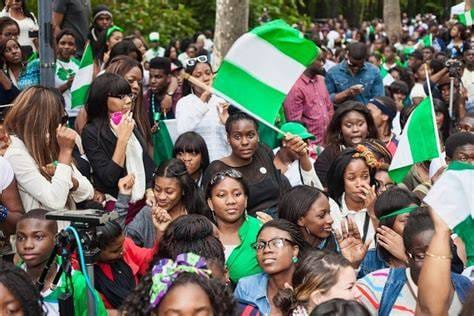
The lesson for today’s advocates is clear: successful women’s movements are strongest when educated, professional, political, rural, and grassroots women see themselves as partners in the same cause. Women’s inclusion cannot remain an elite conversation about appointments in Abuja or state capitals. The market woman, farmer, widow, young graduate, entrepreneur, woman living with disability, and rural girl must all recognise themselves in the advocacy.
Learning from Africa’s Success Stories
Rwanda: From Campaigns to Constitution
Rwanda provides Africa’s most cited example of institutionalised women’s inclusion. Its constitutional framework requires women to occupy at least 30 per cent of decision-making positions. Women’s representation has become embedded across governance institutions—not dependent upon the goodwill of any president or party leader. Sustainable inclusion requires constitutional provisions, legislation, party rules, and accountability mechanisms.
Senegal: Electoral Engineering
Senegal’s 2010 gender parity law established male-female parity in elective institutions. Candidate lists now alternate between men and women, making inclusion part of the electoral system rather than an occasional concession. This transforms the conversation from “Please give women an opportunity” to “This is how our democratic institution functions.”
South Africa: Coalition Building
South Africa offers equally valuable lessons. Women played central roles in the anti-apartheid struggle, and during the democratic transition, organised across political boundaries through broad coalitions. The Women’s National Coalition brought together numerous organisations and regional coalitions. Political affiliation, ethnicity, religion, and profession did not prevent collaboration on shared priorities.
Nigeria’s Numbers Should Concern Everyone
Women constitute roughly half of Nigeria’s population and electorate, yet remain severely underrepresented in political decision-making. This should not be treated simply as a “women’s problem.” When a substantial part of a country’s human capital is inadequately represented where budgets, laws, and development priorities are determined, the nation potentially loses knowledge, experience, and perspectives that could improve decision-making.
The argument for women’s inclusion must therefore be reframed: it is not women versus men. It is development versus exclusion.
Men Must Be Partners, Not Targets
One mistake that weakens women’s advocacy is presenting every discussion as confrontation between women and men. Men remain critical stakeholders in political parties, traditional institutions, religious organisations, businesses, families, and government. Sustainable change requires strategic male allies who understand that women’s progress does not require men’s failure.
A woman entering Parliament broadens democracy. A woman becoming economically productive strengthens household income. A girl receiving quality education expands the future productive capacity of her community. Women’s empowerment should be communicated as a shared national dividend.
Beyond Political Appointments
Measuring women’s progress primarily by the number of ministerial appointments or board memberships is insufficient. Inclusion must extend to economic empowerment, education, agriculture, technology, entrepreneurship, access to credit, healthcare, property ownership, peacebuilding, and community leadership.
The rural woman who gains access to agricultural inputs and markets has been empowered. The widow who receives skills training and financing rather than perpetual handouts has been empowered. The young woman trained in technology who secures employment has been empowered. When these women become employers, taxpayers, community leaders, and educators of another generation, society receives the multiplier effect.
From “My Advocacy” to “Our Institution”
Sustainable women’s advocacy requires:
1. From personalities to institutions – organisations must have governance structures and succession plans that survive their founders
2. From elite representation to grassroots inclusion – rural and economically disadvantaged women must help define the agenda
3. From confrontation to partnership – male allies should be deliberately engaged
4. From appointments to empowerment – representation must be accompanied by education, skills, financing, and economic opportunities
5. From rhetoric to legislation – advocacy should produce enforceable policies, party rules, and legal frameworks
6. From individual visibility to collective impact – success should be measured by how many women advance, not by how prominent an advocate becomes
7. From women-only benefits to national outcomes – every intervention should demonstrate how women’s inclusion strengthens families, communities, and the economy
The Historical Lesson
From the women of Eastern Nigeria in 1929 to Funmilayo Ransome-Kuti’s mobilisation of Abeokuta’s market women; from South Africa’s cross-organisational mobilisation to Senegal’s parity legislation and Rwanda’s institutionalisation of women’s participation—history teaches essentially the same lesson: movements become transformational when the cause becomes bigger than the personalities leading it.
The women who came before us were not merely asking to be celebrated as powerful individuals. They challenged systems that affected thousands of other women. That should remain the spirit of modern advocacy.
Nigeria does not need women’s inclusion simply to count more female faces around conference tables. We need women included because no nation can sustainably develop while limiting the contribution of half of its human resources.
Women’s advocacy must cease to be perceived as a personal pursuit, an elite project, or a competition with men. It must become a broad national movement involving government, political parties, traditional and religious institutions, civil society, the private sector, men, women, and young people.
The real victory will not come when one woman receives an appointment or another receives an award. Victory will come when inclusion no longer depends on who is advocating, who is in power, or who knows whom—because fairness, opportunity, and representation have become part of the institutions of the nation.
At that point, women’s inclusion will no longer be merely a women’s agenda. It will be a Nigerian development agenda.
—
Dr. Jumai Ahmadu is Director, Reform Coordination and Service Improvement Department, Federal Capital Territory Administration.