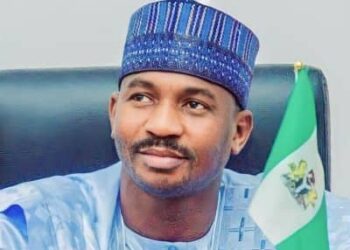

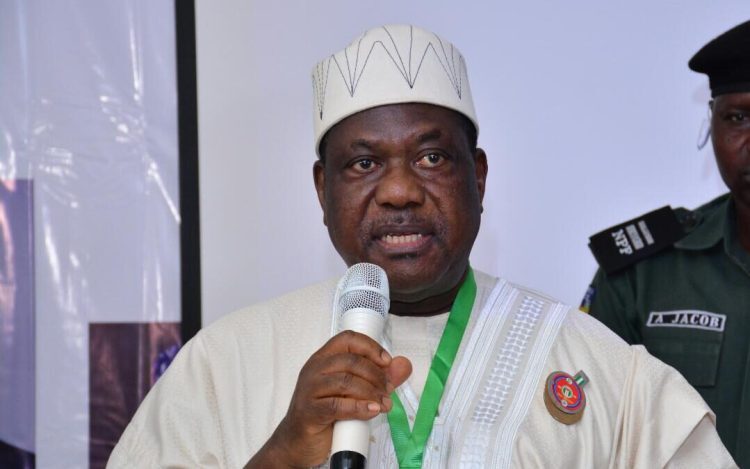
The Secretary to the Government of the Federation (SGF), Senator George Akume, has revealed that former Vice President Atiku Abubakar was among the political leaders who endorsed the rotational presidency system following the annulment of the 12 June 1993 presidential election.
Speaking at a World Press Conference in Abuja to mark Nigeria’s 27th Democracy Day, Akume clarified that the decision to alternate power between the North and South was a collective pact—not an imposition.
He recalled that the annulment of the 12 June election, won by Chief MKO Abiola and widely regarded as Nigeria’s freest and fairest poll, forced leaders to make tough choices to preserve national unity.
According to Akume, senior Peoples Democratic Party (PDP) figures convened in Kaduna under the late Chief Solomon Lar and Alhaji Adamu Ciroma. At the heart of the discussion was the future of the presidency.
“It was a tough argument before the issue of rotational presidency was agreed on. At the end, we had to concede. We must do this. The 12 June annulment had complicated everything,” Akume said.
“Atiku was one of the leaders at that meeting, which was convened by Chief Solomon Lar. He was part of that agreement.”
The SGF described the annulment as a painful setback to Nigeria’s democratic aspirations, stressing that Abiola won “round and square”.
He added that the enduring lesson from the 12 June experience is the supremacy of the people’s will. “The voice of the people must always be supreme; it must be sacrosanct. That is the beauty of democracy. We prefer the ballot to bullets.”
Akume expressed confidence in the Independent National Electoral Commission (INEC), noting that its current leadership understands the gravity of the past. “Never again would such happen in this country,” he said.
Drawing a parallel with the United States, he said: “President Trump lost to Joe Biden. He did not bring America down. He went back, prepared, and came back to win. That is the beauty of democracy.”
The SGF praised Nigeria’s 27 years of uninterrupted democratic rule, highlighting freedoms such as the right to criticise leaders without fear of “a midnight knock on your door”.
He urged political actors to respect electoral outcomes and continue strengthening the nation’s democratic culture.