
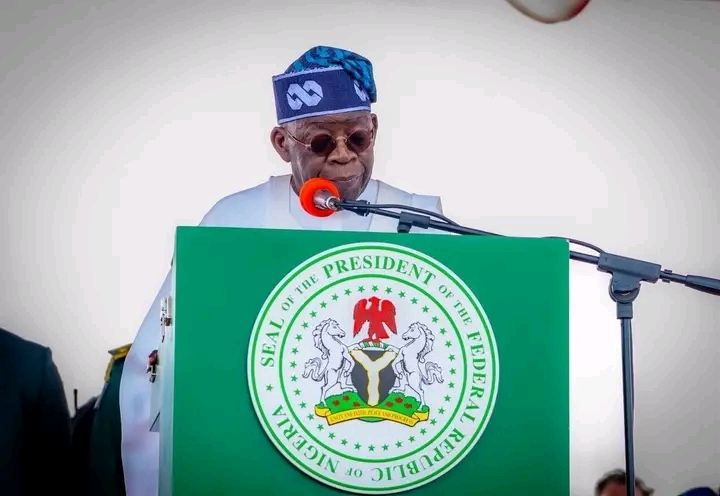
President Bola Tinubu has commissioned a new Compressed Natural Gas (CNG) daughter booster station in Jahi, Abuja, as part of a broader push to curb Nigeria’s costly reliance on petroleum products and harness its vast gas reserves.
Flanked by the Minister of State for Petroleum Resources (Gas), Ekperikpe Ekpo, the President described the facility as a cornerstone of his administration’s Renewed Hope Agenda, which prioritises domestic gas utilisation for industrial growth.
Nigeria holds proven gas reserves of approximately 215 trillion cubic feet. However, much of this resource has historically been exported, leaving Nigerians burdened by expensive and polluting fuels. The Tinubu administration is now moving to reverse that trend.
The Jahi commissioning was one of four simultaneous gas infrastructure projects unveiled nationwide. Similar facilities were launched by Ibile Oil and Gas in Lagos and Portland Energy in Owerri.
“This facility marks another important milestone in our collective drive to deepen gas utilisation, expand access to cleaner energy solutions and strengthen Nigeria’s gas value chain,” Ekpo said.
Private sector drives transformation
At the forefront of this shift is Rolling Energy Limited, the private firm behind the Jahi station, which developed the project in partnership with the Midstream and Downstream Gas Infrastructure Fund (MDGIF).
Rolling Energy’s Chairman, Mubarak Umar Dambata, disclosed that the company is expanding beyond Abuja, with mother stations, daughter stations and liquefied natural gas facilities underway in Kaduna, Kano and Borno states.
The firm has also partnered with the Presidential Initiative on CNG and Electric Vehicles to convert more than 8,000 vehicles to gas-powered systems – a policy designed to deliver direct savings for commuters, tricycle operators and businesses.
Capacity and commercial impact
The Jahi facility has a sales capacity of 1,000 Standard Cubic Metres (SCM) per hour and features two CNG tube skids with a combined storage capacity of 17,000 SCM. It also houses a Mass Conversion Centre capable of converting up to 20 vehicles and 25 tricycles daily.
Since commencing commercial operations, the station has been serving 350–400 vehicles per day, with projected capacity to serve over 1,000 CNG vehicles and 100 trucks daily across the Federal Capital Territory and surrounding regions.
‘Cleaner, more viable option’
Chairman of the Presidential Initiative on CNG and Electric Vehicles, Ismahil Ahmed, said the removal of fuel subsidies had created urgency for alternative energy.
“CNG offers a cleaner and more economically viable option,” Ahmed argued, urging investors to move quickly into a market with rising demand for gas infrastructure.
Presidential Adviser Sunday Dare added that the administration has commissioned 25 projects nationwide to mark its third anniversary, with clean energy and gas infrastructure featuring prominently.
With regulatory backing from the Nigerian Midstream and Downstream Petroleum Regulatory Authority and financial support from MDGIF, officials say the foundation for a CNG-powered Nigeria is now in place.
For truck drivers, tricycle operators and factory owners, the promise is lower costs, cleaner air and greater energy reliability.