
At a time Africa is grappling with deepening fiscal pressures, the Executive Chairman of the Nigeria Revenue Service, Zacch Adedeji, is taking a measured approach to reposition the country at the centre of the continent’s revenue reforms.
Rather than loud rhetoric, Adedeji’s strategy has focused on coordination, quietly bringing together countries, institutions and experts to address persistent tax challenges across Africa.
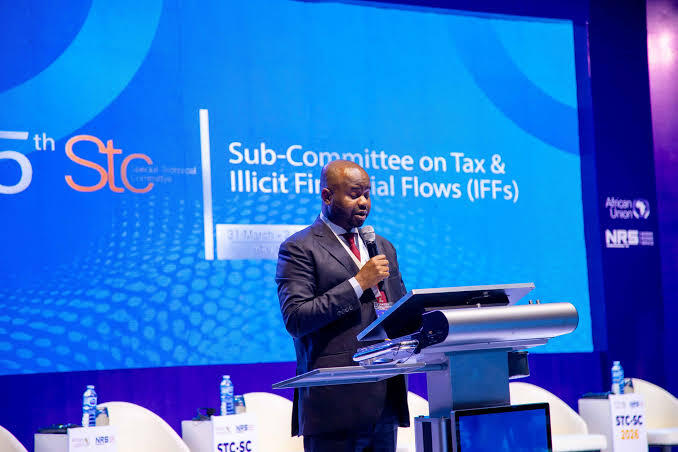
This effort came into sharper focus as Nigeria hosted the African Union Subcommittee on Tax and Illicit Financial Flows in Abuja, signalling a shift from domestic concerns to broader continental engagement.
The meeting underscored a growing consensus that Africa’s fiscal challenges are interconnected and require collective solutions.
For decades, many African countries have struggled with widening gaps between revenue and expenditure, driven by population growth, infrastructure deficits and increasing social demands.
At the same time, billions of dollars are lost annually through tax evasion, aggressive avoidance and illicit financial flows, resources that experts say could transform critical sectors.
“The impact is evident in stalled projects, weakened public services and rising debt burdens,” a source familiar with the discussions said.
Analysts warn that continued reliance on borrowing is shrinking fiscal space and, in some cases, limiting national sovereignty.
However, there are signs of change.
Across the continent, governments are beginning to treat tax administration as a central pillar of governance rather than a routine bureaucratic function.
When effective, experts note, tax systems can boost public trust, improve accountability and strengthen the social contract between citizens and the state.
Nigeria is aligning with this shift.
Under Adedeji, reforms within the Nigeria Revenue Service are targeting efficiency, transparency and improved taxpayer engagement.
Processes are being streamlined, compliance strengthened and digital tools deployed to reduce leakages and enhance revenue tracking.
Officials say the objective is to build a system capable of supporting national development while rebuilding public confidence.
“Voluntary compliance improves when citizens trust that their taxes are properly managed,” an official noted.
Experts also stress that illicit financial flows cannot be tackled by individual countries acting alone.
They argue that cross-border cooperation, information sharing and policy alignment are critical to closing loopholes exploited by multinational entities and complex financial systems.
Meetings such as the Abuja session are therefore seen as vital platforms for harmonising strategies and strengthening institutional frameworks.
There is also a growing push by African countries to influence global tax rules in ways that reflect the continent’s realities.
Observers say this marks a shift from passive participation to active engagement in international fiscal governance.
Beyond technical reforms, political will remains a decisive factor.
Stakeholders insist that sustained commitment from leadership is essential to ensure long-term success.
“The cost of inaction is simply too high,” another expert said, noting that effective revenue mobilisation is key to economic resilience.
For many, the conversation ultimately comes down to self-reliance.
If African countries can generate and manage their own resources efficiently, they can reduce dependence, invest in development and better withstand economic shocks.
While the Abuja meeting may not deliver immediate solutions, it is widely regarded as a step in the right direction.
With stronger cooperation and sustained reforms, stakeholders believe Africa can gradually curb illicit financial flows and retain more of its wealth.
For Nigeria, the opportunity to lead this charge comes with both responsibility and promise.