

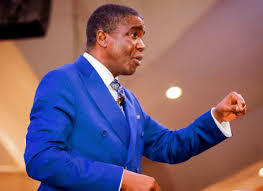
In a country already battling rising hardship and uncertainty, the warning from respected cleric David Abioye has added a sobering voice to growing public concern: Nigeria, he says, is fast becoming a jungle.
The Overseer of Living Word Conquerors Global Assembly did not mince words as he addressed worshippers during a Special Easter Celebration Service in Abuja. His message, though delivered from the pulpit, echoed far beyond church walls—touching on a reality many Nigerians now confront daily: fear.
From the troubled communities in Plateau State to the tense settlements in Nasarawa State, and stretching into Benue State and Taraba State, reports of killings, displacement and violence have become disturbingly frequent. What was once shocking now risks becoming routine.
Bishop Abioye painted a grim picture of a nation where lives are cut short with alarming ease. He recalled incidents where dozens were killed in a single attack—including a pregnant woman—describing it as evidence that the value of human life is steadily eroding.
“In a situation where about 30 people are killed just like that, it shows that human life is losing its value,” he said, his tone reflecting both grief and urgency.
Across affected regions, the human cost is visible. Families abandon homes overnight, fleeing into uncertainty. Makeshift journeys on motorcycles—often carrying children and the elderly—have become a desperate escape route from violence. For many, survival now depends on how quickly they can run.
The cleric did not shy away from calling out leadership. He urged the Federal Government under President Bola Ahmed Tinubu to take immediate and decisive steps to halt the growing insecurity.
“Our dear government, please take responsibility. The citizens have nowhere else to turn,” he appealed.
Beyond criticism, his message carried a warning: insecurity, if left unchecked, respects no boundaries. It could spread beyond rural communities and eventually reach the corridors of power.
“Leadership is not a title, it is a duty,” Abioye stressed. “Those in authority must rise and act now.”
For many Nigerians, his words resonate deeply. In markets, motor parks and homes, conversations increasingly revolve around safety—where next, who next, and how long before normalcy returns.
As the nation marks the Easter season—a time traditionally associated with hope and renewal—the bishop’s remarks serve as a stark reminder that for countless citizens, peace remains a distant dream.