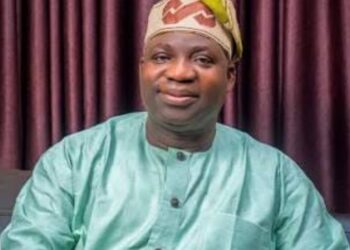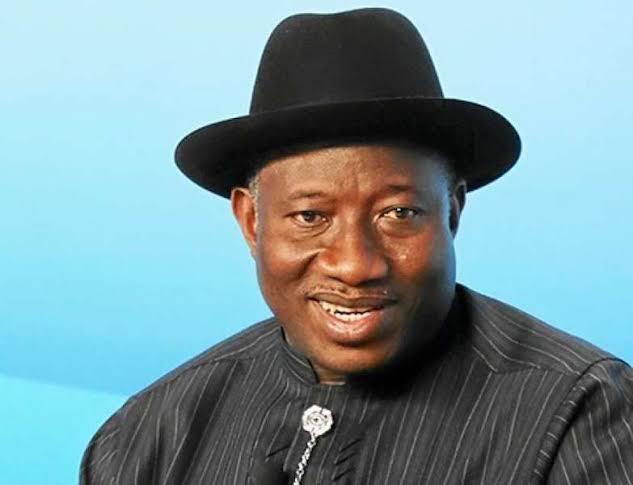
Former Sports Minister Bolaji Abdullahi has shed light on the circumstances surrounding his dismissal from President Goodluck Jonathan’s cabinet in March 2014.
Abdullahi, who represented Kwara State in the Federal Executive Council, served as Minister of Youth Development before taking on the role of Minister of Sports. Now the National Publicity Secretary of the African Democratic Congress (ADC), he recounted the events that led to his departure during an appearance on Channels Television’s Politics Today.
Twelve years after his dismissal, Abdullahi revealed that his refusal to publicly criticise former Senate President Bukola Saraki during a critical campaign in Kwara State was the primary reason for his sacking. Saraki had recently switched from the Peoples Democratic Party (PDP) to the newly formed All Progressives Congress (APC), creating a political rift that put Abdullahi in a difficult position.
“There is always a price to pay because you find yourself caught in between,” he stated. “You are not being asked to take sides in a battle that you hardly understand most of the time.”
Abdullahi explained that, as the most senior political appointee from Kwara, he was expected to rally support for Jonathan’s campaign and lead the PDP structure in the state. However, when the campaign commenced, he faced pressure to join the chorus of those attacking Saraki. “When we got to Kwara, everybody was attacking Saraki. I was expected to also join and attack Saraki, and I said no. So it was a matter of principle,” he asserted.
Despite the circumstances of his removal, Abdullahi expressed no regret about serving in Jonathan’s government. He acknowledged that he anticipated his dismissal due to his loyalty to Saraki, even while maintaining a working relationship with the President.
Reflecting on his previous roles, Abdullahi noted that he had a longstanding association with Saraki, having served as his special assistant on communication, special adviser on policy, and later as commissioner for education when Saraki was the governor of Kwara State.
This revelation underscores the often complex and turbulent nature of Nigerian politics, where personal loyalties can clash with party expectations. Abdullahi’s experience serves as a reminder of the intricate dynamics that can influence political appointments and the sometimes heavy toll of standing by one’s principles.
As the political landscape evolves, Abdullahi’s insights provide valuable context for understanding the challenges faced by public officials navigating competing allegiances. His story is emblematic of the broader struggle for integrity within a political system frequently characterised by factionalism and shifting loyalties.
In conclusion, Bolaji Abdullahi’s account of his dismissal highlights the sacrifices made by political figures who strive to maintain their principles in the face of conflicting demands. As Nigeria continues to grapple with its political realities, the importance of loyalty, integrity, and the impact of personal relationships on governance cannot be overstated.