
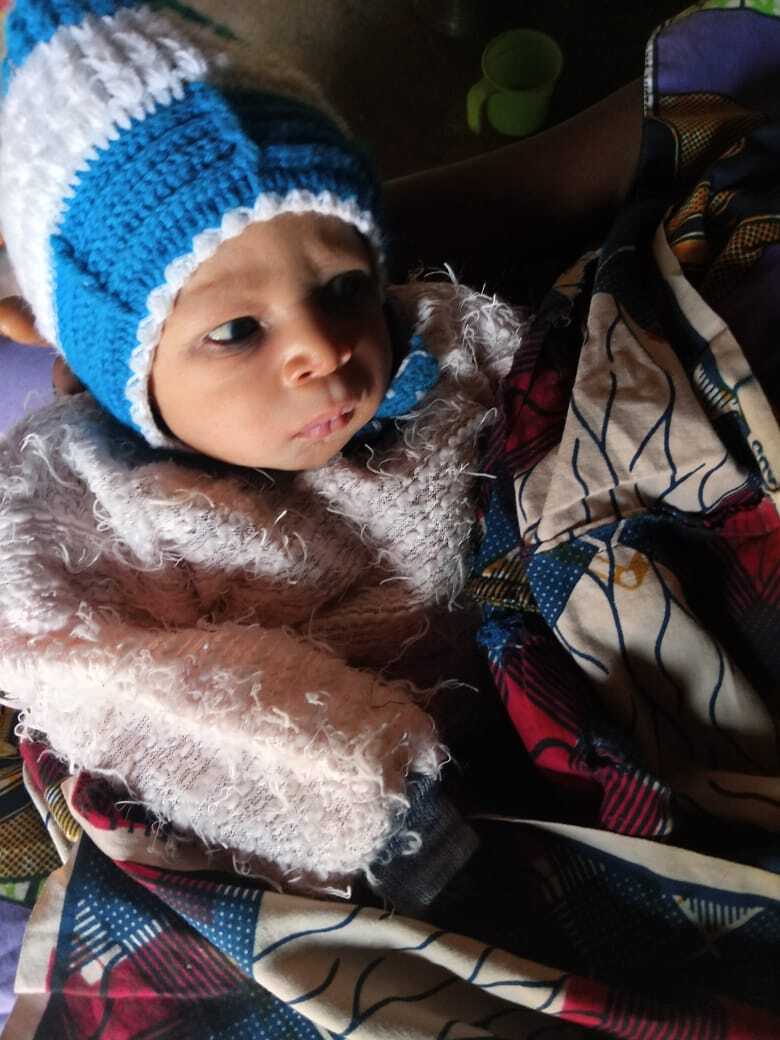
(Kaduna, Nigeria) – In a chilling testimony that exposes the human cost of Nigeria’s protracted security crisis, 27-year-old Maimuna Babangida has detailed her nightmare of being kidnapped alongside her four children and subsequently giving birth without any medical assistance in a bandit camp.
Speaking exclusively to Elanza News from an undisclosed location, Babangida, her voice strained with trauma, recounted the attack on Kadage community in Kauru Local Government Area on the night of 5 January 2025. The assault shattered the quiet as armed men stormed the village, gunfire erupting into the darkness.
“We had all retired, unaware of the danger descending,” Babangida recalled. “Suddenly, around half-nine, gunshots shattered the silence. There was screaming, panic. Before we could even process it, they were everywhere—surrounding us.”
Forced from her home with her children—Bilki, Safiya, Salim, and Aisha—she was among thirty residents marched into the dense forest. The journey was a brutal trek through hostile terrain, a physical torment for a woman in her third trimester and critically unwell.
“I was eight months pregnant and very sick,” she stated. “The walk was endless. Some had no shoes. There was no mercy, no concern for my condition or the life I was carrying.”
A Captivity of Deprivation and Degradation
Her 13 days in captivity were marked by systematic dehumanisation. Confined in the bandits’ camp, Babangida described conditions of severe deprivation where food was not only scarce but served in a manner designed to break spirit.
“The feeding was degrading. It was not just about hunger; it was about humiliation,” she said. “Watching my children suffer, their fear—it broke me. I wept daily. No one should endure this.”
Throughout this period, despite her visibly precarious health and advanced pregnancy, she received precisely zero medical attention. Her appeals for care for herself and her unborn child were ignored, a stark violation of basic human rights and international humanitarian law.
The Trauma of Birth Amidst Terror
The climax of her ordeal came when she went into labour within the camp. With no sanitation, no supplies, and no professional help, she was forced to deliver her baby surrounded by fear and uncertainty.
“When the pains started, I knew true terror,” Babangida recounted, her composure wavering. “The bandits offered nothing. No help, no pity. I delivered my baby with only the frightened, shaky hands of fellow captives to assist. There was no medicine before, none after. Myself and my newborn were just… left there, vulnerable.”
This traumatic birth underlines a horrifying escalation in the tactics of kidnap-for-ransom groups, who show blatant disregard for the most fundamental aspects of human dignity and life.
A Mother’s Desperate Plea
While Maimuna Babangida and her newborn infant were eventually released, likely due to the perceived liability of her condition, her agony is far from over. Her four other children remain in the clutches of the bandits, a fact that dominates her every waking thought.
“My relief is poisoned by this unbearable worry. My children are still there, living that nightmare,” she pleaded, her words turning to a direct appeal. “I am begging the government, the security agencies—please, intensify efforts. Do not forget them. Fast-track their rescue and bring my babies home.”
The Broader Crisis: Kaduna in the Crosshairs
Babangida’s harrowing story is not an isolated incident but a severe symptom of the pervasive insecurity plaguing Kaduna State and the wider North-West region. Communities in Kauru, Chikun, Kajuru, and Birnin Gwari LGAs have borne the brunt of incessant attacks, mass abductions, and violent raids.
Security analysts note that criminal gangs, loosely termed ‘bandits’, have exploited ungoverned spaces and systemic security gaps to terrorise populations, engaging in rampant kidnapping as a lucrative enterprise. The psychological warfare and physical brutality described by Babangida are tactics employed to pressure families and authorities for rapid ransom payments.
Calls for Action and Systemic Response
This case has prompted renewed calls from human rights organisations and community leaders for a more robust, intelligence-driven, and humane security response. There is a growing demand for policies that prioritise not only kinetic operations but also the protection of vulnerable victims, particularly women and children, during and after such crises.
“Maimuna’s experience is a shocking testament to the gendered dimensions of this insecurity,” commented [Insert Name/Title, e.g., Amina Hassan, Director of a local Women’s Rights NGO]. “Women in captivity face unique and devastating violations. The government’s response must integrate specialised trauma care and a focused strategy for rescuing abducted women and minors.”
As Maimuna Babangida attempts to recover from her physical and psychological wounds, her story stands as a powerful indictment of the ongoing crisis. It is a stark reminder of the countless silent sufferers and a urgent summons to action. The nation waits to see if her plea for her children will catalyse a decisive rescue, or become another echo in the cavern of Nigeria’s unresolved security challenges.
Elanza News is committed to ethical reporting on the human impact of Nigeria’s security situation. We have chosen to withhold certain specific details and the victim’s exact location to protect her and her family’s ongoing safety.