

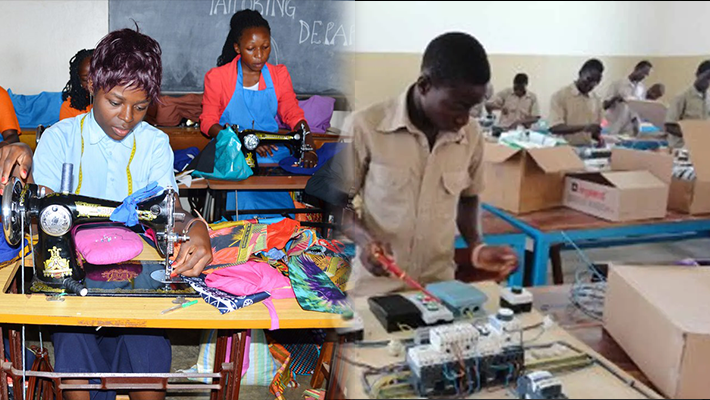
Jean-Paul Abiaga, head of office and representative in Abuja, has restated the need for stakeholders in Nigeria’s education sector to prioritise skills development among youths to help tackle unemployment gaps in the agricultural sector.
Mr Abiaga disclosed this on Thursday in Abuja, at the Labour Market Workshop focused on skills gap analysis in the Agro-Processing Sector under the BEAR III project in Nigeria. According to him, the BEAR III project is implemented by UNESCO with support from South Korea.
Mr Abiaga said, “It is only relevant market-orientated skills that will enable people thrive in today’s fast-changing world, a world ruled by AI, technology, digital interventions.”
According to him, by identifying where this gap exists, we can prepare more effectively, design responsive training programmes and strengthen the link between education and employment.
He explained that the workshop’s objective centred on shaping policy legislation and implementation in agro-processing, ensuring TVET programmes are responsive, ready for the future and aligned with industry needs.
Speaking at the event, Patricia Ogungbemi, a director of technology and science education at the Federal Ministry of Education, underscored the need for adequate investment in technical skills teaching and learning, to achieve targets.
Ms Ogungbemi urged participants at the workshop to work more closely with each other to boost food security.
“Our mission is move beyond theoretical science and transition into applied industrial competence. we cannot train in a vacuum,” said Ms Ogungbemi. “We must ensure skills cultivated in TVET institutions are exact skills required by the factory floors and processing plants of today and tomorrow.”
Ibrahim Ado, a representative from Kano’s education ministry, said the state recognised WBL as a critical pathway for bridging the gap between theoretical knowledge and practical industry skills, given its large youth population and growing economic activities, especially in agriculture and agro-processing.
“The state government under the leadership of Abba Yusuf, remains fully committed to repositioning the education sector, to respond to the demands of the labour market.
“In this regard, we are strengthening our TVET institutions, promoting partnerships with industry and aligning our education policies with national priorities and global best practices,” he said.
Onallo Akpa, chairman of the Sector Skills Council for Agriculture, expressed concern over lacking skills in agriculture-processing and post-harvest management.
According to him, this has led to organising various workshops in Abuja, Kano and today at KRIVET with the support of the Korean government to promote understanding about the gaps in supporting agro-processing.
(NAN)