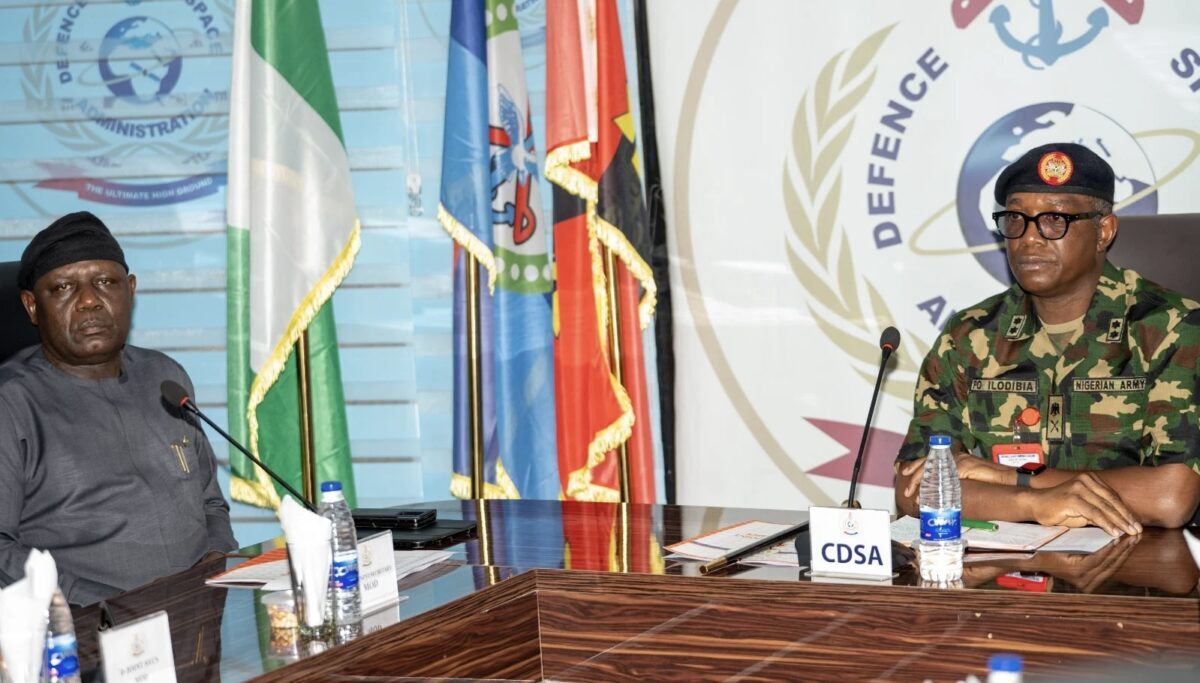
The federal government has tasked the Defence Space Administration with enhancing military operations using space-based technologies and intelligence.
The permanent secretary of the defence ministry, Richard Pheelangwah, gave the charge during a familiarisation visit to the agency’s headquarters in Abuja, according to a statement on Thursday.
Mr Pheelangwah noted that the DSA was a critical enabler of operational effectiveness for the armed forces, as it provided geospatial intelligence, satellite imagery, and real-time data required for the planning and execution of military operations.
He stated that the agency’s contributions had resulted in improved border monitoring, quicker response to security incidents, and the successful tracking of criminal activities, all of which enhanced surveillance, reconnaissance, and situational awareness for more coordinated and precise operations across various theatres.
According to him, the evolving nature of modern warfare demands the integration of advanced technologies.
He added that the DSA remained central to Nigeria’s efforts at addressing contemporary security challenges.
The permanent secretary also urged the agency to take concrete steps to consolidate its achievements and to actively pursue deeper collaboration with other security and intelligence organisations to further enhance operational outcomes.
He assured the ministry of continued support in addressing key challenges, particularly in funding, infrastructure, and capacity development.
The chief of the Defence Space Administration, Phillip Ilodibia, said the agency had remained focused on delivering actionable intelligence to support military operations.
Mr Ilodibia said that the DSA’s capabilities in geo-spatial intelligence, data fusion, and cyber operations had led to the interception of unauthorised communications, the prevention of cyber-attacks, and the identification of critical security threats, all of which continued to play a vital role in supporting mission successes.
He also highlighted challenges such as inadequate accommodation and funding constraints, and called for increased agency involvement in national security decision-making, emphasising the need for urgent action to secure greater support.
(NAN)