

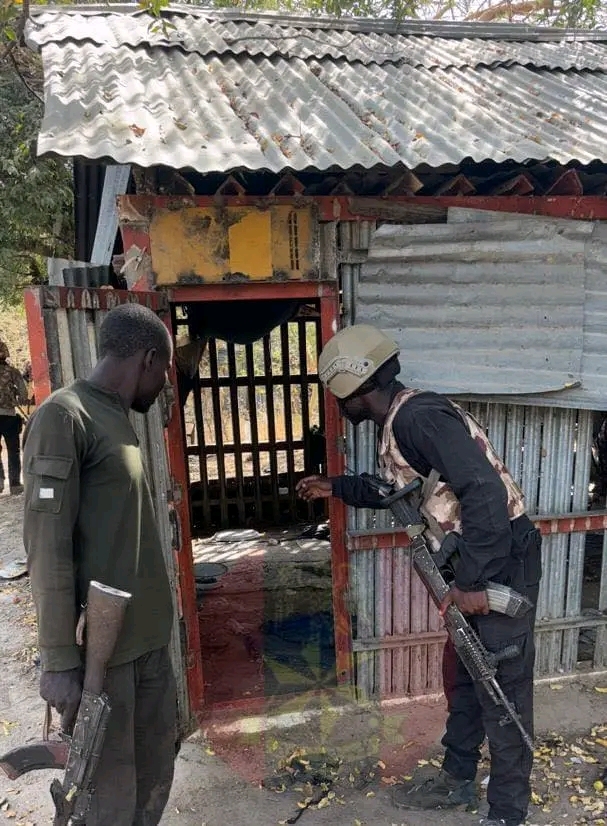
In a significant operational breakthrough, the Joint Task Force North East Operation HADIN KAI (OPHK) has successfully dismantled key ISWAP detention facilities deep within the Timbuktu Triangle, marking a pivotal moment in the ongoing battle against terrorism. This operation not only showcases the strategic advancements of Nigerian troops but also signals a turning tide in the fight for regional stability.**
In a meticulously planned assault executed over the past two weeks, troops of OPHK targeted and destroyed three major detention facilities hidden within the dense forests of the Timbuktu Triangle, located in the Gujba Local Government Area. This operation, part of the larger Operation DESERT SANITY V, represents a significant incursion into territories previously viewed as impenetrable by security forces. The success of these operations highlights the increasing effectiveness of counter-insurgency measures being employed against the Islamic State West Africa Province (ISWAP).
From January 21 to the present, intelligence-led operations led to the discovery and subsequent destruction of these facilities, which had the capacity to detain up to 300 individuals. This discovery underscores the strategic significance of these sites within ISWAP’s operational framework, reinforcing the group’s reliance on detention as a means of control and coercion.
A Turning Point in Counter-Terrorism Efforts
The coordinated military efforts forced ISWAP militants to retreat from their critical strongholds, leading to the uncovering of these detention camps. The destruction of these facilities not only denies ISWAP vital operational space but also significantly undermines their psychological edge. The implications of this operation are far-reaching, as it directly impacts the terrorists’ capacity to hold hostages for ransom and exert influence over local communities.
Among the notable outcomes of this operation, over 70 captives managed to escape during the chaos of the assaults. Eyewitness accounts from these escapees, including Malam Jidda Ba Jidda, a resident of Kufi village, provide chilling insights into the conditions within the camps. Abducted on December 22, 2025, Ba Jidda recounted his harrowing experience and eventual escape during a fierce gunfight between ISWAP militants and advancing troops.
Significant Combat Engagements
The military engagement during this operation was intense, resulting in substantial losses for ISWAP. Reports indicate that at least 32 militants were neutralised, including two Qaids and three Munzirs—key figures within the terrorist organisation. The casualties suffered by ISWAP further diminish their operational capabilities and disrupt their internal hierarchy, making it increasingly difficult for them to maintain control over their networks.
Following the thorough clearance of the area, the three detention facilities were systematically demolished, thereby permanently denying ISWAP the opportunity to reclaim these strategic sites. The successful execution of this operation exemplifies the resilience, professionalism, and tactical acumen of the OPHK troops.
Broader Implications for Regional Security
The destruction of these detention facilities serves as more than just a tactical victory; it represents a significant blow to ISWAP’s internal enforcement mechanisms. By disrupting their ability to detain civilians and collect ransom, the operation constricts their freedom of movement and operational effectiveness.
Moreover, the large-scale escape of detainees not only weakens ISWAP’s control over local populations but also has the potential to yield valuable intelligence. The testimonies of these escapees can provide critical insights into ISWAP’s operations and strategies, aiding ongoing military efforts.
Despite the overall calm in the security situation across the Theatre, the unpredictability of the landscape remains a challenge. However, the morale and combat effectiveness of the troops engaged in these operations remain commendable. The Armed Forces’ commitment to maintaining pressure on terrorist elements is unwavering, as they strive to eliminate safe havens for ISWAP and restore lasting peace to the North East region.
Conclusion
The successful dismantling of ISWAP’s detention facilities within the Timbuktu Triangle marks a significant milestone in Nigeria’s fight against terrorism. As Operation HADIN KAI continues to gain momentum, the resilience and determination of the Nigerian Armed Forces herald a hopeful future for the region. The commitment to uphold security and restore peace is more crucial than ever as Nigeria faces the ongoing challenge of insurgency.
Through sustained military pressure and strategic intelligence-led operations, the OPHK is poised to further disrupt ISWAP’s activities, ultimately paving the way for a more secure and stable environment for the communities affected by this long-standing conflict.