
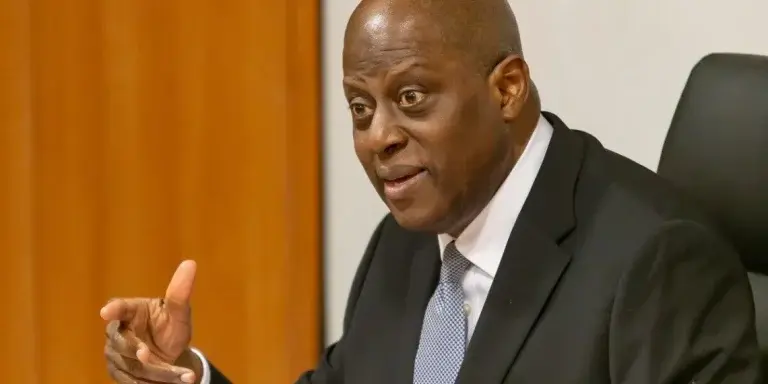
Olayemi Cardoso, the Governor of the Central Bank of Nigeria (CBN), has urged manufacturers to take the initiative in diversifying Nigeria’s foreign exchange earnings, moving away from the heavy reliance on crude oil exports.
This appeal was made during the 54th Annual General Meeting (AGM) of the Manufacturers Association of Nigeria (MAN), Apapa Branch, themed ‘Complementing the Oil Sector, a Major Forex Earner: Strategy for Manufacturing to Fill the Gap.’ Mr. Cardoso was represented at the event by Aliyu Ashiru, the director of the trade and exchange department.
He emphasized that Nigeria’s economy has been significantly influenced by crude oil, which constitutes over 80% of foreign exchange inflow. This dependency, he warned, exposes the economy to external shocks and vulnerabilities.
Mr. Cardoso highlighted the substantial potential of the manufacturing sector to conserve foreign exchange, boost exports through value-added products, generate employment across various levels, and enhance macroeconomic stability. He called for a strategic, long-term approach to unlock the manufacturing sector’s capabilities and establish it as a key foreign exchange contributor.
He outlined several strategic pillars necessary for growth, including policy alignment, infrastructure and energy investment, improved access to finance and foreign exchange, value addition, and backward integration.
A comprehensive industrial policy focusing on export-oriented manufacturing is essential, he noted, stating, “This policy must be stable, predictable, and aligned with trade, monetary, and fiscal frameworks.” He also suggested incentives such as tax holidays, duty waivers for machinery imports, export rebates, and investment guarantees specifically targeting manufacturers aiming for export markets.
Mr. Cardoso stressed the need to transition from exporting raw materials to value-added products, which requires significant investment in backward integration, particularly in sectors such as agro-processing, petrochemicals, and solid minerals. He assured that the CBN would continue to support the manufacturing sector through proactive monetary policies and tailored financing initiatives.
Francis Meshioye, president of MAN, echoed the urgency of diversifying Nigeria’s foreign exchange sources, particularly in light of global oil price fluctuations. He pointed out critical areas needing attention, including infrastructure improvement, reduction of production costs, affordable financing, and promotion of high-export-potential products.
Mr. Meshioye also called for governmental support in developing industrial clusters, especially in the Amuwo-Odofin and Apapa regions of Lagos State. He emphasized the need for improved road networks in these industrial areas, stating that many companies are willing to assist in infrastructure rehabilitation in exchange for tax incentives. Enhanced industrial roads, he argued, would decrease vehicle wear, improve logistics, and increase competitiveness.
Additionally, he advocated for the harmonization of taxes and levies at the local government level to minimize exploitation and enhance compliance among manufacturers.
Lagos State Governor Babajide Sanwo-Olu, represented by Folashade Ambrose-Medebem, the commissioner for commerce, cooperatives, trade, and investment, expressed his administration’s commitment to fostering an environment conducive to industrial growth and competitiveness. He noted, “The disruptions and forex crises experienced over the years underline the necessity of reducing import dependence.”
Governor Sanwo-Olu highlighted Lagos’s efforts to establish agro-industrial linkages that connect farmers with processors and strengthen local supply chains, asserting that in today’s digital age, competitiveness is tied to innovation. “Lagos is cultivating an innovation-driven economy where smart manufacturing enhances productivity and efficiency,” he added.
Raphael Danilola, chairman of the MAN Apapa branch, urged the government to address the operational challenges faced by manufacturers nationwide, including poor road infrastructure, inadequate power supply, rising logistics costs, insecurity, and forex volatility. He emphasized that overcoming these challenges is vital for enhancing competitiveness and increasing manufacturing’s contribution to foreign exchange earnings.
(NAN)