
By Abbas Jimoh
The ActionAid Nigeria (AAN) has called for the revitalization and institutionalization of the abandoned School Feeding Programme as part of measures to cut the growing number of out-of-school children and strengthen the education progress of the country.
The AAN Country Director, Andrew Mamedu made the call at the ‘National Policy Forum on the Institutionalisation and Implementation of Home-Grown School Feeding Programme for Sustainable Economic Growth and Financial Inclusion’ held at the Banquet Hall, Presidential Villa in Abuja.
He said at the event organised by AAN, smallholder farmer associations and other partners that stakeholders should strengthen community ownership of the Home-Grown School Feeding Programme and local sourcing focusing on women and farmers to ensure sustainability of the programme.
According to him, home-grown school feeding programme was more than a nutrition intervention but an education strategy that keeps children in school and helps them learn better.
He said that the intervention is a human capital development strategy with guaranteed returns on investment and ultimately, a nation-building strategy for inclusion, stability, and sustainable development.
He noted that if the programme is properly institutionalised, it would improve nutrition and learning, create jobs, enhance financial inclusion, and build resilience for future generations.
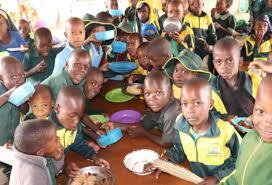
“In the immediate past administration, the home-grown school feeding programme recorded remarkable gains .It has increased school enrollment by 28 per cent and improved pupil retention by over 50 per cent in many states across the country.
“Nationwide, about seven million children across 40,000 public schools benefited from daily nutritious meals, while tens of thousands of cooks and smallholder farmers were engaged in the supply chain. These outcomes clearly demonstrate the power of school feeding to draw children into classrooms, keep them there, and link education with broader economic opportunities,” Mamedu said.
He also urged all stakeholders including the federal, state and local government to
think beyond short-term interventions and push for long-term frameworks that would survive political transitions.
While urging them to commit to building a school feeding system that is inclusive, sustainable, and transformative, the AAN boss further urged them to secure, sustained and ring-fenced financing, including statutory contributions through FAAC, Universal Basic Education Commission, TETFUND among others and develop partnership.
He noted that between 2018 to and 2022, enrolment in basic education increased from 35 million to 40 million.
Mamedu however, said that the number of out-of-school children grew from 9.1 million in 2000 to 14.6 million in 2020.
He said that based on World Bank’s Human Capital Index, Nigeria scored 0.36 an indication that a child born at the moment would only achieve 36 per cent of their productive potential if nothing changes.
He said that at the moment over than 45 million cannot read a simple text at age 10, with 15 million completely out of school and that the figures showed that the crisis is not due to lack of effort, but weak governance, underfunding, and systemic gaps.
“AAN has always believed in and supported the Federal Government’s vision for the home-grown school feeding programme as a proven pathway to address these gaps. This gathering is a defining moment in our journey to secure the future of millions of Nigerian children, strengthen our communities, and advance inclusive national development.
“It also aligns with ActionAid Nigeria’s 10-year Country Strategy Paper, which commits to lifting at least five million people out of poverty by 2034. We believe institutionalising school feeding is a critical pathway to achieving this,” Mamedu said.
Also speaking, the Minister for State, Ministry of Humanitarian Affairs, and the Chairman of the Steering Committee on Renewed Hope-National Home-Grown School Feeding Programme, Dr. Yusuf Tanko Sununu, represented by Mr Valentine Ezulu and the National Programme Manager of the Renewed Hope NHGSFP, Dr. Princess Aderemi Adebowale, reaffirmed the federal government’s commitment to repositioning the Renewed Hope National Home-Grown School Feeding Programme (NHGSFP) as a transformative driver of nutrition, education, local agricultural development, and inclusive economic empowerment for millions of Nigerians.
Dr. Sununu said the forum marks a significant step in consolidating President Bola Tinubu’s Renewed Hope Agenda to enhance human capital development and strengthen social investment programmes nationwide.
Dr. Adebowale on her part said the Federal Government will work and partner with ActionAid and other critical agencies to strengthen the Home-Grown School Feeding Programme.
“Together, we are building a stronger, sustainable, and more impactful Home-Grown School Feeding Programme for the benefit of our children and communities,” Adebowole said.
The Technical Advisor to the President on Economic and Financial Inclusion, Dr. Nurudeen Zauro, stated that unlocking economic and financial inclusion is crucial for the sustainability of the Home-Grown School Feeding program, particularly for smallholder farmers, women, youths, and other potential value chains.