
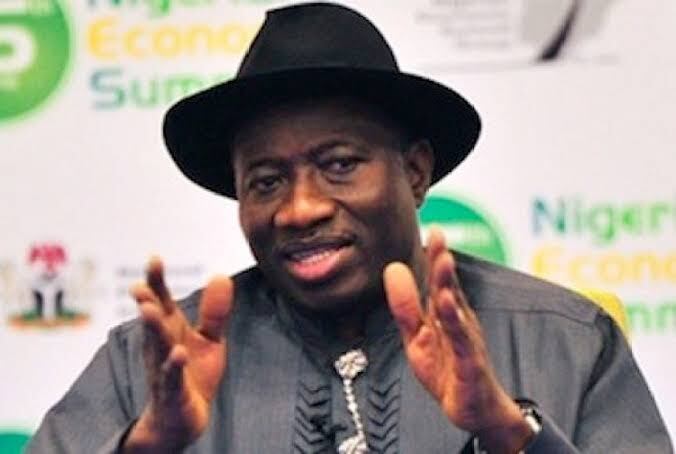
A recent publication has disclosed that former President Goodluck Jonathan faced significant opposition from state governors within the Peoples Democratic Party (PDP) when attempting to implement vital reforms aimed at addressing the party’s financial challenges and curbing the influence of affluent sponsors.
The book indicates that an initiative intended to secure financial autonomy for the party was ultimately dismissed during a National Executive Committee (NEC) meeting, despite having initially garnered Jonathan’s endorsement.
This revelation is detailed in “Wadata Wonders: Memoirs of a Partisan Journalist,” authored by Ike Abonyi, a former media adviser to two PDP national chairpersons, Okwesilieze Nwodo and Prince Uche Secondus. The book was unveiled in Abuja on Tuesday, with numerous PDP dignitaries present.
Reflecting on the internal dynamics during Jonathan’s presidency, the memoir notes that Nwodo, who held the position of PDP national chairman from 2010 to 2011, proposed a reform plan to fund the party through member contributions.
Under this scheme, a minimum of 10 million PDP cardholders would contribute ₦1,000 annually, potentially generating ₦10 billion each year—sufficient to manage party operations without dependence on donations from governors or external benefactors.
Although Jonathan initially supported the proposal following a successful pilot demonstration at Aso Rock Villa, the initiative was ultimately derailed at the NEC meeting where it was set to be approved.
“All that was required to free the party from its financial struggles was for President Jonathan to advocate for the reforms… However, he did not do so at the NEC meeting,” the book asserts.
The author highlights that Rotimi Amaechi, the then Governor of Rivers State and Chairman of the PDP Governors’ Forum, spearheaded the opposition to the reform, concerned that it would undermine the governors’ influence over the party—especially with a significant general election approaching.
“The governors were reluctant to diminish their power within the party… That’s how the proposed reforms failed to take off,” the book observes.
Additionally, the memoir claims that the governors played a role in Dr. Nwodo’s removal as PDP chairman to thwart any potential reformist agenda within the party.
“This action also heralded the beginning of the PDP’s decline in power,” Abonyi concluded.