By Nahum Sule, Jalingo
A recent investigation by NEW NATIONAL STAR has exposed dire conditions in public schools across Jalingo, the capital of Taraba State, revealing a crumbling education system marked by severe infrastructural decay and neglect.
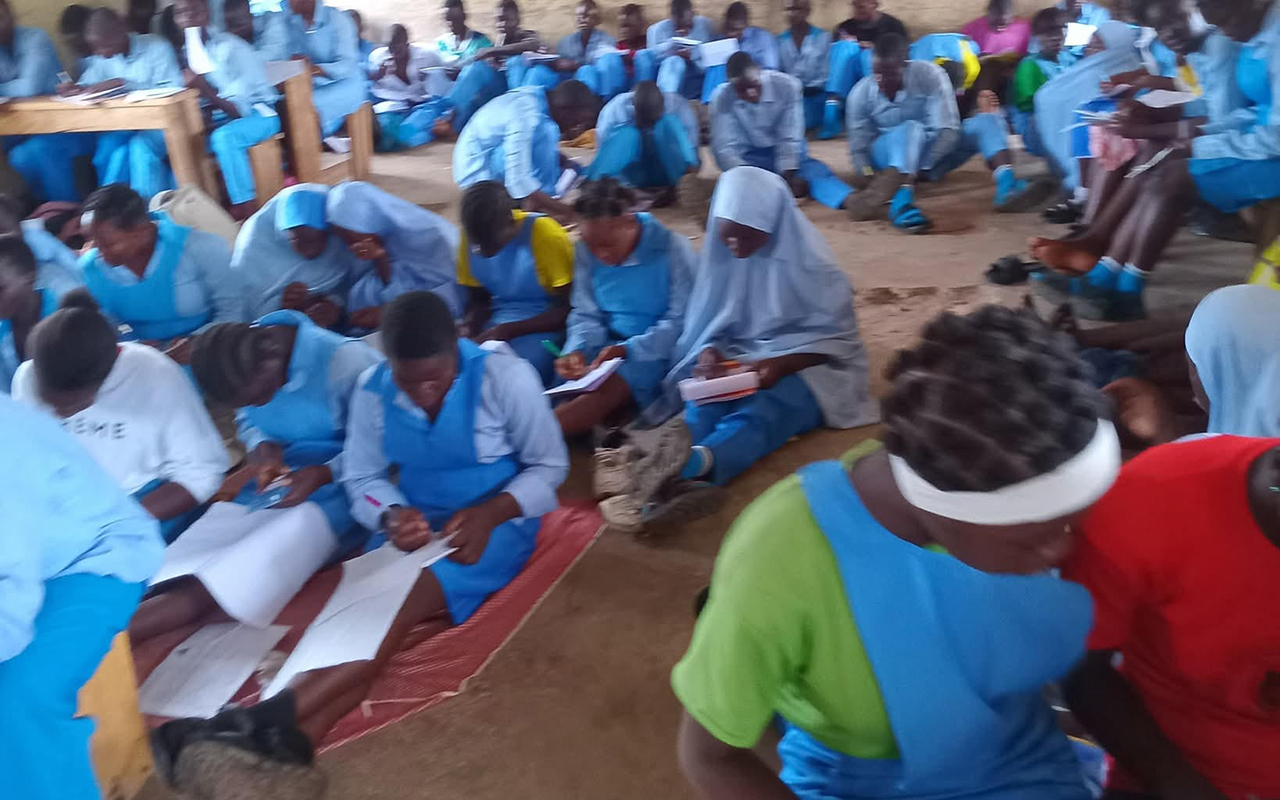
At Salihu Dogo Government Secondary School and other public institutions, students face daily hardships, including studying on bare floors, under leaking roofs, and in classrooms with cracked walls and broken windows
In many schools visited, desks and chairs are virtually non-existent, forcing students to balance exercise books on their knees during lessons and examinations. “It’s very hard to write like this,” one student shared, gripping her pen tightly. “Our hands get tired quickly.”
Another student described disruptions caused by rain, stating, “When the rain comes, water enters the class. We have to shift to the other side of the classroom where it’s not leaking to stay. Sometimes, lessons stop completely.”
Teachers who speak to us anonymously expressed frustration over the lack of basic infrastructure, which they say hinders students’ academic performance.
“How can a child concentrate on learning or doing well in examinations when he has no table to write on?” one teacher questioned. “We keep appealing to the government, but little is changing.”
The deplorable state of schools reflects a broader crisis in Taraba’s public education sector, plagued by chronic underfunding and neglect.
Education advocates warn that inadequate learning environments contribute to poor performance in national examinations, rising dropout rates, and a widening gap between public and private education in the state.
Hassan Ardo Jika, former Nigerian Envoy to Trinidad and Tobago, criticized the state’s highly publicized free education program as ineffective. “Students have no uniforms, no sandals, sit on bare floors, and classrooms are overcrowded,”
He said. “Nothing new has been started or completed. There are no new roads, no impactful projects, just propaganda. Governor Kefas has lost the confidence of the people and has become a political liability.”
Civil society activist Sanda Useni called on Governor Agbu Kefas to personally inspect public schools in the state capital, questioning the neglect despite the free and compulsory education policy. “If students are still sitting on bare floors in classrooms in the state capital, I wonder how our schools in rural communities look,” Useni remarked. He suggested that some individuals may be undermining the governor’s education policy and urged the establishment of a monitoring team to report directly to the governor.
Education advocate Stella Manza attributed the slow progress of the free education policy to the lack of effective monitoring mechanisms, which she believes are essential for its success across the state.
Despite these challenges, students at Salihu Dogo and other public schools remain resilient, attending classes daily with aspirations of becoming doctors, teachers, lawyers, and leaders. However, the question remains: How long can they be expected to pursue their dreams under such conditions?
Efforts to reach Dr. Augustina Godwin, Commissioner for Basic Education, for comment, were unsuccessful, as she did not respond to calls or messages.