
Seun Oni, the Oluomo of Erijiyan Ekiti, has said Nigeria’s business sustainability challenge goes beyond exchange rates, inflation and regulation, stressing that weak internal values and neglect of what he calls the ‘God factor’ are major threats to enterprise survival.
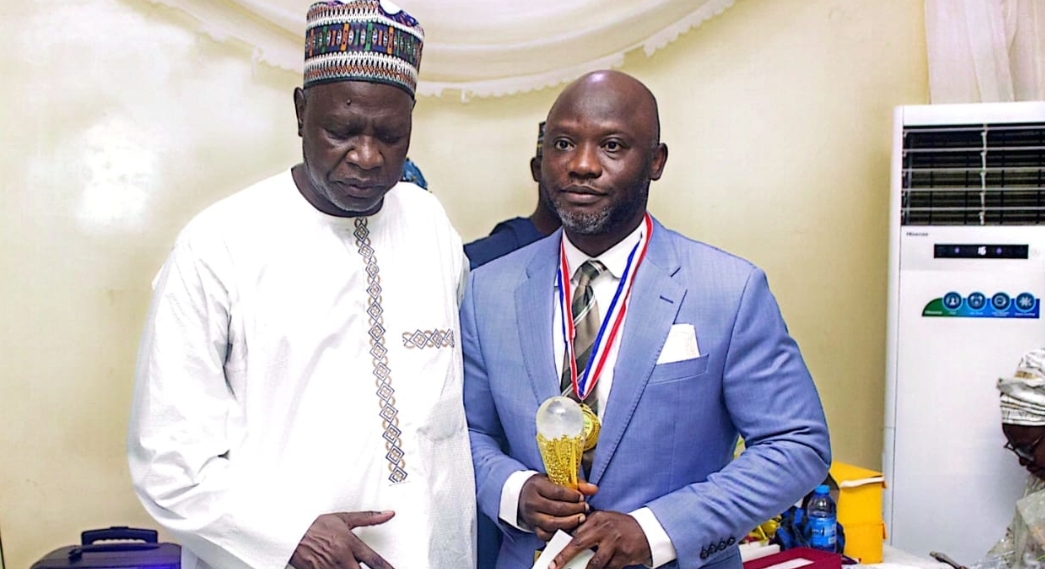
Reacting to his recent award as Icon of Intellectual Leadership and Community Development at the Ebony Herald 2026 Lecture, Oni said the honour is not a celebration of arrival, but a call for more work, describing it as a challenge to deepen his commitment to knowledge sharing, ethical leadership and grassroots development.
The corporate restructuring expert with over two decades experience across aviation, banking, oil & gas and power said Nigerian entrepreneurs have shown remarkable resilience, but preserving enterprise value requires external stability — exchange rates, interest rates and regulation — and internal stability built on integrity, competent management, governance and operational discipline.
He added that enduring success also requires humility and faith. “Some may call it luck, but one of my professors at Wharton referred to it as the God factor. It encompasses outcomes that cannot be fully explained by strategy, skill, effort, or market conditions alone,” he said.
Oni traced his career from Computer Science at Obafemi Awolowo University and brief IT roles at Nigerian Arab Bank to Commercial Banking at Standard Trust Bank in 1998, where Tony Elumelu posted him to Commercial Banking against all IT recommendations, a decision he said changed his life and taught him that leaders must see potential beyond qualifications.
His exposure to AT&T Wireless in the USA during its merger with Cingular, plus senior roles at Standard Chartered, UBA and FCMB and executive education at Wharton and IMD Switzerland, shaped his belief that sustainable organisations rest on integrity, competence, transparency, accountability, communication, shared responsibility and risk management.
On his 2016 conferment as Oluomo of Erijiyan Ekiti, he described it as humbling and personal, linked to his maternal lineage from the Odigbo kingmaker family of Erijiyan Ekiti, noting that while the title is ceremonial, both corporate and traditional leadership share a common foundation of service.
He said his support for the multi-billion-naira Ijesaland Geriatric Centre affiliated with OAUTHC and the ultra-modern Palace of the Owa Obokun of Ijesaland was driven by lasting community impact, noting the palace preserves culture while the Geriatric Centre addresses painful personal experience of taking his parents to Lagos for care before his mother died there.
Explaining his over 15 years of annual outreaches for elderly women and Christmas parties for schoolchildren in Ilesa, he recalled his modest upbringing as a cocoa trader’s son, including a Christmas with no rice when the family ate Uncle Ben’s rice sent by providence with okra soup, and his mother’s tradition of sharing feasts with neighbours.
To young graduates, he advised strong academics, practical skills and networking, stressing that competence gets you noticed but character determines how far you go. “Your reputation becomes one of your most valuable assets. Guard it carefully,” he said.
On Nigeria’s future, he said his vision is a country where opportunity is not determined by birthplace or connections, where every child in Ilesa, Lagos, Maiduguri, Port Harcourt or Kano has access to quality education, healthcare and security, insisting that “a great nation is built one family at a time” and urging leaders to leave a legacy of strong institutions beyond roads and bridges.