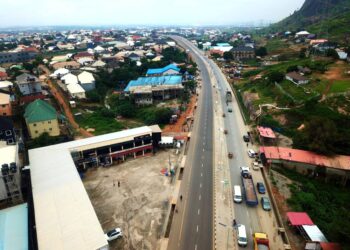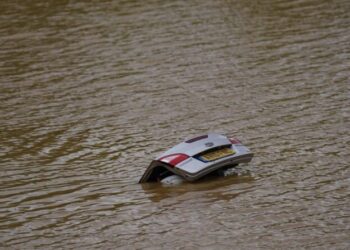

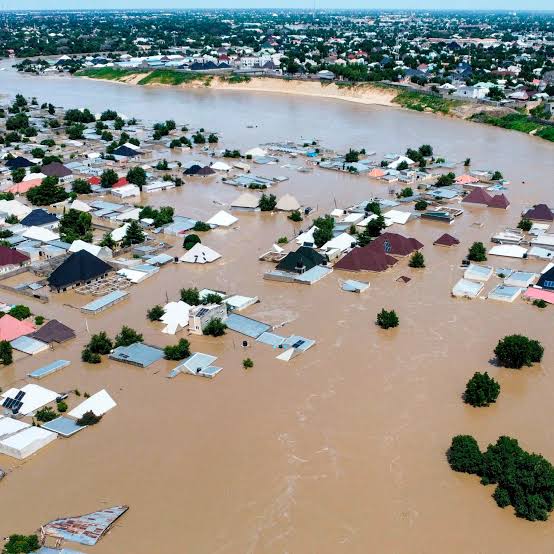
The Federal Government has placed 919 locations across 20 states in the critical-risk category for flooding, warning residents to brace for possible flooding between September 10 and 23, 2026.
The National Flood Early Warning Systems Centre of the Federal Ministry of Environment, in its latest forecast issued on Thursday night, said sustained rainfall, rising river levels, rapid surface runoff and drainage surcharge could trigger flooding during the period.
The Centre also classified 425 locations across seven states as high-risk, while 656 locations across 13 states and the Federal Capital Territory were placed on the moderate-risk watchlist.
The latest warning comes as Nigeria enters the peak of the annual rainy season, when persistent rainfall and rising waterways heighten the risk of flooding in vulnerable communities.
According to the Centre, elevated soil moisture, sustained rainfall, rapid surface runoff, drainage surcharge and rising river levels could worsen flooding.
The critical-risk locations are spread across Benue, Kogi, Niger, Rivers, Edo, Delta, Cross River, Bayelsa, Akwa Ibom, Abia, Anambra, Ebonyi, Enugu, Imo, Ekiti, Lagos, Ogun, Ondo, Osun and Oyo states.
The warning is particularly significant for the South-South and South-East, where several communities and local government areas were classified as critical-risk locations.
In the North-Central, parts of Benue, Kogi and Niger states were also listed among areas requiring heightened vigilance.
High-risk locations were identified in Kwara and Niger states, as well as parts of Benue and Kogi.
Several parts of the FCT were placed on the moderate-risk watchlist.
They include Abaji, Abuja Municipal, Asokoro, Bwari, Garki, Gwagwalada, Gwarinpa, Kubwa, Kuje, Kwali, Lugbe, Maitama, Nyanya and Wuse, among others.
The Federal Government consequently directed communities in critical-risk areas to maintain an immediate flood watch and verify evacuation routes.
It also urged residents to protect vulnerable households, essential assets and valuables against possible flooding.
The government warned residents against living, parking vehicles, trading or storing goods within active floodplains, wetlands, riverbanks and low-lying drainage corridors.
It said sudden inundation could occur in such areas.
State emergency management agencies, environmental officers and community flood focal persons were also urged to intensify surveillance around rivers, streams, culverts, bridges, drainage channels, estuaries, reservoirs and erosion-prone corridors.
For high-risk communities, the Centre advised intensified drainage clearance and closer monitoring of culverts and waterways.
Residents were also urged to promptly report heavy rainfall, ponding, dam releases and unusual changes in river levels.
The advisory urged residents to comply with evacuation directives and take precautions against the dangers associated with floodwaters.
It specifically warned residents to keep children away from floodwater and avoid walking or driving through flowing water.
Residents were further advised to disconnect electricity where flooding was imminent and secure medicines, vital documents, food and potable water.
The advisory, signed by the Director of the Erosion, Flood and Coastal Zone Management Department, Usman Abdullahi Bokani, stressed that the forecast should be interpreted alongside real-time local observations, drainage conditions, river levels and official emergency directives.
It added that feedback from state authorities and community flood focal persons would help guide continuous updates of the national flood database as conditions develop during the forecast period.