
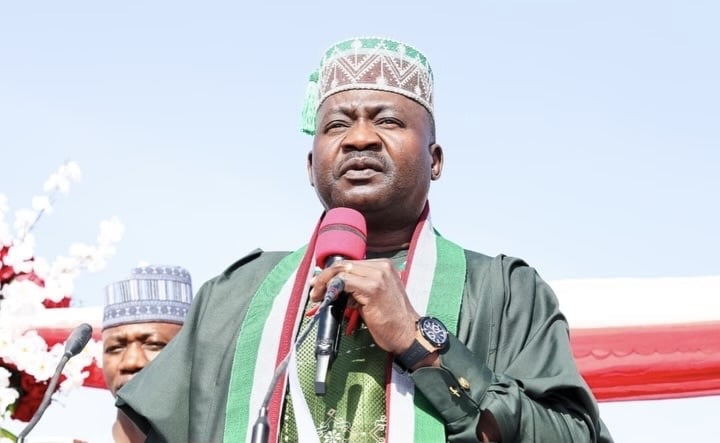
In a shocking revelation, Nigeria’s Minister of Defence, General Christopher Musa, has disclosed that he was a target in a recent coup attempt, allegedly meant to be assassinated by the conspirators. This alarming news comes in the wake of the military’s announcement that several officers arrested last October will face trial for their involvement in a plot to overthrown President Bola Tinubu.
Speaking on Channels Television’s Sunday Politics, General Musa, a seasoned military leader and former Chief of Defence Staff, stated, “I was also a target, I am sure you know. I was supposed to be arrested, and if I refused, I was supposed to be shot.” His comments underscore the gravity of the situation, revealing an insidious plot aimed at destabilising the Nigerian government.
Military Action Against Coup Plotters
In October, the military apprehended sixteen officers for acts of indiscipline and breaches of service regulations. However, recent investigations have uncovered deeper links to a coup plot. Major General Samaila Uba, the Director of Military Affairs, confirmed that some of these officers will be arraigned before a military judicial panel, stating, “Findings have identified a number of the officers with allegations of plotting to overthrow the government, which is inconsistent with the ethics, values, and professional standards required of members of the Armed Forces of Nigeria.”
The impending trials reflect a stringent commitment to uphold military discipline and democracy in Nigeria, asserting that those who breach the law will face consequences.
Allegations of High-Profile Targets
The potential ramifications of the coup attempt extend beyond military ranks, with various high-profile government officials allegedly marked for assassination. Reports suggest that the coup’s orchestrators had plans that included the assassination of prominent leaders, adding a layer of complexity and danger to the already volatile political climate.
Interestingly, the coup attempt has been linked to the controversial cancellation of Nigeria’s 65th Independence Anniversary parade. In a concerning turn of events, the house of former Bayelsa State governor, Timipre Sylva, was reportedly raided due to his alleged connections to the coup plot. This highlights the far-reaching implications of the conspiracy, indicating a well-organised effort to disrupt Nigeria’s democratic process.
General Musa’s Condemnation
In his interview, General Musa did not mince words when describing the individuals involved in the coup plot, labelling them as “unserious individuals.” He expressed disbelief at their audacity, stating, “If you look at the calibre of persons involved in the attempted coup, I don’t know what got into their heads to think they can take on the Armed Forces like that.” This statement reflects a broader sentiment that such attempts are not only misguided but also inherently dangerous.
Moreover, General Musa emphasised the resilience of the Nigerian people, asserting that Nigerians would have united against the coup plotters as they have historically done. “Remember, Nigerians have fought against military rule for quite some time. Mr President has been one of them, so for them to wake up one morning and think they can do that in Nigeria, I think they need to reset their brain,” he remarked. This assertion underscores a collective national memory of resistance against tyranny.
Historical Context of Coups in Nigeria
The recent coup attempt serves as a stark reminder of Nigeria’s tumultuous history with military coups, particularly between 1966 and 1993, a period marked by instability and military rule. Since the return to democracy in 1999, Nigeria has endeavoured to maintain a stable democratic framework, but recent events have raised concerns over the fragility of this system.
The coup attempt also reflects a worrying trend in West Africa, where a series of military takeovers have occurred in various countries. Just last year, neighbouring Benin Republic experienced a coup attempt, signalling a regional instability that could have ripple effects throughout the region.
The Path Forward
As the military prepares to conduct trials for those implicated in the coup plot, the focus will inevitably shift to the broader implications for Nigeria’s democratic process. The government faces the dual challenge of ensuring accountability while also safeguarding the nation’s stability.
General Musa’s revelations and the military’s actions signal a commitment to uphold the rule of law and protect Nigeria’s democratic institutions. However, the road ahead will require vigilance and unity among the Nigerian populace to prevent any resurgence of military insurrection.
Conclusion
The recent coup attempt highlights critical vulnerabilities within Nigeria’s political landscape, with General Musa’s candid revelations serving as both a warning and a call to action. As the nation grapples with the implications of this attempted coup, the resilience and unity of the Nigerian people will be pivotal in safeguarding democracy and ensuring that such threats do not undermine the hard-won freedoms of the past two decades.
In an era marked by increasing instability in West Africa, Nigeria’s ability to navigate these challenges will not only determine its own future but may also set a precedent for the region. The stakes are high, and the world will be watching closely as Nigeria confronts this latest chapter in its complex history.