

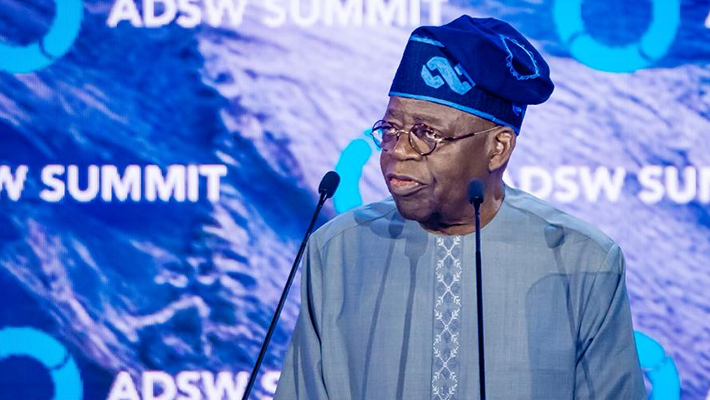
President Bola Tinubu has called for the reactivation of a regional standby force, utilising Nigeria’s National Counter-Terrorism Centre (NCTC) based in Abuja, to enhance counter-terrorism efforts in West Africa and the Sahel.
In an official statement delivered by Minister of State for Foreign Affairs, Bianca Odumegwu-Ojukwu, on Saturday, President Tinubu emphasised that this proposed force would operate as an intelligence and kinetic fusion unit, fortifying regional responses to escalating security challenges.
This position was articulated following a regional conference focused on security issues and future risks in West Africa and the Sahel, held in Accra from January 29 to 30. During the conference, President Tinubu reiterated Nigeria’s steadfast commitment to maintaining peace, security, and stability in the region.
“The security crisis across the Sahel is worsening, and Nigeria advocates for collaborative, multilateral strategies to confront these challenges,” he stated. “We continue to disrupt terrorist activities through strategic partnerships with regional intelligence and security frameworks.”
These partnerships include the Regional Intelligence Fusion Unit, the Liaison Fusion Unit, the Eastern African Fusion Unit, and the Committee of Intelligence and Security Services of Africa. Highlighting Nigeria’s proactive approach, the president noted that the NCTC signed a Memorandum of Understanding with the African Union in 2025 aimed at continent-wide counter-terrorism cooperation.
“The NCTC is well-positioned to support regional mechanisms and serve as an intelligence coordinating hub,” President Tinubu added. He cautioned that the misuse of cyberspace for misinformation and disinformation remains a significant threat to regional stability, urging neighbouring states to leverage Nigeria’s cybersecurity infrastructure.
“The successes achieved by the National Cyber Security Centre in Abuja should serve as a model for collective action,” he remarked. “Security cooperation is central to Nigeria’s national interests and the stability of the region.”
President Tinubu highlighted the necessity of joint initiatives, intelligence sharing, and coordinated operations to effectively combat terrorism and transnational organised crime. He emphasised the importance of partnerships that respect sovereignty, uphold international law, and foster mutual trust.
Acknowledging the volatile security landscape, he noted the rising casualties, particularly among women and children, across various parts of West Africa. He pinpointed weak defence coverage and the lack of a unified counter-terrorism focal point as critical factors that create exploitable power vacuums.
“These gaps have empowered Sahel-based terrorists to extend their reach towards littoral states, including Nigeria, Benin, Togo, and Ghana,” he explained. “Such developments facilitate the establishment of corridors between terrorists and organised criminal networks across porous regional borders.”
Additionally, President Tinubu expressed concern about the potential relocation of South American drug cartels to West Africa, particularly in light of intensified U.S. anti-narcotics operations. He warned that this could forge closer ties between well-funded drug cartels and insurgent groups within the region.
The president identified overreliance on foreign support, political divisions, and the emerging divide between ECOWAS and the African Economic Community (AES) as significant security challenges. “To address these issues, political differences must be disentangled from security cooperation,” he asserted.
He urged ECOWAS and AES states to confront the root causes of instability, such as poverty, governance deficits, and marginalisation. “Tensions must be de-escalated and an inclusive framework established to reflect shared security and economic interests,” he concluded.
As the Sahel region continues to face escalating threats, President Tinubu’s call for a reactivated regional standby force underscores Nigeria’s commitment to collaborative security efforts. The effectiveness of these initiatives will depend on the collective willingness of regional partners to engage in meaningful cooperation and address the underlying issues contributing to insecurity.
In the coming weeks, the focus will be on how regional states respond to these pressing calls for action. Will they unite to tackle the multifaceted challenges facing the Sahel, or will the region remain fragmented and vulnerable to both terrorist and criminal activities? The answers to these questions will significantly impact the future stability of West Africa and the Sahel.
As the international community watches closely, Nigeria’s proactive stance may serve as a pivotal point in shaping the region’s security landscape. The time for decisive action is now, and President Tinubu’s leadership could prove instrumental in forging a path towards a more secure and stable West Africa.