
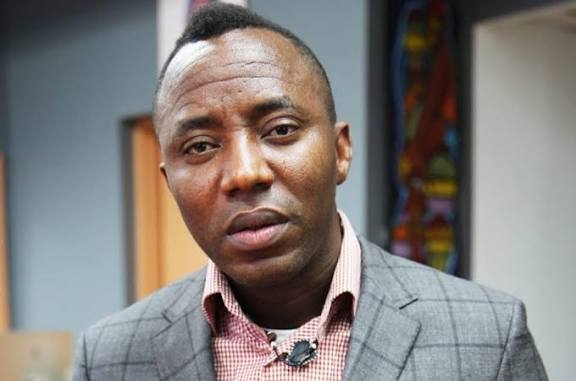
A Federal High Court in Abuja has issued a stern caution to the legal counsel representing activist and politician Omoyele Sowore, warning against attempts to delay proceedings in a contentious cyberbullying suit brought by the Department of State Services (DSS). The case, which centres on social media posts allegedly defamatory to President Bola Tinubu, took a dramatic turn as the defence presented video evidence of the President himself vowing to protect free speech.
The presiding judge, Justice Mohammed Umar, delivered the admonition on Tuesday after counsel for the DSS, Senior Advocate of Nigeria Akinlolu Kehinde, complained of “frivolous and dilatory tactics” by Sowore’s lawyer, Marshall Abubakar. Justice Umar assured the prosecution that the court would not condone any manoeuvres designed to prolong the trial, underscoring a commitment to procedural efficiency.
The Core of the Allegation
The DSS is prosecuting Sowore, the 2023 presidential candidate of the African Action Congress (AAC), for allegedly referring to President Tinubu as a “criminal” in posts on his X (formerly Twitter) and Facebook accounts. The agency contends the statements have serious security implications.
During cross-examination, DSS official Cyril Nosike, the prosecution’s witness, defended the decision to file charges. He stated the action was necessitated solely by the perceived security threat of Sowore’s posts, not by a direct complaint from the President.
A Defence Built on the President’s Own Words
In a strategic counter, defence counsel Marshall Abubakar presented a video recording in open court. The clip showed President Tinubu, during an official visit to Brazil, promising to safeguard the rights of all Nigerians, “including those abusing me and calling me names.” Abubakar pressed the witness to reconcile the DSS’s prosecution with the President’s public commitment to free expression.
The witness, Mr. Nosike, confirmed he had downloaded the video from Sowore’s social media but offered limited knowledge of its provenance. He stated he was not present in Brazil, did not record the video, and had not interviewed President Tinubu to verify its contents or to ascertain whether the President was even aware of Sowore’s posts. Notably, Nosike confirmed the DSS had not presented any formal defamation complaint from the President to the court.
Exposing Contradictions and Past Precedents
The cross-examination delved into perceived inconsistencies in the DSS’s actions. Abubakar referenced Sowore’s previous 2019 prosecution by the DSS for allegedly calling for a revolution, a case widely publicised on the agency’s own website. Nosike claimed no knowledge of that prior trial or of a subsequent court order to release Sowore’s phones, seized in 2019, back to him.
At this point, Abubakar tendered a certified true copy of a February 2024 order from Justice Emeka Nwite of the Federal High Court, reportedly directing the DSS to return Sowore’s phones. The court admitted the document as evidence.
The defence further submitted a flash drive containing additional video material. One clip featured now Ambassador-designate Reno Omokri, who during the 2023 election campaign labelled President Tinubu a “drug lord” and vowed never to serve under him. When questioned, the DSS witness said he could not explain why his agency, presumably involved in security clearance, did not bring charges against Omokri, who has since been nominated for a senior diplomatic post.
Implications for Free Speech and Selective Prosecution
The day’s proceedings raised pointed questions about the boundaries of free speech, the definition of cyberbullying in a political context, and the consistency of state prosecution. The defence’s tactic of using the President’s own words as a shield introduces a complex legal and philosophical dimension to the case. It challenges the DSS’s assertion of a purely security-based motive by highlighting a potential contradiction between executive rhetoric and agency action.
Legal observers note the case tests the application of Nigeria’s cybercrime laws against political criticism. The admission of evidence relating to other individuals who made similar allegations without facing prosecution could form the basis for an argument of selective, politically motivated legal action.
Case Adjourned
Justice Mohammed Umar has adjourned the high-profile case for further hearing on 4th February. The proceedings are being closely monitored by civil society organisations, media freedom advocates, and political analysts, for whom the outcome may set a significant precedent regarding online expression and state power in Nigeria.
The Sowore case continues to underscore the tense intersection of politics, security, and constitutional rights in the digital age, with each hearing amplifying the national debate on where the line should be drawn.