
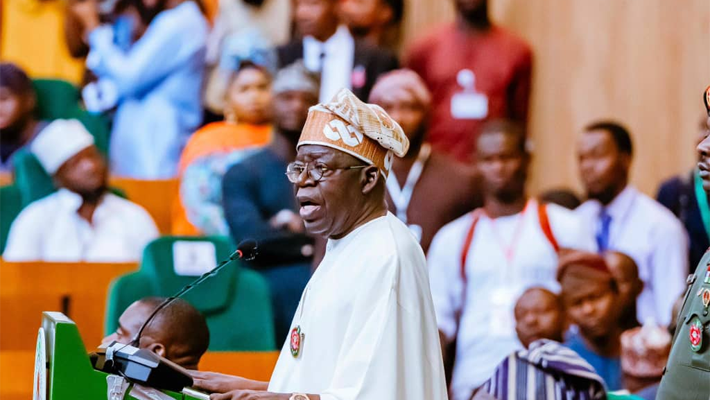
President Bola Tinubu has issued a compelling call for national unity, religious tolerance, and peaceful coexistence, framing them as indispensable pillars for enhancing Nigeria’s security and accelerating its development. The President articulated this vision at the 4th International Conference of the Centre for Islamic Civilisation and Interfaith Dialogue, held at Bayero University, Kano.
Represented by the Minister of Information and National Orientation, Alhaji Mohammed Idris, President Tinubu’s address, detailed in a statement released in Abuja, emphasised that the nation’s safety is inextricably linked to its social cohesion. He commended the organisers, including the Sultan Bello Mosque in Kaduna, for sustaining a crucial platform dedicated to dialogue and national harmony.
Honouring a Legacy of Bridge-Building
The conference, which focused on the legacy of the late Sheikh Mahmud Abubakar Gumi, provided a poignant backdrop for the President’s message. Tinubu described the renowned Islamic scholar as a “distinguished scholar, reformer, and national figure” whose influence extended far beyond religious circles.
He highlighted Sheikh Gumi’s significant role in promoting national unity during pivotal moments in Nigeria’s history, particularly after independence and the Civil War. “He understood the intersection of faith and politics,” Tinubu stated, noting that Gumi worked closely with authorities to champion oneness and peaceful coexistence. The President framed Gumi’s life as a testament to the power of mentorship and dialogue in fostering a belief in Nigeria’s indivisibility “in work and in worship.”
A Firm Rejection of Divisive Narratives
Addressing contemporary challenges head-on, President Tinubu urged citizens to vigorously reject narratives that misrepresent Nigeria as intolerant of religious freedom. He positioned such portrayals as threats to national stability that must be collectively resisted.
“We must strengthen our resolve for a more united country,” he asserted. “Recent attempts to misrepresent Nigeria as a nation that undermines religious freedom must be firmly resisted. Our national security is tied to our unity, togetherness, and respect for religious diversity; we must forge a united front against those who seek to divide us.”
This declaration underscores the administration’s view that internal solidarity is a primary defence mechanism against both physical threats and corrosive societal divisions.
Concrete Security Measures: From Forest Guards to Community Policing
Beyond the philosophical appeal for unity, President Tinubu outlined tangible security initiatives his administration is deploying. He reiterated an unwavering commitment to protecting lives and property and confronting criminality with all available resources.
Key operational details disclosed include:
· The Deployment of Forest Guards: Over 7,000 trained forest guards have been deployed nationwide. This strategic move aims to deny kidnappers, bandits, and terrorists access to vast forest corridors often used as hideouts and routes for movement.
· Progress on State Policing: Efforts are actively ongoing to entrench community policing through the establishment of state police forces. Tinubu affirmed this is being pursued “in line with constitutional processes,” signalling a structured approach to decentralising security architecture for more responsive, localised policing.
· Expanded Security Operations: Following the declaration of a national security emergency in November 2025, security operations have been “expanded and reinforced” in states most affected by banditry and terrorism. The President pointed to “optimised intelligence-led operations” designed to disrupt and dismantle terrorist and criminal networks.
Strategic International Cooperation
The address also shed light on Nigeria’s security cooperation with the United States, carefully defining its scope and principles. President Tinubu stressed that the alliance is “strategic” and “focused on protecting vulnerable communities,” with operations remaining “operationally led by Nigerian troops.”
This clarification emphasises national sovereignty while welcoming specialised support in counterterrorism and civilian protection. It reflects a balanced foreign policy approach that seeks international partnership without ceding operational command.
Conclusion: Unity as the Unshakeable Foundation
President Tinubu’s comprehensive address at the interfaith conference successfully bridges moral suasion with policy action. By linking the revered legacy of a national religious figure like Sheikh Gumi to contemporary governance, he grounds his appeal for unity in a respected historical context.
The speech makes a clear case that national security is not solely a function of military might or intelligence assets, but is profoundly dependent on the social fabric of the nation. The outlined measures—from boots on the ground in forests to high-level international partnerships—demonstrate a multi-layered strategy.
Ultimately, the President’s message posits that for Nigeria to achieve lasting peace and security, its citizens must consciously uphold shared values of tolerance and peaceful coexistence. In this framework, unity is not merely an ideal but the essential, non-negotiable foundation upon which all other security and development efforts must be built. The administration’s challenge now lies in translating this powerful rhetoric into sustained, visible action that further fosters this collective national resolve.