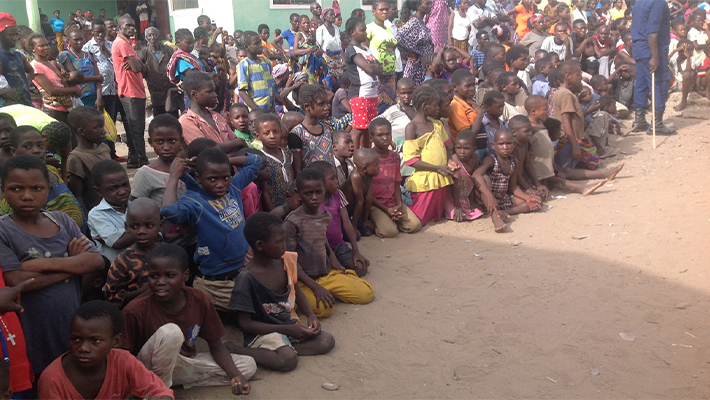
In a significant development, 3,122 individuals displaced by Boko Haram violence are set to return to their homes in the Gwoza and Bama council areas of Borno State, Nigeria. This repatriation initiative, announced on Monday, marks a pivotal step towards restoring normalcy and stability for communities affected by years of conflict.
UNHCR Guarantees Safe and Dignified Return
Rudacogora Monique, head of the United Nations High Commissioner for Refugees (UNHCR) Sub-Office in Maroua, Cameroon, confirmed that extensive preparations have been made to ensure the safe and dignified return of these refugees. The repatriation process is the result of a collaborative effort involving the Federal Government of Nigeria, the Government of Cameroon, the Borno State Government, and UNHCR personnel at the Minawao Refugee Camps.
Monique stated, “We are committed to ensuring the protection and well-being of our people. The week-long screening process resulted in the clearance of 306 individuals from Gwoza and 2,816 from Bama, all of whom are now ready to return home.”
Collaborative Efforts to Ensure Safety
The repatriation is backed by a tripartite agreement that prioritises the safety of returning refugees. Monique expressed gratitude for the cooperation among all parties involved, stating, “We have worked hand in hand to ensure the safety and well-being of the refugees.”
This collaboration was further emphasised by Sone Clement Ngoe, the divisional official of Mayo and Tsanaga, which hosts the Minawao camps. She noted that the voluntary repatriation process has been effective, highlighting the smooth operation under the guidance of the Governor of the Far-North Region, Midjinyawa Bakari.
Assurance of Security During Transit
Tijani Aliyu, chairman of the repatriation technical committee and Federal Commissioner of the National Commission for Refugees, Migrants, and Internally Displaced Persons (NCFRMI), also assured returning refugees of their safety. Represented by Murdakai Titus, a deputy director at the commission, Aliyu thanked security agencies, particularly the Nigerian Army, for their commitment to ensuring a secure operation throughout the repatriation process.
“We are grateful for the support from the Nigerian Army, which guarantees the safety of this exercise,” Aliyu remarked.
Preparations by Borno State Government
Lawan Wakilbe, the Borno State Commissioner for Education, shared details of the preparations made by the state government to facilitate a smooth transition for the returning population. “The state government has arranged adequate accommodation for over 400 households returning to Bama, along with financial support packages,” he stated.
Each head of household will receive N100,000, with an additional N20,000 allocated for each wife. For households without accommodation, a support package of N500,000 will be provided, alongside N50,000 for their wives.
Wakilbe further stated, “For those returning to Gwoza, the governor has approved N500,000 for each head of household and N50,000 for their wives, in addition to the federal government’s support.”
A New Chapter for Displaced Persons
This repatriation marks a crucial moment for those who have been displaced for years due to the violence instigated by Boko Haram. Many refugees have expressed a strong desire to return home voluntarily, with Monique noting that numerous individuals are eager to leave the camps and rebuild their lives.
While acknowledging the emotional ties formed during their time in Cameroon, she affirmed, “Those who return will carry memories of their time in Cameroon, which provided them refuge during a turbulent period.”
Conclusion: A Call for Continued Support
As these 3,122 individuals prepare for their journey back to Borno, it is imperative that continued support and resources be allocated to ensure their successful reintegration. The collaborative efforts of the Nigerian and Cameroonian governments, along with international organisations, exemplify the importance of unity in addressing the needs of displaced populations.
The road ahead may be fraught with challenges, but with the right support and commitment, these returning citizens can begin to rebuild their lives and contribute to the restoration of their communities. The successful repatriation of these individuals is not just a return to their physical homes; it signifies a step towards healing and hope for the future.