

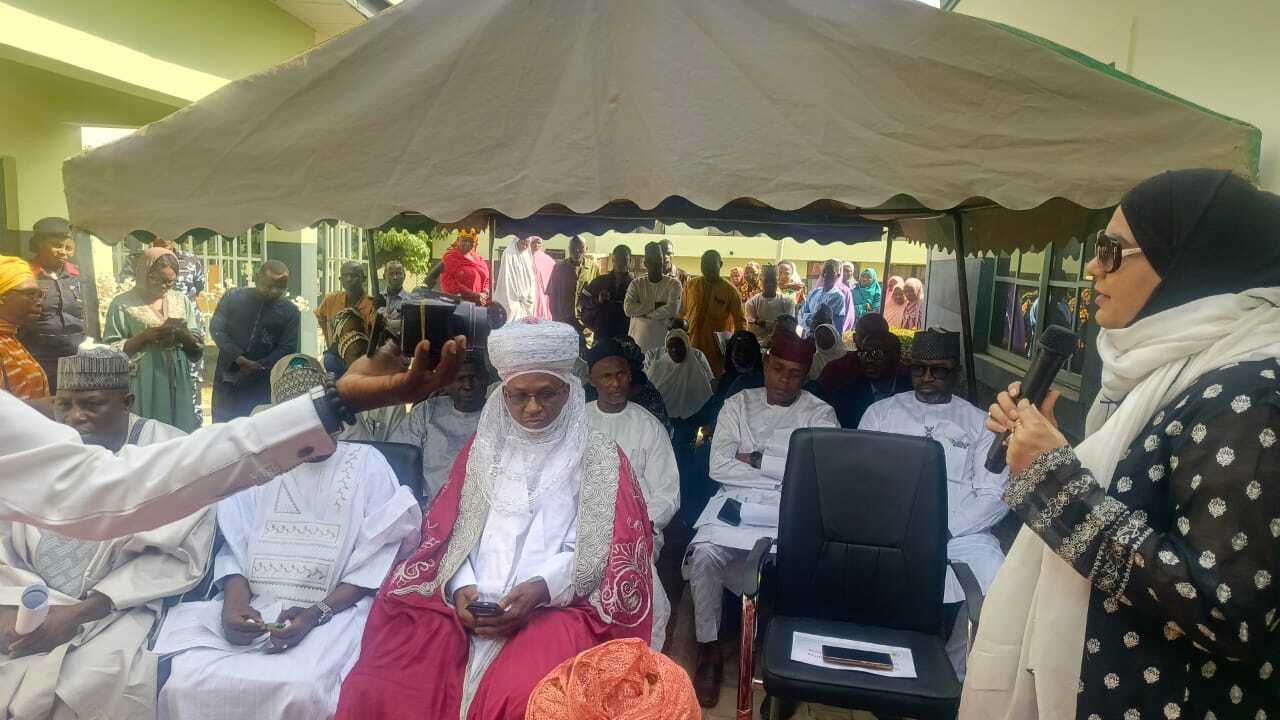
Gombe State has recorded 645 reported cases of sexual and gender‑based violence (SGBV) between 2021 and 2025, prompting the launch of a dedicated Sexual Assault Referral Centre (SARC) at the State Specialists Hospital, officials announced on Friday.
The Chief Medical Director (CMD) of the hospital, Dr Sambo Dawa, disclosed the figures at the official inauguration of the SARC, a one‑stop facility established through collaboration between the state government, the United Nations Children’s Fund (UNICEF) and other development partners. The data show an upward trend in reported survivors treated at the hospital: 76 cases in 2021; 117 in 2022; 122 in 2023; 160 in 2024; and 170 in 2025.
Dr Dawa described the numbers as alarming and stressed that the majority of survivors were adolescent girls aged 10 to 14. He said most victims came from rural communities and that perpetrators were often neighbours or family members, highlighting the concealed and domestic nature of much sexual violence.
“The pattern of abuse we treat points to danger within households and communities, where trust is exploited,” Dr Dawa said. “Creating a safe, integrated centre for survivors is critical to delivering timely medical care, psychosocial support and legal assistance.”
From informal care to an integrated SARC
Dr Dawa recounted that responses to sexual and gender‑based violence at the hospital began informally some 15 years ago, handled by a lone doctor without dedicated space, trained personnel or systematic record‑keeping. He said a turning point came in 2021 after the state government restructured and upgraded the hospital, enabling the creation of a sexual and gender‑based violence unit, improved documentation, better medical supplies and official support for survivor care and court appearances by expert witnesses.
The 2025 establishment of the SARC, he added, represents a further milestone. The state provided the building, staff, drugs and consumables; UNICEF contributed training, technical support, specialist equipment, clinical kits and an integrated child‑protection information management system. The centre is intended to offer survivors a streamlined pathway: clinical forensic care, counselling and psychosocial services, police investigation, legal aid and social services — all coordinated under one roof to reduce trauma and improve case management.
Legal backing, community role and prevention
Speaking on behalf of the Deputy Governor, the Commissioner for Health, Dr Habu Dahiru, said the SARC is anchored in legislation enacted by the Gombe State House of Assembly to protect women and children. He emphasised the centre’s mandate to guarantee privacy, prompt medical attention, rehabilitation and legal redress, and urged traditional and community leaders to play an active role in early detection and referral of survivors.
“Silence and stigma drive underreporting,” Dr Dahiru said. “District heads, village heads and community leaders must investigate allegations and ensure survivors are referred immediately. The law must be enforced, and communities must be part of the solution.”
UNICEF warns: prevention must match response
Dr Nuzhat Rafique, Chief of the UNICEF Bauchi Field Office, told the launch that sexual and gender‑based violence is a preventable crime and urged a shift from reactive response to sustained prevention. She warned that abuse frequently occurs in homes and neighbourhoods and called for intensified community awareness, parental responsibility and cultural change.
“This is not only a problem in Gombe. In the five states I cover, I have seen victims as young as six months,” Dr Rafique said. “We must change practices that normalise abuse and ensure communities protect children and vulnerable people. Otherwise, nobody is safe.”
Traditional leaders back the centre
The Emir of Gombe, represented at the ceremony by Alhaji Dalhatu Sambo, Wakilin Birnin Gombe, commended the state government’s initiative and pledged the support of traditional rulers for the sustainability of the SARC. He described the centre as a “compassion hub” for survivors and underscored the moral responsibility of community custodians in protecting children and women.
Operational priorities and challenges
Officials at the launch outlined immediate priorities for the SARC: fast‑tracking medical and forensic examination for survivors, expanding psychosocial counselling services, training health and legal personnel in survivor‑centred care, and scaling up public education on reporting mechanisms. Coordinated data collection through the integrated information system will also enable better tracking of trends and service outcomes.
Despite these advances, gaps remain. Rural access, digital literacy and stigma were flagged as obstacles to comprehensive reporting and timely care. Movement coordinators said targeted outreach and mobile registration drives will be necessary to reach under‑served wards where internet access is limited and cultural barriers discourage disclosure.
Political and social implications
The new SARC could alter the landscape of SGBV response in Gombe by reducing the barriers survivors face when seeking assistance and by improving the evidence chain for prosecution. If effectively resourced and supported by local authorities, the centre may boost conviction rates and deter would‑be perpetrators. However, experts caution that infrastructure alone will not end endemic abuse: long‑term prevention requires sustained community engagement, school‑based education, economic empowerment for vulnerable families and robust enforcement of child‑protection laws.
Public reaction and next steps
Civil society groups and women’s organisations welcomed the launch, calling for continuous funding, independent monitoring and clear referral pathways between health, law enforcement and social welfare agencies. They emphasised that survivor dignity and confidentiality must guide every interaction.
Officials said the SARC will begin full operations immediately, with plans to roll out community awareness campaigns and training for frontline workers across Gombe’s 11 local government areas. The state government also indicated intentions to explore additional centres in rural hubs to reduce travel times for survivors.
Conclusion
The establishment of the Sexual Assault Referral Centre in Gombe represents a significant policy and service delivery response to a growing record of sexual‑assault cases. By integrating medical, psychosocial and legal services, the SARC aims to reduce secondary trauma, strengthen evidence for prosecution and foster a prevention‑led mindset across communities. Yet success will depend on sustained political will, adequate funding, community mobilisation and the enforcement of protective laws to ensure that the vulnerable — especially young girls in rural areas — receive timely justice and rehabilitation.